Sitdown Foiling
What is Sit-down Foiling?
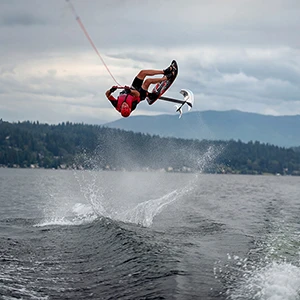
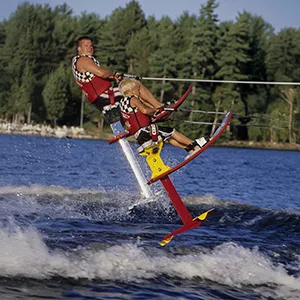
Sit-down foiling, often called Sky Skiing or Air Chairing by the brand, is a seated form of hydrofoiling in which the rider sits in a strapped seat mounted on a board connected to a hydrofoil mast and wing. Instead of standing, as in boat wake foiling, the rider is seated, with their feet secured in foot straps and their hips supported by a seat. The setup is towed behind a boat, making it a classic boat tow hydrofoil discipline.
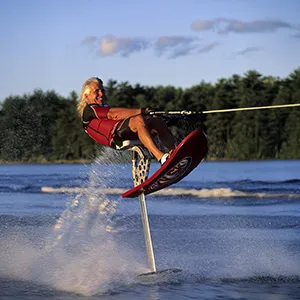
A sit-down hydrofoil lifts out of the water as speed increases, allowing the rider to glide above the surface on the foil. Once on foil, the ride becomes smooth and quiet compared to traditional water skiing because most of the ski is out of the water. Riders can carve, jump, and perform a wide range of tricks once they develop control.
For a newcomer, the simplest way to picture it is a seated hydrofoil that you tow behind a boat, where balance and subtle weight shifts control height and direction rather than edging a ski or board hard against the water. This was the primary foiling discipline for many years, from which all other modern foiling disciplines grew.
Who is into sitdown foiling?
If you are into sitdown foiling, make sure to drop your pin on the Foilers Pin Map and help sitdown foiling claim the leaderboard. Check the pin map and leaderboard for how many people into sitdown foiling have marked themselves on the map.
How it Works
Like all hydrofoil sports, a seated hydrofoil works because an underwater wing generates lift as it moves through the water. One difference with a Sky Ski/Air Chair is that the wings operate heavily on angle of attack rather than self-generated lift, meaning the boat's speed is the primary driver of flight. The boat provides the power source by towing the rider with a rope. This makes it a hydrofoil tow sport and a form of tow behind boat foiling.
A typical start goes like this
- The rider begins in the water with the hydrofoil floating and the rope in hand.
- The boat gradually accelerates.
- As speed builds, the foil wing takes over, raising the board and rider above the water.
- The rider maintains flight through small forward and backward weight shifts, arm motions, and rope tension management.
It is entirely boat-powered. Once up on foil, only small inputs are needed to stay flying, but overcorrecting can cause the foil to rise too high and breach the surface.
What Makes it Different
The biggest difference from most modern foil sports is the seated position. In sit-down foiling, the rider is locked into a seat and often foot straps, which changes balance and control compared to standing disciplines.
Key differences include
- Body position: Seated instead of standing. This lowers the center of gravity and can make early balance easier for some riders.
- Tow requirement: A boat is required. You cannot self-launch from a dock or beach.
- Equipment geometry: Seated hydrofoils often use specific mast lengths, wing sizes, and seat frames to achieve stability and withstand loads mainly created by trick riding.
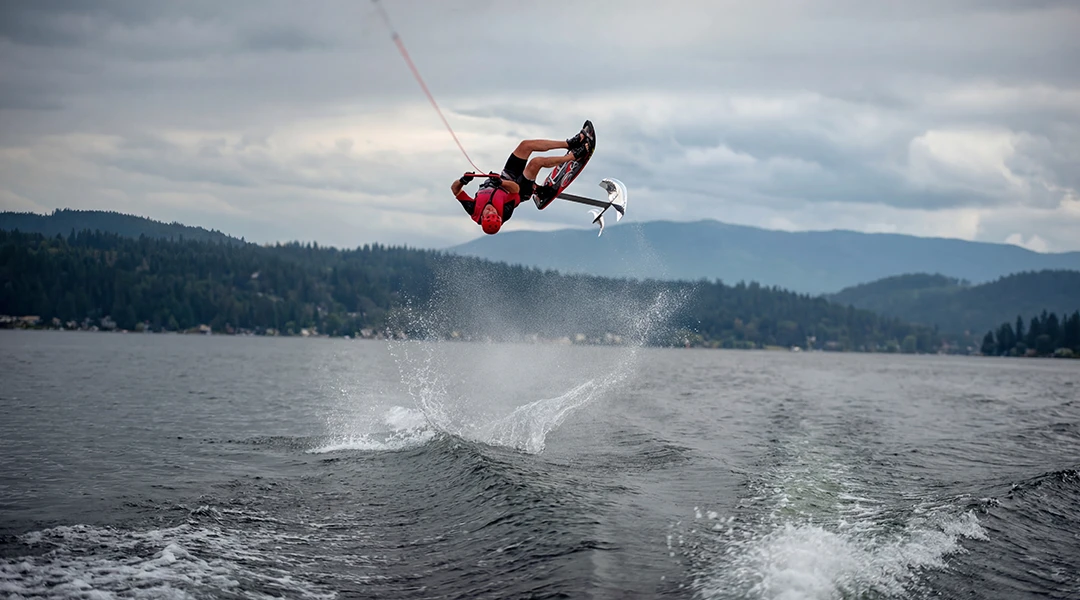
- Trick style: Many airchair tricks involve airs, spins, and flips while being towed, more similar to wake sports than to wave riding.
- Learning pathway: Progression often starts with basic flights and controlled touchdowns before moving into aggressive turns and jumps, then aerial tricks.
Compared to stand-up foiling, it can feel more secure at first because you are strapped in, but crashes can be harder since you are attached to the setup.
Safety and Etiquette
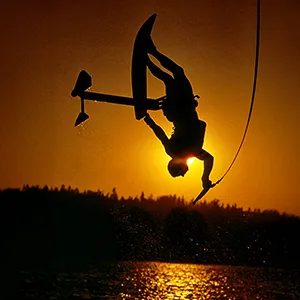
Sit-down foil setups involve speed, sharp wings, and towing forces, so safety matters.
Common safety considerations
- Wear a helmet and an impact vest or life jacket.
- Use an experienced boat driver and a dedicated spotter.
- Maintain clear communication between the rider and the boat crew.
- Stay well away from swimmers, other boats, and floating hazards.
- Be aware that foil wings are sharp and can cause injury on impact.
Primary hazards include hard falls at speed, foil strikes, and collisions with objects. Controlled boat speeds and gradual progression help reduce risk.
Etiquette guidelines
- Do not ride in crowded swim areas.
- Give space to other tow sports and general boating traffic.
- Follow local boating regulations and right-of-way rules.
- Choose open water where your tow path is predictable.
Starter Guide
A beginner can get into sit-down foiling with relatively focused gear and the right environment.
Minimum gear list
- Seated hydrofoil setup with mast and wings
- Tow rope and handle
- Helmet and life vest
- Boat with a knowledgeable driver and spotter
Costs vary widely depending on whether the gear is new or used and on boat access. The overall cost is often higher than human-powered foiling because a boat is required. If you already have access to a boat, the barrier is lower.
Difficulty and learning curve
- Getting short stable flights can happen in early sessions for some riders.
- Consistent control and smooth carving take more time.
- Advanced tricks require significant practice and conditioning.
Good ways to start
- Watch instructional videos to understand body position and common mistakes.
- Start at moderate speeds rather than maximum speed.
- Learn basic hand signals and safety protocols.
- Connect with other riders through general social media and online discussions about hydrofoil tow sport.
If local knowledge is available, learning from experienced riders can shorten the curve. If not, slow progression and conservative speeds are the safest path. If you are lucky, maybe Mike Murphy will show up on your lake someday.
Gear Selection
Sitdown foiling uses a purpose-built seated hydrofoil designed to handle towing, big-air tricks, and a rider strapped into a seat. While exact dimensions vary, there are common ranges and concepts.
Board and seat frame
The board is usually a compact platform with a mounted seat and foot straps. The seat supports the rider's hips and keeps the body stable under tow. Boards are generally shorter than many stand-up foil boards because they do not need to support a standing stance.
Mast length
Common mast lengths are often in the medium to long range, roughly comparable to many tow-and-wake foils. Longer masts allow a higher ride height and more room to carve without the wing breaching. Shorter masts can feel more stable for early learning, but limit how high you can fly.
Front wing
Front wings for seated hydrofoil use often balance lift and speed.
- Beginner riders often benefit from larger-surface-area wings.
- Intermediate and advanced riders may move to smaller wings that are faster and more responsive but require better control.
Exact surface areas vary by design.
Stabilizer and fuselage
Stabilizers add pitch stability. Larger or more stable rear wings can make early flights more predictable. Shorter fuselages feel more maneuverable, while longer ones can add stability.
Some fuselages have multiple holes that allow changing the pitch by moving the wing, rather than requiring different fuselage lengths.
Accessories
Common extras include
- Helmet
- Impact vest or life jacket
- Wetsuit or drysuit, depending on water temperature
- Gloves in cold conditions
- Quality tow rope and handle designed for water sports
- Quick-release safety system
Some riders keep multiple wings to adjust for different speeds and riding styles, though large multi-wing quivers are less common than in other foil sports.
Conditions
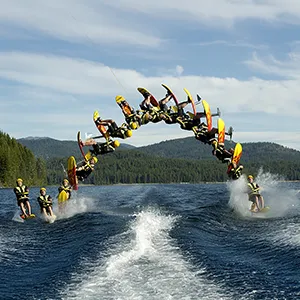
Sitdown foiling depends heavily on tow conditions because the boat provides the power.
Good conditions
- Relatively flat to lightly choppy water
- Low boat traffic
- Predictable water surface
- Open areas with long straight runs
Flat water helps beginners because it reduces unexpected height changes and makes starting easier. Small chop is manageable, but it can make learning harder.
Challenging conditions
- Heavy boat chop
- Crowded waterways
- Debris in the water
- Strong current in rivers
Large waves are not required for this discipline, since the foil is boat-powered. Excessive chop can make control more difficult and increase crash risk.
Where to Go
Sitdown foiling is commonly done anywhere boats are allowed, and there is enough open water.
Inland lakes
Lakes are popular because they often provide controlled environments and manageable chop, especially in the mornings.
Rivers
Rivers can be navigated if they are wide and relatively free of obstacles, but currents and debris require caution.
Ocean and coastal areas
Coastal riding is possible in protected bays or calmer coastal zones. Open ocean swell is generally less ideal for learning because surface conditions can be unpredictable.
Setup and Tuning
Not all seated hydrofoil systems have the same tuning options, but some general principles apply.
Mast position
Sitdown hydrofoils have fixed mast positions. You can get masts of different lengths to tune the type of riding.
Stabilizer and shims
Shims can change the angle of the stabilizer.
- A more positive angle can add stability and lift.
- A smaller angle can reduce drag and increase speed, but it requires more control.
Fuselage length
Longer fuselages usually add stability and smoother pitch control. Shorter ones can feel more agile but less forgiving. Typically, you use a single fuselage on a sitdown hydrofoil; however, some allow you to move the wings back and forth to tune the pitch sensitivity.
Tuning should be changed in small steps. Large changes all at once can make it hard to understand which performance improved or worsened.
Tips and Tricks
- Start at moderate boat speeds rather than fast speeds. High speed does not equal easier foiling.
- Focus on small, calm body movements. Overcorrecting is a common beginner mistake.
- Practice controlled touchdowns instead of trying to stay in the air at all costs. Touching down safely is part of learning.
- Keep your eyes forward, not down at the foil. Looking ahead helps balance.
- Communicate clearly with the boat driver about speed changes.
- Take breaks. Fatigue leads to sloppy technique and harder falls.
Many riders say that the breakthrough moment comes when they stop fighting the foil and start making gentle, deliberate inputs. Watching experienced riders and studying instructional material can also shorten the learning curve.
Skills Ladder
Beginner
At the beginner stage, the focus is on safe starts, short stable flights, and controlled touchdowns.
Riders learn
- Proper seated posture and handle control
- Gradual lift off without overcompensating
- Basic height control using small weight shifts
- Communication with the boat driver
Beginners often use larger, more stable wings and conservative boat speeds to make lift easier and reactions slower.
Intermediate
Intermediate riders work on consistency and maneuvering.
Skills include
- Sustained flights at a steady height
- Gentle carving turns
- Riding in both directions comfortably
- Small wake crossings and surface management
Some riders move to slightly smaller or faster wings for better glide and turning. Tuning may be adjusted for responsiveness.
Advanced
Advanced sitdown foiling includes dynamic riding and aerial maneuvers.
Skills may include
- Aggressive carving and wake use
- Controlled jumps and airs
- Flips and other aerial tricks
- Precise height control at higher speeds
Advanced riders often prefer more responsive setups that trade some stability for performance.
Niche Specific
What is truly specific to sitdown foiling is the seated, strapped-in riding position combined with hydrofoil flight. Unlike most modern foil sports that emphasize standing balance, this discipline uses a seat and foot retention as part of the control system.
It is also tied to boat towing. You cannot practice it alone without a driver and spotter. That makes it more similar to traditional tow sports in logistics and culture.
Sure, we've seen Jake Kinnison going solo on a Sky Ski with a kite, but that would be an exceptionally rare sighting of a solo ride.
Another niche element is the trick style. Many classic maneuvers are developed from the seated position and rope-tension dynamics, which differ from surf or wind-powered foiling.
Common Problems
Porpoising up and down
- Problem: New riders often overcorrect, causing repeated rises and drops.
- Fix: make smaller, slower body movements and maintain a steady speed.
Breaching the foil
- Problem: The wing leaves the water and loses lift.
- Fix: lower ride height and learn subtle pitch control.
Hard crashes
- Problem: Being strapped in can lead to strong falls if control is lost.
- Fix: wear protective gear, ear protection, and progress gradually.
Inconsistent boat speed
- Problem: Sudden throttle changes make learning harder.
- Fix: use a steady, experienced driver.
Fatigue
- Problem: Grip and core fatigue can build quickly.
- Fix: take short sets and rest between runs.
History
Seated hydrofoil tow sports have roots going back several decades. Early experimentation with hydrofoils behind boats dates back to the 1960s, when inventors and water-sport enthusiasts explored lifting surfaces for skis and boards.
In the late 1980s and 1990s, dedicated seated hydrofoil devices became more visible and organized as a discipline. Designs evolved toward a seat mounted on a board with a hydrofoil underneath, towed by a boat. This period was when many people began to recognize sitdown foiling, primarily the Air Chair and Sky Ski, as a distinct hydrofoil tow sport.
Various designers and riders contributed to the development and promotion. Specific claims about who was first can be hard to verify because early experimentation occurred across multiple places, and much of the history is preserved in personal accounts rather than formal records. Mike Murphy is credited with creating the Air Chair and, subsequently, the Sky Ski, along with many other hydrofoil variations (such as the kneeboard hydrofoil).
FAQs
Is sit-down foiling easier than stand-up foiling?
For some beginners sit-down foiling is easier than stand-up foiling, the seated position feels more stable at first, but control and crashes can still be challenging. It is not necessarily easier.
Do I need a special boat?
You need a capable tow boat and an experienced driver, but not necessarily a specialized model. Safe towing and steady speed are more important.
How fast do you go?
Exact speeds vary by rider and setup and can range from 15 to 30mph. Learning is usually done at a moderate pace rather than at maximum speed.
Is it safe?
It can be safe when proper gear, spotters, and good judgment are used. Like many tow sports, it carries an impact risk.
Can I learn without an instructor?
Some people do, but guidance from experienced riders and watching instructional material is preferred.
Which Foiling Freaks are into Sitdown Foiling
-
 Pinto
The old dog of foiling. Checkout Pinto's merch page.
Pinto
The old dog of foiling. Checkout Pinto's merch page.
2021 Blue Springs Hydrofoil Club - Sky Ski - Air Chair
A high-energy compilation from the Blue Springs Hydrofoil Club featuring Sky Ski and Air Chair riders carving smooth wake lines, popping airs, and dialing in classic sit-down hydrofoil style.
If you know this discipline inside and out and want to help review and or edit the info on this page, drop us a line. We will credit you as a reviewer or editor and set you up with a proper bio page with links back to your site.