Boat Wake Foiling
What is Boat Wake Foiling (“Wake Foiling”)?
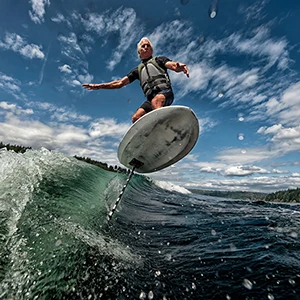
Boat wake foiling, often called wake foiling or wakefoil, is hydrofoiling done behind a boat where the wake becomes the rider’s continuous power source. You start with a tow rope and handle to get moving, then let go of the handle once you are stable and positioned on the wake. From there, you ride the “endless wave” the boat creates by matching your foilboarding speed to the wake’s push, staying in the pocket and using small adjustments in stance and direction to maintain glide and pumping to move around.
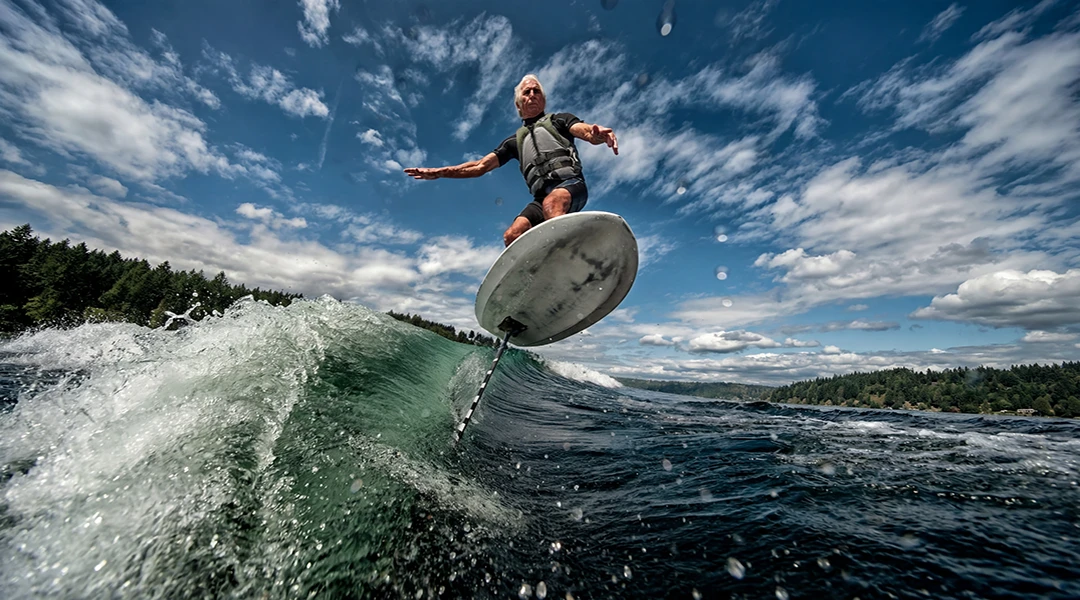
Unlike traditional wakeboarding, where the rope stays in your hands, or wakesurfing, where you ride close to the boat with a very short rope, boat wake foiling is about flying the foil in the wake’s power zone, carving, doing wake foil turns, and even pumping to stay connected when you drift out of the sweet spot. Advanced riders use wake-to-wake foiling skills to transition between wakes, pump back to the wake, and add freestyle elements like jumps and rolls.
Who is into boat wake foiling?
If you are into boat wake foiling, make sure to drop your pin on the Foilers Pin Map and help boat wake foiling claim the leaderboard. Check the pin map and leaderboard for how many people into boat wake foiling have marked themselves on the map.
Be more than just a dot on the map. Join the Foiling Freaks community and create your own foiling profile with a custom handle, rider photos, videos, disciplines, bio, and more.
How it Works
All hydrofoiling uses the same physics: a front wing moving through water generates lift, raising the board above the surface. In boat wake foiling, the power source is the moving wake created by the boat, and the boat’s steady speed is what makes the wake consistent enough to ride without the rope.
A typical session looks like this
- Deep-water or wakeboard-style starts with a tow rope are used. The boat accelerates smoothly, and the rider stands as the board planes.
- As the board gains speed, the foil begins to generate lift, and the rider rises onto the foil. At this stage, controlling pitch is everything. Too much back foot and the foil breaches, too much front foot and you stuff the nose.
- Once stable, you move to the cleanest, most usable part of the wake, often the first or second roller for learning, then let go of the handle. Beginners will let the boat crew pull the rope into the boat, while advanced riders can throw the handle back into the boat.
- From the rope drop onward, you “foil in the pocket” by holding a line on the wake and making small, efficient wake foil carving inputs to stay powered.
Boat wake foiling is typically done at a steady boat speed around 9 to 12 mph, with many setups landing in an 11 to 12 mph sweet spot, and a longer rope in the roughly 70 to 80 foot range when you are riding the second wake or a rope a few feet longer than a surf rope to ride the first wake.
What Makes it Different
Boat wake foiling sits between several related tow sports, but the feel and the equipment priorities are distinct.
Power and constraint
- Wakeboarding is rope-powered the entire time and typically runs at higher boat speeds.
- Wakesurfing is wake-powered, but it happens much closer to the boat, often with a very short rope, and typically requires a larger, steeper wake.
- Wake foiling uses the wake as wakesurfing does, but you are flying above the water on the foil, and you typically start farther back with a longer line to find clean water and a stable wave. Wakesurf ropes are often around 10 to 20 feet, while wakeboard ropes are commonly far longer, roughly 65 to 85 feet. Wake foiling commonly uses longer lengths than wakesurfing, and beginners often target a length that places them on the second roller. As you advance, you may use a shorter rope (still longer than a wakesurfing rope) to ride the first wake.
Speed and wake choice
- Wake foiling is designed around low-speed lift with a controlled top-end. The goal is not maximum speed; it is efficiency and stability at wake-foil speed (9 to 12mph), so you can stay flying while carving and transitioning.
- Wake shapes also matter. A longer, broader wake is usually preferable to a short, steep wake.
Foil and mast priorities
- Beginners benefit from stability and predictable lift at low speeds. Shorter masts are commonly used for learning behind the boat, including a 24-inch (about 60 cm) option specifically designed for low-speed, learning-friendly wake-foil use.
- Typical mast lengths for boat wake foiling are in the 70-80cm range.
- As skills improve, riders often move to longer masts for more clearance and more aggressive edging angles, especially if they want bigger wake jumps or sharper wake foil turns.
Technique differences that matter
- Rope drop is a core milestone that is absent in most tow sports.
- “Pump back to the wake,” and wake-to-wake transitions are discipline-specific skills. A common method is to carry speed off the wake, avoid hitting turbulent sections that slow you down, then pump in the flats until the next usable wake face lines up again.
Safety and Etiquette
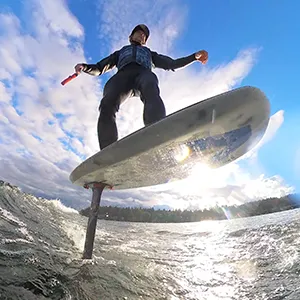
The main hazards are the tow rope, impacts with the foil and board, and collisions with objects in the water. Practice safe riding techniques to not get caught up in the rope or handle, and learn how to fall or push away from the board properly when crashing to avoid contacting the board and foil.
Primary safety practices
- Use a dedicated spotter on the boat who watches the rider, manages the rope, and communicates with the driver.
- Wear a properly fitted life jacket and strongly consider a helmet and impact vest, because falls at speed can hit like a solid surface, and the foil and board can strike you.
- Manage the rope. After a rope drop, keep the line away from the rider and foil, and avoid leaving slack near the riding zone.
- Respect propeller risk. Boats with outboard motors require extra separation from the stern and prop, and a conservative approach is to ride farther back on later wakes to maintain a safety buffer.
- Pick an appropriate riding area: open water, clear of swimmers, docks, anchored boats, and shallow hazards. Maintain appropriate spacing.
Etiquette and right-of-way mindset
- Treat the towing lane like a moving hazard zone. Do not run repeated passes through crowded water.
- Keep a predictable line and communicate with other boaters. Your driver should follow local boating rules for passing distance and wake responsibility.
- If other people are in the water, do not foil near them. Foilboarding requires extra margin because of the underwater wing.
Starter Guide
A beginner can get into wake foiling with a foil board, a patient driver, and a simple progression plan.
Minimum gear list
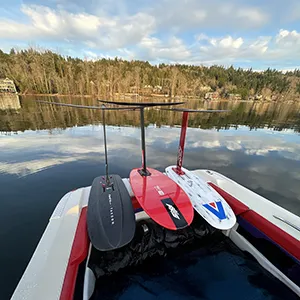
- Foil board and hydrofoil setup (mast, fuselage, front wing, rear stabilizer, hardware)
- Tow rope and handle suitable for tow foiling, with length options to place the rider on the most stable part of the wake. Pick a rope length for either the first wake or the second wake. Foiling ropes will typically be slightly longer than a standard wakeboard or surfing rope to allow the rider to pull up outside the wake, then drift into it once stable.
- Helmet and impact vest for wake foil safety
- Basic tool kit and spare hardware (foils are bolted systems, and you do not want a session ended by a missing bolt)
Cost ranges
- New, complete wake foil packages commonly land in the low-to-mid thousands of dollars, with many retail complete setups clustering in the high $1,000s to the $3,000s, and premium builds higher, depending on materials and included components.
Difficulty ranking and learning curve
- Difficulty: moderate. The wake provides consistent power and a controlled environment, but balance and pitch control on a hydrofoil have a steep learning curve.
- Typical progression: first learn stable rides on the rope at a conservative speed, then learn controlled lift and touchdowns, then attempt the rope drop once you can hold a steady line in the pocket. Wake foil progression after the rope drop focuses on carving control, speed management, and eventually wake-to-wake transitions.
How to learn efficiently
- Watch how-to videos that show body position, foil pitch control, and rope drop technique from different angles.
- If possible, get a coaching session. One correct explanation of stance and pitch control can replace many frustrating attempts.
- Boat wake foiling is a team sport. A good driver who knows how to properly pull up a foiler makes all the difference. Driving for wake foiling requires a softer and more nuanced approach than pulling up a wakeboarder or a slalom skier.
- Find a local community through social media or local water-sports circles so you can learn driver communication, safe towing lanes, and what boat settings work on your local water.
Wake foil tips that speed up success
- Start at a conservative speed and use a longer line to find clean water.
- Learn in calm flat water. Trying to learn in heavy boat chop or on a windy day is not ideal.
- Aim to ride the smooth, stable section of the wake before trying tricks.
- If you drift out, keep calm, maintain speed, and use small pumps to reconnect and pump back into the wake rather than making large corrections.
Gear Selection
Boat wake foiling gear is built around low-speed lift, predictable control, and the ability to ride in the pocket after dropping the rope.
Board
- Common wakefoil board lengths cluster from about 3’6" to 4’10".
- For wake foil beginner setups, longer boards around 4’4" to 4’10" make it easier to keep the board from dipping and stalling the foil.
- As skills improve, many riders move down into the 3’6" to 4’2" range for faster response and tighter wake foil turns.
- There is also a large-volume learning path: foilboards around 120 to 150 liters can let a rider kneel or stand to start, reducing the difficulty of getting pulled onto the board.
Mast
- A common starting point for wake foiling is a 70 cm mast. It keeps the ride height manageable while still working well for riding in the power zone.
- Wake foiling masts are commonly in the 70-80 cm range for general use.
- Longer masts increase clearance but require more attention to depth and weeds.
- The power zone of a wake is the same distance down as the wake is high. Taller masts mean you will have to ride higher on the foil to keep the wing in the power zone of the wake.
Front wing and stabilizer
- The front wing drives lift and wake foil speed range. For a typical adult rider, wake foiling front wings commonly fall in the 850-1,600 cm2 range, with beginners benefiting from the larger end of that range.
- A typical wake foil is a two-wing system: a larger front wing and a smaller stabilizer. The combination of wings helps determine the type of ride (casual, surfy, pumping, freestyle, etc.)
- More advanced riders may use high-aspect (thin and narrow) wings for greater speed and faster response.
Fuselage
- Many systems offer fuselage options in the 50-70 cm range. 60cm is the typical fuselage length for wake foiling.
- Longer fuselages increase pitch stability and make the foil feel smoother, while shorter fuselages feel more reactive and turn quicker.
- For wake-to-wake foiling and quick direction changes behind the boat, a shorter fuselage is often preferred because it demands faster turning.
Accessories
- Tow rope and handle for tow foiling starts, plus a plan to retrieve and stow the rope after the rope drop.
- Flotation and head protection are common choices for wake-foil safety because falls can be high-energy, and the foil is a hard piece of equipment underwater.
- A basic tool kit and spare fasteners matter because the hydrofoil setup is bolted equipment with lots of small parts.
Conditions
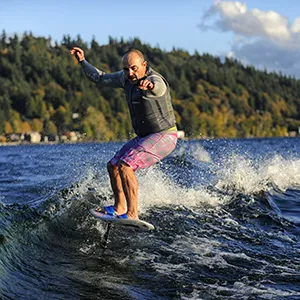
Boat wake foiling is all about wake quality, visibility, and space.
Best conditions
- Clean, predictable wakes with enough push to stay foiling in the pocket after the rope drop.
- Light wind and lower surface chop make it easier to control height, carve smoothly, and manage recoveries.
- Even when the surface is not glassy, the foil can smooth out the ride because you are flying above the chop once stable.
Challenging conditions
- Heavy boat traffic that turns the water into stacked rollers makes riding much harder because the wake face becomes inconsistent, and you spend more time reacting to conditions.
- Strong crosswinds can break up the wake faces and generate spray, reducing visibility and making it harder to hold a clean line. Headwinds can also make it more difficult to maintain speed.
- Shallow water, weeds, and sandbars are a real constraint because the mast and wings need depth, especially as you move to longer masts. A single small weed hooked on the mast can dramatically alter the foil's performance. And too many weeds make it impossible to ride a foil through them.
Where to Go
In general, the best locations for wake foiling are the same places that make wakesurfing and wakeboarding enjoyable: open water, controlled traffic, and safe towing lanes.
Strong general choices
- Inland lakes and reservoirs with long, straight runs and protected coves for calmer water.
- Wide rivers with low current and enough width for a boat to run predictable passes without crowding other users.
- Protected bays and large harbors can work if boating rules, traffic, and water depth allow towing.
Known hot spots you can use as a clue
- Locations that host major tow-wake events tend to have strong local communities, towing infrastructure, and access to water.
- Wake foiling is not the same competition scene as wakesurfing, but it thrives in the same kind of water and boating culture.
Setup and Tuning
Wake foil tuning is about balancing stability, turning radius, and the effort required to stay in the wake pocket.
Mast position in the tracks
- Moving the mast forward generally loosens yaw and reduces the “driving” feel, while moving it back tends to add drive and make yaw feel stiffer.
- Practical wakefoil use: if you feel like you have to constantly hunt for the pocket or the foil wants to wander, a slightly more “drivey” setup can help you hold a line. If turns feel sluggish and you cannot tighten your wake foil carving, a slightly more maneuverable balance can help.
Stabilizer size and shims
- A larger stabilizer increases stability and gives you more to push against. A smaller stabilizer reduces drag and can feel quicker rail-to-rail.
- Changing the shim angle changes the stabilizer’s angle of attack, which affects pitch feel and drag. More shim is commonly associated with more drag and a different turning feel.
- Not every hydrofoil setup offers shim options, so only tune what your system can actually adjust.
Fuselage length
- Longer fuselages increase pitch stability because the stabilizer sits farther back, creating a longer lever arm.
- Shorter fuselages feel more reactive and can be better for tight wakefoil turns and quick wake-to-wake direction changes.
Mast height as a tuning choice
- A 70-80 cm mast is a good balance for learning and progression behind the boat.
- Longer masts can expand your turning envelope and reduce breach risk in aggressive carves, but they demand more depth awareness and staying in the wake’s power zone.
Tips and Tricks
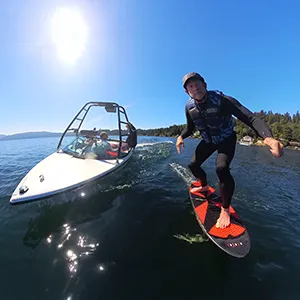
Speed, line length, and body position solve most wake-foil beginner problems faster than brute-force methods.
Dial the boat speed before you change gear
- Most beginners learn around 9 to 12 mph, and more advanced riders often cruise faster depending on foil size and style.
- If the wake loses push and feels “soft,” you may be out of the foil’s efficient range for that wake size. Adjust speed incrementally.
Use rope length to find clean power
- A long rope, around 70 to 80 feet, is commonly used to place the rider in a cleaner, usable part of the wake.
Make the start boring on purpose
- Start with low, controlled flights. The goal is not height. The goal is stable pitch and a calm line so you can progress to dropping the handle.
Fix the classic beginner errors
- Breaching: too much rear-foot pressure. Shift slightly forward, lower your flight height, and keep your knees soft.
- Stuffing the nose: too much front-foot pressure or forcing the board down. Let the foil carry you once you are flying.
- Too much pop: if you pull up too close to the forming wake, the added wake push can pop you up too fast.
- The torso twist: if you hold the handle with both hands during the pull-up, your torso twist can throw you off. Let go of the rear hand right away on the pull-up to align your torso and legs.
- Airborne at the start: this is all in the boat driver's hands. Too hard a pull can send you airborne during the pull-up. Wake foiling uses a slower, softer touch on the throttle and a smoother acceleration.
Learn wake-to-wake foiling with a clean line
- For wake transfers, avoid flying directly through the turbulent wake in front of you because it bleeds speed. Carve out clean, keep speed into the flats, then pump back to the wake and reconnect on an angle instead of hitting the wake straight on.
Skills Ladder
Beginner
- The first milestone is a consistent start on the tow rope with controlled body position. You want the board tracking flat on the surface, knees bent, and your weight centered so the foil does not try to lift aggressively before you are stable.
- The next milestone is controlled “micro flights.” You deliberately lift the board for 1 to 3 seconds, then set it back down. This teaches pitch control without the unpredictability of sustained height.
- The third milestone is sustained foiling while still on the rope. You hold a steady line, manage your wake foil speed, and lower your ride height whenever you feel unstable. Let the spotter manage the rope tension for you.
- Typical gear for a wake foil beginner is maximum stability: a larger, lower-speed front wing, a more pitch-stable setup, and a shorter mast, if available. A long tow line and a gentle pull-up speed also make the learning phase dramatically easier.
Intermediate
- You learn to place yourself in the clean part of the wake and ride in the pocket with a slack line. This is where you stop being “towed” and start being “wake powered.”
- Moving to the rope drop: let go at the right moment, keep your eyes forward, and immediately focus on holding the pocket. At first, let the boat crew handle the rope. Eventually, you will be able to toss the rope where you want it.
- You add wake foil turns and wake foil carving without climbing too high. The pocket rewards smooth edge pressure and punishes sudden pitch changes.
- Gear usually shifts toward more maneuverability: a smaller front wing, a slightly longer mast for clearance, and a tuning setup that lets you tighten turns without feeling twitchy.
Advanced
- You can move between wakes, reconnect, and pump back to the wake when you drift out of the power zone. That is the bridge from simple pocket-riding to wave-to-wave foiling behind the boat.
- You start linking higher-risk moves, such as faster carves, wake jumps, and freestyle tricks.
- Gear trends toward performance: smaller, faster wings, more responsive stabilizer choices, and shorter, more maneuverable configurations, if your equipment supports them. At this level, you tune for the riding you actually do, not for maximum forgiveness.
Niche Specific
Boat wake foiling is defined by one unique constraint and one unique advantage. The constraint is that the wake is your engine, so you must match the boat’s wake shape and speed and stay in the pocket. The advantage is that the boat gives you a repeatable, endless wave on demand. That makes wake foiling one of the most controllable ways to learn foilboarding skills like pitch control, carving, and speed management.
This niche is also teamwork-driven. A good wakefoil session depends on the driver holding steady speed and predictable lines, and the rider communicating clearly. Unlike wind-powered hydrofoiling, you are not negotiating gusts. Unlike surf foiling, you are not negotiating an unpredictable wave set. Your challenge is precision: staying within a narrow band of wake energy and making small corrections rather than big moves.
Common Problems
Not getting up consistently
- Problem: riders try to stand too early, pull against the rope, or let the foil lift before they are stable.
- Fix: keep the board on the surface first, then practice brief lift-and-settle repetitions until you can control pitch. Use a slow, progressive pull and do not rush the stand. Fine-tune your foot position on the board as needed.
Over-foiling and breaching
- Problem: the foil climbs too high, ventilates, and drops, often in a cycle that feels like porpoising.
- Fix: lower your ride height on purpose, soften your knees, and shift slightly forward to calm the foil. Treat “low and level” as the default until you can hold height without tension.
Losing the pocket after the rope drop
- Problem: riders drift too far back or too far out from the wake, so the wake no longer powers the foil.
- Fix: Make your first goal after the rope drop a calm line in the pocket. Carve gently back toward clean energy instead of making a hard turn that scrubs speed. If you do drift out, carry speed and reconnect smoothly rather than stomping the board.
Falls close to the foil
- Problem: Trying to save a bad moment causes riders to fall toward the board and foil.
- Fix: When you are going down, commit to separating from the foil. Jump away from or push the board away from you and prioritize clearance. Cover your face with your arms as you are falling and keep your hands up until you are stopped and have sight of the board.
Rope and prop awareness mistakes
- Problem: Slack rope drifts into the riding zone or the rider drifts toward the stern while focused on balance.
- Fix: treat rope handling as part of the sport. After the rope drop, the crew retrieves and stows the line immediately, and the driver maintains a safe towing lane with no unnecessary tightening turns near the rider. Falling into a rope trailing behind the boat can have serious consequences.
World Records
Most wake crossings in 60 seconds on a boat wake foil
- Current record: Boat wake crossings in 60 seconds - 39. Holder: Brian Grubb
- Previous record: Boat wake crossings in 60 seconds - 35. Holder: Brian Grubb
Tallest stand-up foil board ridden while towed
- Current record: 15-foot stand-up foil board ridden under jetski tow. Holder: Charlie Cohn
Most Lake Water Filtered Through the Nostrils
- Current record: Lake Sammammish Edition. Holder: David Hobbs
Know about a broken record, an update needed to an existing world record, or a brand new world record that deserves to be in the public record? Submit it.
World Firsts
- First Airwalk on a foil in a wake-boat setting: First Airwalk on a foil in a wake-boat setting. Holder: Ozzie Kroop
- First back mobe on a wake foil: First back mobe on a wake foil. Holder: Austin Tovey
- First backflip in the second wake or second wave on a wake foil: Backflip in the second wake or second wave - public world-first claim. Holder: Simon Nicolas Boucher
- First frontside 360 backflip on a wake foil: First frontside 360 backflip on a wake foil. Holder: Nikolas Plytas

Know about a broken record, an update needed to an existing world first, or a brand new world first that deserves to be in the public record? Submit it.
History
Boat-towed hydrofoiling predates modern foilboards by decades. In the early 1960s, Walter Woodward developed one of the first waterski hydrofoils, using a winged underwater assembly to lift the rider above the surface as the boat pulled.
The predominant foiling sport from the 1990s to the mid-2000s was the sit-down hydrofoil by Air Chair and Sky Ski. There was some experimentation with stand-up towed versions of the sit-down foils, using click-in bindings for towed stand-up riding and big-wave foiling.
Wake foiling, as a recognizable “behind-the-boat foilboard” discipline, emerged later alongside the broader boom in hydrofoiling across multiple sports. By the mid-2010s, wakesports media and manufacturers were actively positioning wakeboarding’s own wakefoil offerings, including product lineups explicitly framed for wake foiling behind boats and PWCs.
FAQs

What boat speed is typical for wake foiling?
Most riders learn in a low-speed band where the foil can lift cleanly, and the wake remains mellow. A common working range is about 10 to 12 mph, adjusted for rider weight, wing size, and wake shape.
Do I need a special boat to foil behind a boat?
You do not need a surf-specific boat to start. You need a boat that pulls smoothly and holds a steady speed. Consistency matters more than maximum power for wake foil progression. Any boat that can generate a clean wake of even a couple of feet high can be used. Standard ski boats and surf boats are the preferred choices.
Is wake foiling harder than wakesurfing?
Getting up on a wake foil is usually harder than getting up on a wakesurfer because the foil is low-drag and very sensitive to pitch. The learning curve is typically steeper and longer, measured in days or weeks.
Should I use a wakesurf rope or a wakeboard rope?
For learning wake foiling, a longer rope, like a wakeboard main line, is a practical starting point because it helps you find clean water and a usable part of the wake before you attempt the rope drop. For the first wake foiling, use a rope a few feet longer than a surf rope. For second-wake foiling, use a rope that is up to 10 feet longer than a wakeboard rope.
How deep does the water need to be for wakefoil riding?
Deep enough that your mast and wings never contact the bottom, even when you drop off foil. If you ride shallow water, you are not just risking equipment damage; you are risking a sudden stop that can cause a high-energy fall.
Which Foiling Freaks are into Boat Wake Foiling
-
 Grindle Gremm
Invert addict. Rope anarchist. Certified chaos technician. Checkout Grindle Gremm's merch page.
Grindle Gremm
Invert addict. Rope anarchist. Certified chaos technician. Checkout Grindle Gremm's merch page.
-
 Johnathan Honeybadger
Wake-foil menace. Propeller-hat philosopher. Unofficial official mayor of the boat. Checkout Johnathan Honeybadger's merch page.
Johnathan Honeybadger
Wake-foil menace. Propeller-hat philosopher. Unofficial official mayor of the boat. Checkout Johnathan Honeybadger's merch page.
-
 Bucklehorn Blue
Clipped in and lit up. Checkout Bucklehorn Blue's merch page.
Bucklehorn Blue
Clipped in and lit up. Checkout Bucklehorn Blue's merch page.
-
 Ruckus Vandalore
It looks sketchy. Lets do it. Checkout Ruckus Vandalore's merch page.
Ruckus Vandalore
It looks sketchy. Lets do it. Checkout Ruckus Vandalore's merch page.
How to Foil behind a boat, wake foiling with Brian Grubb
Everything you need to learn how to wake foil behind a boat. An outing with Brian Grubb, 2 times World Wakeskate Champion and Red Bull athlete to learn how to foil behind the boat.
If you know this discipline inside and out and want to help review and or edit the info on this page, drop us a line. We will credit you as a reviewer or editor and set you up with a proper bio page with links back to your site.