Wing Foiling
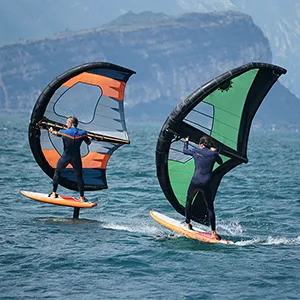
What is Wing Foiling (Winging)?
Wing foiling, often called winging, is a wind-powered hydrofoil discipline in which the rider holds an inflatable hand wing and rides a board with a hydrofoil mounted beneath it. As the board gains speed, the foil generates lift, raising the board above the water, which is why it feels smooth and fast once you are flying. Beginner boards are typically larger and have higher volume, while advanced boards get smaller and can partially sink under the rider at rest.
A good way to picture wing foiling is that it blends elements of windsurfing, kiting, and foiling, but the wing is handheld rather than attached to a mast or lines. That makes it very versatile for flatwater cruising, wave riding, and even jumping once a rider has the skills.
Who is into wing foiling?
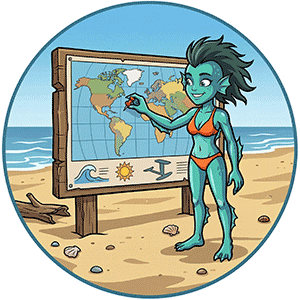
If you are into wing foiling, make sure to drop your pin on the Foilers Pin Map and help wing foiling claim the leaderboard. Check the pin map and leaderboard for how many people into wing foiling have marked themselves on the map.
Be more than just a dot on the map. Join the Foiling Freaks community and create your own foiling profile with a custom handle, rider photos, videos, disciplines, bio, and more.
How it Works
The power source for wing foiling is wind. The rider uses the handheld wing to create pull; the board accelerates, and the underwater foil lifts it as speed increases. The physics of lift comes from the foil moving through the water, while the wing provides the wind power that gets everything moving.
A typical beginner session starts with choosing a safe launch area and conditions, checking gear, and walking out until the foil has enough water depth to avoid hitting bottom. A common safe-launching habit is to keep the board on the upwind side and the wing downwind as you enter the water. Once clear of shore traffic, the rider gets on the board, powers the wing, builds speed, and starts with short, low flights before progressing to longer rides.
What Makes it Different
Compared with other foiling disciplines, wing foiling is distinct because the rider carries the power source in their hands rather than using a tow rope, motor, or a kite with long lines. That changes everything about setup, launch, and maneuvering. It also means wing foiling can work in many locations without a boat, as long as there is suitable wind and room.
Gear setup also differs from many other foil sports. Beginners usually want a more forgiving setup, which generally means a higher-volume board, a manageable wing, and a stable foil. One beginner guideline often used is a board volume roughly 30 to 50 liters above body weight in kilograms to make early sessions more stable while learning wing control and foil balance.
Winging also has a notable learning curve at the start, as the rider learns several skills at once: wind handling, board balance, and foil control. Retail beginner package descriptions and training-focused guides often emphasize that the early phase is steep, but setup choices can make it much easier.
Safety and Etiquette
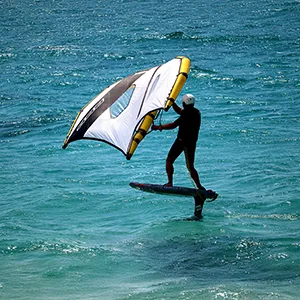
Wing foiling has real hazards, especially for beginners, and most are manageable with good habits. The big risks are collisions, foil contact, bad wind direction, and getting stranded when the wind drops. A major wing-specific issue is visibility because the wing creates a blind spot, so riders need to regularly lift and check under the wing before turning or bearing off. Offshore winds are also a common no-go for beginners because they can push you away from shore.
Basic safety gear for winging usually includes a wing leash, board leash, buoyancy or impact vest, helmet (especially in shallow, rocky, or crowded spots), and thermal protection appropriate to water temperature. It is also smart to practice self-rescue, which usually means staying with your board, keeping the wing attached, and paddling or drifting to the nearest safe landing if the wind dies or something breaks.
Etiquette on the water matters a lot. Many wing spots follow sailing-style right-of-way basics, including port tack giving way to starboard tack, windward giving way to leeward, and overtaking riders keeping clear. Even when you technically have the right of way, avoiding contact is the priority. Also, provide ample space for swimmers, paddlers, surf takeoff zones, and launch/landing lanes.
Starter Guide
A practical beginner path is to start with a lesson or two, then rent gear before buying. This helps you learn safe launches, wind judgment, and foil awareness with supervision, and it reduces the chance of buying the wrong setup too early. Lesson pricing varies widely by location and format, but published examples and pricing roundups typically fall within a broad range of $50 to $200 per hour, with many private lessons clustering above that midpoint.
Minimum gear list for a beginner wing foiling setup
- Wing
- Foil board
- Hydrofoil
- Board leash and wing leash
- Helmet
- Buoyancy or impact vest
- Wetsuit or other thermal protection
- Pump and basic safety accessories
That four-part core gear list (wing, board, foil, plus safety gear) is the standard starting point, and beginner-friendly board volume is especially important for stability.
For cost ranges, new complete setups vary widely. Current package listings show beginner and midrange wing foil packages commonly priced around the low-to-mid four figures, with examples on the low end at $1,599 and many complete wing foil packages in the $2,700 to $4,000 range. Premium complete packages can go well above $4,000, reaching $5,000 or more. Renting first can reduce upfront costs, and some schools also offer hourly full setup rentals.
Difficulty ranking is subjective, but for most beginners, wing foiling may rank around 7/10 at the start because you are learning wind handling and foil balance at the same time. The first hurdle is usually just getting stable and making short, controlled flights. Progress tends to improve once you can consistently launch safely, ride both directions, and recover.
To get started, watch beginner how-to videos, book a lesson in safe conditions, and look for local winging communities on social media and general foiling forums. Local communities are among the fastest ways to learn about your launch spots, wind patterns, and etiquette.
Gear Selection
For wing foiling, gear is usually chosen as a system rather than one part at a time. The big variables are board volume, handheld wing size, foil front wing area, mast length, and how stable or loose you want the foil to feel. Beginner setups usually prioritize easy starts and stability, then move smaller as skills improve.
A practical board progression for winging is to start with larger, higher-volume boards, then move to smaller boards as you improve. Board size ranges by skill level: roughly 160 to 250 liters for very beginners, 120 to 200 liters for beginners, 80 to 150 liters for intermediates, and 60 to 120 liters for advanced riders, with shorter, narrower boards as skill increases. These are only starting ranges, but they are useful for planning a first setup.
For the handheld wing, size is usually chosen by wind and rider weight. For beginners, some common ranges are about 4.5 to 5.5 m² for lighter riders and 5 to 6.5 m² for heavier riders at 12 to 16 knots, then stepping down as the wind increases. Many beginners progress faster in winds of 12 to 20 knots than in very light or very strong winds.
For the foil itself, beginner front wing areas are often larger to help with early lift and lower takeoff speed. A weight-based beginner chart shows approximate front wing ranges of 1300 to 1600 cm² for lighter riders, up to 2100 to 2500 cm² for heavier riders, with board volume and wing size increasing with rider weight.
Mast length is another major choice. A common learning path is to start with shorter masts, then longer masts as control improves. About 60 to 70 cm for beginners, around 70 to 85 cm for intermediate riders, and longer masts for more advanced use, depending on depth and chop.
Fuselage length and stabilizer size strongly affect feel. Longer fuselages generally add longitudinal stability and make the foil calmer, while shorter fuselages feel more agile and reactive but require more control.
For stabilizers, larger tails tend to feel calmer and more stable, while smaller tails reduce drag and feel looser and quicker. Larger stabilizers in the mid 200 cm² and up for maximum stability, medium sizes in the 200s for balanced setups, and smaller, low-200-and-below tails for more advanced, reactive setups.
Common accessories for wing foiling include a board leash, a wing leash, a helmet, an impact vest, foil tools and hardware, a pump, and repair items. Your checklist should also commonly include wetsuit items, gloves, or boots depending on temperature, spare screws, and a waterproof phone, satellite rescue beacon, or radio setup.
Conditions
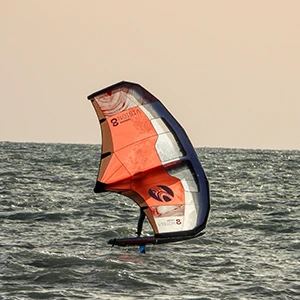
Good wing foiling conditions are usually steady wind, safe launch access, enough water depth for the mast and foil, and enough space to stay clear of swimmers, boats, and other riders. You need wind, water, and lots of space.
For many riders, a useful wind range is roughly moderate, not extreme. The middle wind ranges are the easiest learning zone, and a broad optimal wingfoiling window is roughly 12 to 25 knots, with steadier wind preferred over gusty wind.
Inland and coastal conditions can ride very differently even at the same forecast speed. Lakes and inland spots often have pulsing wind and lulls, so riders may use slightly larger wings, while coastal wind is often steadier and can support more controlled, mid-range wing choices.
Bad conditions for learning usually include offshore wind, strong gusts, irregular wind directions, heavy traffic, and strong current if you do not already have solid upwind skills and self-rescue ability. Blind spots under the wing require actively checking in front and downwind before transitions.
Where to Go
Wing foiling works in both ocean and inland locations, but the best spots usually have steady wind, manageable chop, safe launches, and enough space to drift and return while learning. Large lakes can be excellent if they have consistent thermal wind and open shore access. Coastal bays and open ocean beaches can be excellent when wind direction and launch safety are favorable.
Some widely recognized winging hotspots show up repeatedly in event circuits and regional guides. The global wingfoil tour site lists event locations such as Leucate (France), Tarifa (Spain), and Cauipe (Brazil), which reflects how established those areas are for competition and reliable conditions.
In the United States, Hood River is a standout example, frequently described as a wind hub with consistent breezes and long runs.
In Europe, Lake Garda is a common reference point for its thermal wind patterns and broad wing access on many beaches in the northern part of the lake. Tarifa is another major destination, and local guides often describe two common wind patterns there: Poniente (typically steadier, side-on, often with waves) and Levante (often stronger and more gusty, flatter water).
Setup and Tuning
Small setup changes can make a big difference in wing foiling. This includes mast track position on the board, stabilizer size, shim angle, and fuselage length. These changes affect stability, lift, drag, turning feel, and the foil's reactivity.
Mast track position changes the board-to-foil balance. Moving the mast forward can reduce drive and increase yaw looseness, while moving it back can add drive and make yaw feel stiffer. Exact positions are not universal because tracks, boards, and foils vary, so there is no one setting that applies to all setups.
Stabilizer size is one of the biggest feel changes. Larger stabilizers generally make the foil calmer in pitch and more stable, but add drag and slower turning. Smaller stabilizers feel faster and looser, but are less forgiving. This is why many riders start with a larger stabilizer and then reduce it later.
Shims adjust the stabilizer angle, affecting lift and stability. Making the stabilizer angle more negative increases the stabilizing effect and lift, but also increases drag and reduces top speed. This is a useful tuning lever when the foil feels too twitchy or hard to control. The direction of the stabilizer angle also depends on whether the wing is mounted on the top or bottom of the fuselage.
Fuselage length is a longer-term tuning choice. Longer fuselages tend to smooth out pitch and improve stability, while shorter fuselages are more reactive and maneuverable. For winging, a longer fuselage is often easier during early progression, and shorter options become more attractive later for tighter turns, tricks, or more playful handling.
Tips and Tricks
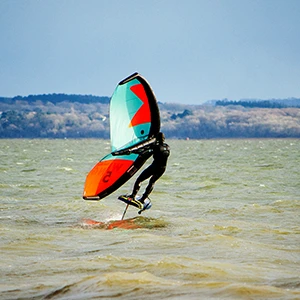
A good beginner progression for wing foiling is to learn the wing-and-board-handling sequence first, then combine it with foil flight. Break your learning into handling and flipping the wing, learning to ride on knees, sailing upwind on knees, then standing, and only after that, focusing on the first controlled flights. That sequence is common because it reduces the number of things you have to learn at once.
When rigging for a session, treat charts as a starting point, not a rule. A beginner wing-size guide recommends checking the actual conditions at the beach, including flags, water texture, and what other riders are doing, then adjusting wing choice if needed. Coming back in to swap wing sizes is normal, even for experienced riders.
If you are learning in stronger currents, chop, or crowded areas, err on the side of more float and more power rather than smaller performance gear. Check that you can get back to your launch, using a buddy system, and staying within your ability.
Do not rely on wing windows alone for visibility. Note the blind spot created by the wing and lift the wing to check ahead and downwind before gybes and transitions. That one habit prevents a lot of close calls.
For etiquette, wing foiling follows basic sailing-style right-of-way rules in many shared spots, including starboard tack priority, maintaining course while passing, and giving way when turning. Also, keep clear of swimmers, waders, and beachgoers, and give commercial traffic a very wide berth where applicable. Always check local rules because launch rules and traffic patterns vary by site.
Skills Ladder
Beginner
In wing foiling, most beginners start with a stable setup and focus on a short list of skills first: handling the wing on land, kneeling and standing on the board, controlling direction, and making short powered runs before fully foiling. Use a larger, more stable board, a bigger low-speed front foil, and a shorter mast at first, so touchdowns are less dramatic, and takeoffs happen at a lower speed. Start with a larger wing size (depending on rider weight and wind) and then size down as control improves.
Intermediate
The intermediate phase is where riders move from brief flights to consistent foiling and begin linking maneuvers. Typical milestones are staying on foil through turns, riding both directions comfortably, improving upwind and downwind angles, and learning basic jibes and tacks. Gear usually starts to shrink here, with less board volume than a beginner board, a longer mast, and a foil setup that trades some lift for more speed and control.
Advanced
Advanced winging usually means confident transitions, stronger wind control, better wave reading, and discipline-specific goals such as freeride jumps, surf-style wave riding, racing starts, or long downwind runs. At this level, riders often use smaller boards, narrower performance boards, longer masts, and more specialized foil shapes depending on whether they want efficiency, speed, turning, or lift.
Niche Specific
What makes wing foiling distinct from other foiling sports is the handheld inflatable wing. It is not attached to the board like a windsurf foil rig, and it does not use long flying lines like kite foiling. That gives winging a unique feel because riders can depower quickly, carry the wing more easily, and “flag” it while gliding on swell.
Another niche-specific point is the extent to which the discipline has become broad. Wingfoiling is a fast-growing hybrid sport and organizes multiple competitive formats, including Surf-Freestyle, FreeFly-Slalom, Wave, and Big Air. That mix is unusual because it supports both expressive surf-style riding and structured race formats under the same umbrella.
Wing foiling also spans a wide range of use cases. Riders can freeride on flat water, surf ocean swell, ride downwinders, or race. The racing side has matured, and freeride and family-friendly entry points are a big reason winging spread so fast.
Common Problems
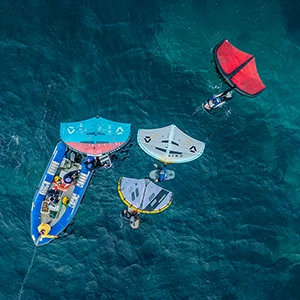
Getting overpowered or underpowered
A common beginner issue is poor wing trim. Riders often sheet in too much, hold the wing at the wrong angle, or choose conditions that are too gusty. The fix is usually better wing angle control, smoother sheeting, and practicing in steady wind before chasing stronger sessions.
Trouble standing and balancing
Another frequent problem is losing balance during the first stand-ups or while trying to accelerate. This is most likely due to body position and foot pressure errors, especially failing to keep weight centered or not using the legs actively enough. A larger board and a calmer location help a lot early on.
Looking at the gear instead of where you want to go
Beginners often stare at the wing or the front foot, which worsens steering and balance. A common fix is to keep your head up and look downwind or toward the next target, which improves posture and direction control.
Struggling to get on foil
This is usually a mix of speed, timing, and stance. Many riders try to force lift by pulling harder on the wing instead of building smooth board speed first. A beginner foil with more lift, proper mast/foil placement, and patient acceleration usually works better than brute force.
Touchdowns during turns
Intermediate riders often touch down while learning jibes and tacks because they lose speed or move the wing too late. The solution is to repeat in moderate wind, enter turns with enough speed, and practice transitions on both sides.
World Records
Fastest documented solo wingfoil circumnavigation of Martha's Vineyard
- Current record: Nevin Sayre's 4h 55m Martha's Vineyard wingfoil circumnavigation - 4h 55m. Holder: Nevin Sayre
- Previous record: Nevin Sayre's 6h 12m Martha's Vineyard wingfoil circumnavigation - 6h 12m. Holder: Nevin Sayre
Fastest Round Texel wingfoil completion
- Current record: Oscar Leclair's 2h 02m 51s Round Texel wingfoil completion - 2h 02m 51s. Holder: Oscar Leclair
- Previous record: Chucho Nonnot's 2h 45m Round Texel wingfoil completion - 2h 45m. Holder: Chucho Nonnot
Greatest distance by hydrofoil wingboard in 12 hours
- Current record: Greatest distance by hydrofoil wingboard in 12 hours. Holder: Dimitris Apalagakis
Greatest documented total distance in a single wingfoil downwind crossing
- Current record: Dimitris Apalagakis' 299.03 km Athens-to-Crete wingfoil crossing. Holder: Dimitris Apalagakis
Outright wingfoil 500 m speed world record
- Current record: Outright wingfoil 500 m speed world record - 33.55 knots. Holder: Alessandro Tomasi
- Previous record: Outright wingfoil 500 m speed world record - 32.95 knots. Holder: Antoine Gardais
- Previous record: Outright wingfoil 500 m speed world record - 32.85 knots. Holder: Antoine Gardais
- Previous record: Outright wingfoil 500 m speed world record - 31.28 knots. Holder: Antoine Gardais
- Previous record: Outright wingfoil 500 m speed world record - 30.18 knots. Holder: Nicolas Parlier
Outright wingfoil nautical mile speed world record
- Current record: Outright wingfoil nautical mile speed world record - 30.37 knots. Holder: Alessandro Tomasi
- Previous record: Outright wingfoil nautical mile speed world record - 30.18 knots. Holder: Nicolas Parlier
Outright women's wingfoil 500 m speed world record
- Current record: Outright women's wingfoil 500 m speed world record - 31.00 knots. Holder: Marie-Agnes Audrey
- Previous record: Outright women's wingfoil 500 m speed world record - 17.60 knots. Holder: Zara Davis
Outright women's wingfoil nautical mile speed world record
- Current record: Outright women's wingfoil nautical mile speed world record. Holder: Marie-Agnes Audrey
Know about a broken record, an update needed to an existing world record, or a brand new world record that deserves to be in the public record? Submit it.
World Firsts
First 1440 seen in GWA wingfoil competition
- World first: First 1440 seen in GWA wingfoil competition. Holder: Chris MacDonald
First ʻAlenuihāhā Channel crossing by foil wing
- World first: First ʻAlenuihāhā Channel crossing by wing foil. Holder: Bobo Gallagher
First Back Flip into double Frontside 3s triple Combo in GWA wingfoil competition
First Backflip Backside 3 in GWA wingfoil competition
- World first: First Backflip Backside 3 in GWA wingfoil competition. Holder: Tomas Acherer
First Bass Strait crossing by wing foil
- World first: First Bass Strait crossing by wing foil. Holder: Andrew Englisch
First Backflip-to-Backflip in GWA wingfoil competition
- World first: First Backflip-to-Backflip in GWA wingfoil competition. Holder: Noé Cuyala
First Formula Wing World Champions
- World first: First Formula Wing World Champions - Men's Formula Wing World Champion. Holder: Mathis Ghio
- World first: First Formula Wing World Champions - Women's Formula Wing World Champion. Holder: Maddalena Spanu
First GWA Wingfoil Big Air World Champions
- World first: First GWA Wingfoil Big Air World Champions - Men's Big Air World Champion. Holder: Julien Rattotti
- World first: First GWA Wingfoil Big Air World Champions - Women's Big Air World Champion. Holder: Mar de Arce Sánchez
First Backmobe 360 in GWA wingfoil competition
- World first: First Backmobe 360 in GWA wingfoil competition. Holder: Bastien Escofet
First GWA Wingfoil Wave World Champions
- World first: First GWA Wingfoil Wave World Champions - Women's Wave World Champion. Holder: Moona Whyte
- World first: First GWA Wingfoil Wave World Champions - Men's Wave World Champion. Holder: Wesley Brito
First backmobe in women's GWA wingfoil competition
- World first: First backmobe in women's GWA wingfoil competition. Holder: Marie Schlittenbauer
First GWA Wingfoil World Tour Race Discipline Winners
First GWA Wingfoil World Tour Surf-Freestyle World Champions
First clean front flip in women's GWA wingfoil competition
- World first: First clean front flip in women's GWA wingfoil competition. Holder: Mar de Arce Sánchez
First non-stop wingfoil circumnavigation of the Isle of Wight
- World first: Ross Williams' non-stop wingfoil circumnavigation of the Isle of Wight. Holder: Ross Williams
First Double Backflip in GWA wingfoil competition
- World first: First Double Backflip in GWA wingfoil competition. Holder: Tomas Acherer
First wingfoil circumnavigation of Martha's Vineyard
- World first: First wingfoil circumnavigation of Martha's Vineyard. Holder: Nevin Sayre
First double backflip on a wingfoil
- World first: First double backflip on a wingfoil. Holder: Titouan Galea
First wingfoil circumnavigation of St. John, U.S. Virgin Islands
- World first: First wingfoil circumnavigation of St. John, U.S. Virgin Islands. Holder: James Jenkins
First WingFoil Racing Marathon World Champions
- World first: First WingFoil Racing Marathon World Champions - Men's Marathon World Champion. Holder: Bastien Escofet
- World first: First WingFoil Racing Marathon World Champions - Women's Marathon World Champion. Holder: Maddalena Spanu
First Wingfoil Racing World Champions
- World first: First Wingfoil Racing World Champions - Women's Wingfoil Racing World Champion. Holder: Paula Novotná
- World first: First Wingfoil Racing World Champions - Men's Wingfoil Racing World Champion. Holder: Mathis Ghio
First landed backflip while wing foiling
- World first: First landed backflip while wing foiling. Holder: Jeffrey Spencer
First Toeside Frontside 360 in women's GWA wingfoil competition
- World first: First Toeside Frontside 360 in women's GWA wingfoil competition. Holder: Enoha Laurent

Know about a broken record, an update needed to an existing world first, or a brand new world first that deserves to be in the public record? Submit it.
History
Wing foiling has a longer backstory than many people realize. A widely cited early precursor is the 1981 “Wing” rig concept, developed by Jim Drake and Uli Stanciu, which described and tested a symmetrical wing rig and filed a patent. That was not modern inflatable wing foiling, but it is often referenced as an important ancestor of today’s winging.
Another historical branch emerged through experimentation with windsurfing and kitesurfing. A 2024 history feature in SURF notes 1980s “Wind Weapon” style concepts, then credits Tony Logosz with early inflatable wing experiments on large boards around 2012, which still did not become mainstream at that time.
The modern wing-foiling breakthrough is commonly associated with Hawaii in the late 2010s. The same SURF history piece describes Flash Austin using an early handheld wing on a SUP foil board and Ken Winner building inflatable prototypes in 2018, followed by more development and a 2019 viral clip that helped accelerate interest.
By 2020, mainstream sailing media was already describing wing-foiling as a fast-growing craze, highlighting how portable the gear was and how accessible it felt compared with some other foiling sports. Competitive structures followed quickly, with the GWA launching in 2020 and publishing its 2021 world tour plans, while the IWSA now lists organized World Cup standings back to Season 1 in 2021.
FAQs

Is wing foiling the same as windsurfing or kiteboarding?
No. Winging borrows ideas from both, but the wing is handheld, not mounted on a mast, and it does not use long lines. That changes handling, launching, and how riders depower during glides.
Can you learn wing foiling on a lake?
Yes, many people learn on lakes and flatwater spots, and they are often easier for early sessions. The main requirement is suitable wind and enough safe space.
What size board should a beginner use?
Beginner boards are usually larger and have higher volume than advanced boards. A common beginner rule of thumb is to use extra volume above body weight so the board is easier to stand on before takeoff, then reduce volume later as skill improves.
What size wing should I start with?
There is no single answer because wing size depends on rider weight and wind speed. Lighter wind needs a larger wing, and stronger wind needs a smaller wing, with a mid-size wing often a practical first choice.
Do I really need lessons, or can I teach myself?
Some people do self-teach, but formal instruction is strongly recommended, especially at the start. A good recommendation is to learn with qualified instructors in a safe environment, which usually shortens the learning curve and reduces bad habits.
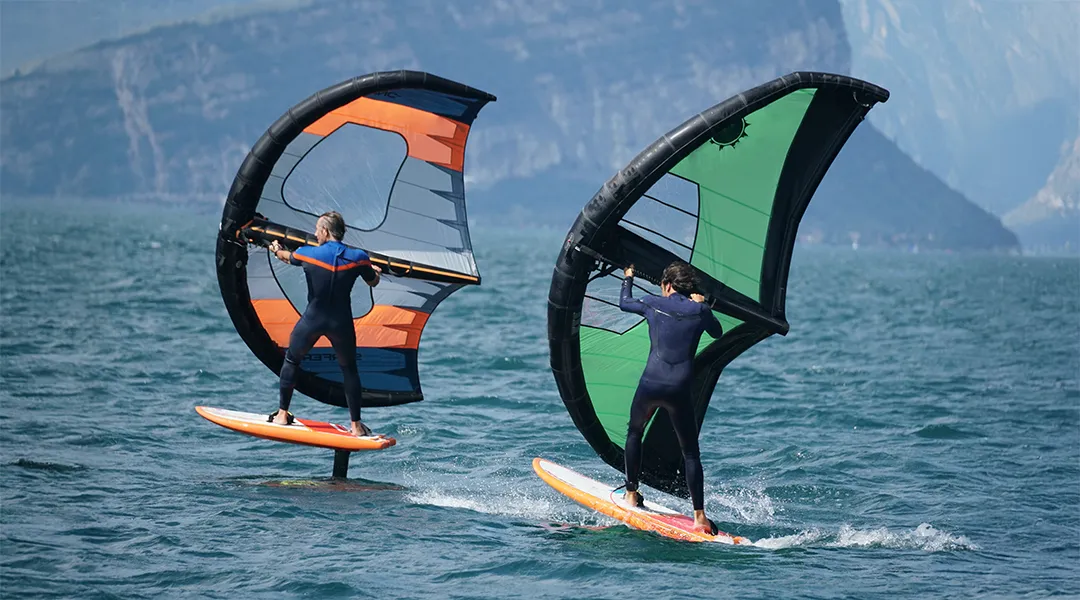
Which Foiling Freaks are into Wing Foiling
-
 Griffin Grady
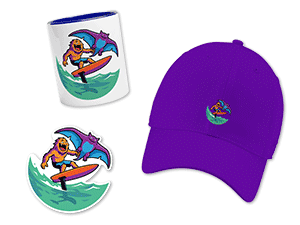
He is not the guy who followed the wing-foiling trend... He is the guy who misunderstood it. Checkout Griffin Grady's merch page.
Griffin Grady
He is not the guy who followed the wing-foiling trend... He is the guy who misunderstood it. Checkout Griffin Grady's merch page.
-
 Vraxen Ashwing
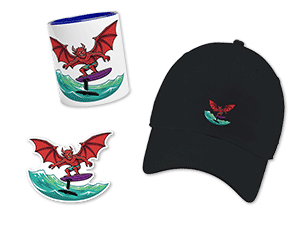
Demon wing foiler. He is his own wing. Checkout Vraxen Ashwing's merch page.
Vraxen Ashwing
Demon wing foiler. He is his own wing. Checkout Vraxen Ashwing's merch page.
How to WING FOIL - your first session FOILING
This video explains everything you need to know about how to wing foil, it covers everything about how to get up on the foil, how to pump, turn the board, gybe, this is the video you need to watch before trying to wing foil.
If you know this discipline inside and out and want to help review and or edit the info on this page, drop us a line. We will credit you as a reviewer or editor and set you up with a proper bio page with links back to your site.