Beachstarting
What is Beachstarting?
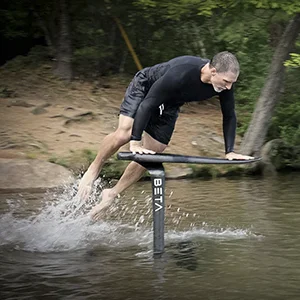
Beachstarting is a way to start a pump foiling session from the shoreline rather than a dock. You build speed with a short running start in shallow water, step or hop onto the foil board at the right moment, and immediately transition into foil pumping to lift and keep flying.
The entire discipline is about the start. Once you are up, you are simply pumping foiling, and you can later cross over into things like pumping out to waves and riding swell lines if the spot allows it.
Who is into beachstarting?
If you are into beachstarting, make sure to drop your pin on the Foilers Pin Map and help beachstarting claim the leaderboard. Check the pin map and leaderboard for how many people into beachstarting have marked themselves on the map.
How it Works
The power source is human-powered. You generate initial speed with your legs, then maintain it and lift with the foil-pumping technique.
A clean beach start hydrofoil sequence has three parts
- Build momentum in shallow water: Use ankle-to-calf-deep water as a runway, then target a deeper section so the foil clears the bottom when you commit to the mount. Picking a beach with a clear drop-off and no hidden rocks matters because the foil can hit bottom if you step on it too early.
- Mount at the last safe moment: You hop up onto the board right before the foil touches. Many riders treat this like a two-step takeoff: back foot first to get the board gliding, then settle into stance as the board stabilizes.
- Pump immediately to lift and stay clear: Beachstarting rewards fast commitment. You begin pumping within the first couple of seconds after mounting, so the foil generates lift before the next shallow patch or sandbar. In a small shorebreak, timing the start with an incoming surge can add helpful flow over the foil during the first pumps.
What Makes it Different
Beachstarting is simply a launch method defined by its unique timing and environmental demands.
- Beachstart versus dockstart: A dock start gives you height and a clean drop. A foil beach start forces you to manage depth, sandbars, and moving through the water. It demands a more explosive, well-timed start because you are accelerating from the beach and jumping on with the foil only inches from the bottom.
- Beachstart versus wave-assisted surf foiling: If a wave pushes you into takeoff, the wave provides most of the initial energy. Beach-start foiling requires you to generate that initial energy yourself, so you generally rely more on lift-oriented foils and efficient early pumping.
- Depth drives gear choices: Shallow-water foil start attempts put a premium on knowing your mast depth and the bottom contour. You also tend to favor front wings that lift early because you want flight quickly, not after a long acceleration phase.
Safety and Etiquette
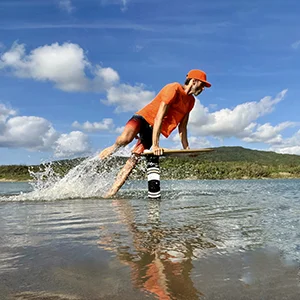
In addition to the usual hydrofoil risks, expect extra hazards: bottom strikes and shore-zone collisions.
Primary hazards and mitigation
- Foot strikes: A primary hazard in beach starts is accidentally kicking the front or rear wing with your foot while running with the board. Wear appropriate foot protection and practice conservatively so you know where the wings are relative to your feet during the start.
- Bottom strikes: A foil hitting sand, rock, or reef can stop instantly and throw you forward. Walk the line, identify rocks, and learn exactly where you must be on the board to keep the foil clear.
- Falling near hard objects: Shorelines have boards, swimmers, rocks, and shallow water. Wear a helmet and protective vest, and choose a spot with plenty of open space to finish your run safely.
- Equipment is becoming a hazard: In a current or shorebreak, a loose foil board can drift into people. Foil leashes are not practical given the athletic needs of the beach start, so maintaining contact with your board after falling off is important.
Etiquette
- Do not beach start in crowded swim zones or through a packed surf lineup. You need a straight corridor, and your foil is fast and sharp.
- Yield to people already in the water and keep your takeoff timing predictable. If you cannot guarantee a clear corridor, you do not start.
- If you are pumping out to waves, follow normal wave priority once you are riding. The beach start does not give you priority on a wave.
Starter Guide
Beachstarting is best learned after mastering basic foil control and pumping. It is recommended to learn a traditional dock start first.
Minimum gear list
- Foil board and hydrofoil suitable for pump foiling.
- Front wing that lifts early enough to reward quick takeoff and early pumping.
- Helmet and impact vest.
Cost ranges (typical market ranges)
- Entry-level complete pump-foil packages are typically in the $1,500 to $2,800 range, new, depending on materials and inclusions.
- Higher-end complete packages can push into roughly $4,000 to $5,700.
- Used gear can significantly reduce costs, but the condition of the mast, fuselage, and hardware matters more than cosmetics for safety.
Difficulty and learning curve
- Difficulty is high for beginners; moderate if you already know foil takeoff timing.
- Expect repetition. Beachstarts are technical, and you build consistency by doing many attempts rather than long sessions.
How to get started fast
- Start with flatwater pump practice, then move to a beach with sand, a clean drop-off, and minimal traffic.
- Set a clear rule: no attempts unless you have confirmed depth, bottom hazards, and a safe run-out.
- Practice the sequence: sprint, back-foot plant, glide, then first pump. If you cannot pump within seconds of mounting, you will stall in shallow water.
- Find local foilers through social media forums, then ask where beachstarts work in your area.
Gear Selection
Boards
- Beachstarting works with several board styles. The start changes, but the board still needs to match what you do after takeoff.
- The larger the board, the more energy is required for pumping, making it more difficult to start and sustain.
- Find the sweet spot that covers both your launching needs and how you will be riding.
Flatwater pump practice boards
- Dedicated pump boards are commonly very short and low volume. Typical examples are around 80 to 90 cm long, roughly 34 to 42 cm wide, and 5 to 12 liters in volume.
Foils
- Beach start foiling rewards early lift. You are sprinting in shallow water, so you want the foil to lift at a lower speed, giving you time to transition into the foil-pumping technique.
Beginner-friendly front wings
- Large, lift-oriented front wings commonly sit in the 1600-2000 cm² range for faster, early-stage foiling progression.
- For pump foiling specifically, a low-aspect learning wing around 1900 cm² is a practical minimum reference around a 70 kg rider.
Intermediate to advanced pump wings
- Higher-aspect pump wings can use less area for similar lift, with a reference point around 1700 cm² and roughly 105 to 115 cm wingspan near a 70 kg rider, and around 2000 cm² and roughly 130 cm wingspan for heavier riders.
- Foils with extremely wide, high aspect wings with high low-speed lift, such as a Beta Freefoil, can allow for shorter and less aggressive beach start runs. This can open up more beach starting terrain options, including rocky shorelines.
Mast length
- Beach starting is limited by shallow water, making mast length a direct constraint.
Beachstart baseline
- A practical starting point is a mast around 60 to 70 cm, paired with a beach that plunges quickly, so the foil does not constantly hit sand.
- A shorter mast also reduces the height you need to jump onto the board during the mount phase.
Fuselage and stabilizer
- Beachstarting prioritizes quick post-mount stability.
More pitch stability
- Longer fuselages increase pitch stability, and larger stabilizers increase control.
- That stability helps you survive the messy first few pumps when your speed is marginal.
Shims if your foil supports them
- Tail shims change pitch stability and speed: The direction of the effect depends on how the stabilizer mounts on your fuselage, but the key point is simple: you can tune for slower, more pitch-stable behavior or for faster, looser behavior.
Accessories
- Helmet and impact protection are highly valuable because the beach zone features hard impacts, shallow falls, and a higher risk of bottom contact.
- Foot protection matters on rocky entries. You cannot beach start a hydrofoil safely if you cannot sprint confidently through the launch zone.
Conditions
Beachstarting has one ideal formula: controlled water, predictable depth, and enough water moving over the foil to help it lift.
Good conditions
- Sandy bottom with a decent drop-off and an obstruction-free takeoff corridor.
- Minimal swell or small, orderly shorebreak where you can time your run so water is moving up the beach, adding flow over the foil during the first pumps.
- Light wind or crosswind. Strong side winds complicate sprinting and make falls messier in shallow water.
- Clear visibility. You must be able to see rocks, reef heads, and sandbars before you commit.
Bad conditions
- Backwash and strong receding water. Less flow over the foil makes lift harder right when you need it most.
- Confused chop at the shoreline. It kills your run-up rhythm and punishes foil takeoff timing.
- Crowded beaches, swim zones, or surf lineups. Beach-start foiling requires a straight, empty corridor and a safe bailout area.
- Beach surface that makes running difficult or dangerous, such as rocks, mud, or debris.
Where to Go
Beachstarting is location-dependent. You need a shoreline that makes a shallow water foil start physically possible.
Best general locations
- Sandy beaches with a relatively quick depth change, so you can run in shallow water and then immediately have mast clearance.
- Protected bays with a sand shelf and a clear channel. These often provide flatwater pump practice conditions with fewer timing variables.
- Small, mellow beach breaks for surf foil beach start sessions, where you can pump out on foil and then pick off an easy first wave on foil without dodging crowds.
Locations to avoid
- Rocky or coral shorelines unless you have a known, safe sand channel.
- Heavy shorebreak, strong rip currents, and any place where swimmers or surfers routinely occupy your takeoff corridor.
Setup and Tuning
Mast length choices
- Start shorter for beachstarting so you can mount the board with less jump height and reduce the required water depth.
- Move longer only when you rarely breach, and you need clearance for chop or swell.
Mast position in the tracks
Track position changes, surface stability, and how easily the board lifts.
- Start conservative: A beginner-friendly baseline is to place the foil farther back in the tracks to keep the board more stable on the surface and make the lift feel more controlled.
- Fine tuning: Small adjustments matter. Moving too far forward can make the board want to pop up and foil out too easily, while moving too far back can make the nose want to pitch down in turns once flying.
Tail tuning and shims
- Shims can change pitch stability and speed, and may require compensating changes, such as mast position adjustments.
Fuselage and stabilizer setup
- Learning and consistency: longer fuselage and a larger stabilizer for pitch stability and control.
- Performance and tighter arcs: shorten and reduce cautiously after your foil pumping technique is efficient, and your touchdowns are clean.
Tips and Tricks
- Walk the line before you run it. Identify rocks, reefs, and the exact point where the bottom drops enough to clear your mast.
- Time to start with the incoming water. Starting as water runs up the beach gives you extra flow over the foil, making lift easier than starting in strong backwash.
- Start with a short mast. It reduces the height you need to jump onto the board and reduces the risk of grounding while learning foil takeoff timing.
- Use a training platform if depth is sketchy. A submerged platform about 15 cm below the surface gives extra clearance and reduces the chance of breaking gear while you learn the sequence.
- Steal more runway in shallow water. A 45-degree approach that runs partly along the shoreline can extend your shallow-water acceleration path before you commit to lift-off.
- Choose your first goal: a clean launch, not a long ride. Beach start foiling improves fastest when you stack successful repetitions.
Skills Ladder
Beginner
You are learning to convert a sprint into foil takeoff timing without striking the bottom or kicking the wing with your foot.
Skills to build
- Spot reading: you can identify the exact takeoff line where depth goes from runnable to mast-safe, and you can repeat it consistently.
- Sprint-to-mount mechanics: you keep the board tracking straight, jump up cleanly, and land in a stable stance without stalling the board.
- Instant foil pumping technique: You start pumping within the first seconds after landing, so the foil lifts before you run out of depth.
- Controlled bails: you step off early when depth or timing is wrong, rather than forcing it and risking a bottom strike.
Gear changes that help
- Shorter mast for early sessions, so the jump is lower and the shallow-water foil-start window is wider.
- High-lift front wing for lower takeoff speed, so the foil beach start can succeed with fewer steps and fewer pumps.
Intermediate
You can beachstart reliably, and now you build consistency, efficiency, and options.
Skills to build
- Timing with moving water: you choose moments when water is moving up the beach so the foil gets extra flow for lift, and you avoid starting in strong backwash.
- Multiple entry styles: you can jump straight to your feet for speed, or use a one-knee entry for more control.
- Pump-out lines: You can pump out on foil past the inside and set up for a first wave on foil when the spot allows it.
Gear changes that help
- Move toward more glide once takeoffs are boring, as long as you still lift quickly enough to clear the shallow zone.
Advanced
You are using beach start foiling as a launch tool to access more terrain in more varied ways.
Skills to build
- Steeper and shallower launches: you can tune your approach to different beach slopes and choose an exact shin-deep jump point on steeper drop-offs.
- Rougher water competence: You can time shorebreak bumps to create a usable depth window and still execute cleanly.
- Style and speed: straight-to-feet starts, higher sprint speed, and immediate acceleration into flatwater pump practice laps or wave approaches.
Niche Specific
Beachstarting is a start discipline. The riding after takeoff is standard pump foiling, surf foiling, parawinging, or whatever you transition into. The beach is the constraint. You have to create two zones: a runnable knee-deep runway, then a deeper section where the mast clears, and the foil can fly.
Timing matters more than power. Starting as water runs up the beach improves lift, while starting during receding water reduces lift when you need it most.
It is a “power start” in the sense that you must be explosive. You sprint, jump, and pump immediately because the usable depth window is short. The bottom is always in play. Unlike dockstarting, beach-start hydrofoil attempts can end in a bottom strike if your takeoff timing is late or your depth reading is off.
Common Problems
Foil hits bottom during takeoff
- What happens: the mast or front wing tags sand, rock, or reef, and the board stops instantly.
- Fix: map the drop-off first, then commit to a consistent takeoff point based on where the bottom falls away.
Not enough lift because you started in backwash
- What happens: you sprint hard, but the foil feels dead and will not rise.
- Fix: time the start as water is moving up the beach, not draining back, so there is more flow across the foil.
You cannot jump high enough to clear the mast
- What happens: you land late, awkwardly, or too far back and stall immediately.
- Fix: start with a short mast so the jump height requirement is lower, and build the skill before you add mast length.
The board caws, and you step on crooked
- What happens: you land with the mast not vertical, you fall sideways, or you stall the first pump.
- Fix: align the board and keep the mast perfectly straight during the commit, because a crooked mast creates an instant roll failure.
You chose a foil that is too “small” for beachstarting
- What happens: you need too much speed before lift, so you run out of depth before the foil flies.
- Fix: Use a higher-lift front wing for beach-start foiling than you would when a wave is pushing you, then size down only after starts are consistent.
The beach angle is wrong
- What happens: too flat and you never get depth, too steep and the run is awkward and unstable.
- Fix: choose a spot with a workable slope: enough shallow runway to sprint, followed quickly by depth for pumping.
History
Beachstarting is a technique that grew out of the practical need to start foiling without a dock, platform, tow, or wind power, using a shoreline as the launch platform.
Beach start how-to material was already publicly available by December 2020, describing the depth-zone concept and timing with shorebreak bumps.
By April 5, 2022, beach start hydrofoil tutorials were being produced as part of structured foiling instruction, including location selection, depth checks, and timing water movement for lift.
A structured progression approach, including learning from a submerged platform and progressing to steeper beach drops, has been documented as a milestone in a broader foiling skills ladder.
FAQs
Is beachstarting a separate discipline from pump foiling?
Beachstarting is a start method and is commonly referenced as how someone pump foils, similar to dockstarting, which is referenced as pump foiling. Once you lift off, you are doing pump foiling or surf foiling, depending on where you go next.
How deep does the water need to be for a shallow water foil start?
You need a runnable zone that is roughly knee-deep, followed by a quick transition to enough depth for the mast to clear. On steeper beaches, the jump point is often described as around shin-deep, because deeper than knee depth makes the jump harder.
Should I start on my feet or on one knee?
Feet-first is the clean, fast version and becomes necessary for some higher-performance setups, but a one-knee entry can be a more reliable stepping stone and a higher-percentage option in harder scenarios.
Does shorebreak help beach start foiling?
Small, orderly shorebreak can help by creating a momentary depth window and extra water flow over the foil. Timing the start with an incoming surge improves lift compared with starting in receding water.
What is the single best gear change to make beachstarting easier?
Use a short mast, such as 60cm when you are learning. It lowers the jump requirement and reduces the chance of bottom strikes while you dial in foil takeoff timing.
Which Foiling Freaks are into Beachstarting
-
 Mara Quillhart
Runs the shoreline, steals the swell. Checkout Mara Quillhart's merch page.
Mara Quillhart
Runs the shoreline, steals the swell. Checkout Mara Quillhart's merch page.
Hydrofoil Beachstart - A Comprehensive Simple Guide
This video offers a beginner-friendly look at how to beach-start a hydrofoil in an early session, focusing on the value of learning the right technique from the start. It is a useful introduction for new pump foilers who want to build solid habits, improve more quickly, and gain confidence on the beach.
If you know this discipline inside and out and want to help review and or edit the info on this page, drop us a line. We will credit you as a reviewer or editor and set you up with a proper bio page with links back to your site.
We could use a few more high-quality images to illustrate this discipline. If you have shots you own and are willing to share, contact us for where to send them. Bonus if you also credit the rider and give us a URL to link back to you.