Prone Foiling
What is Prone Foiling?
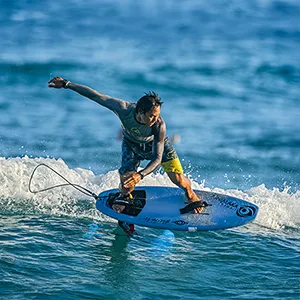
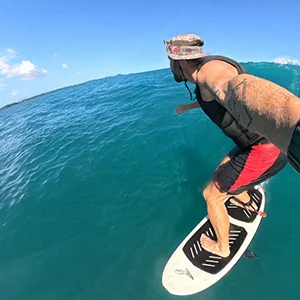
Prone foiling is a form of foilboarding (riding a board fitted with a hydrofoil) where you start the ride lying on your stomach and paddling, similar to traditional surfing. After catching a wave, you pop up to your feet and fly the hydrofoil. The foil is the wing-like structure mounted under the board that generates lift, letting you glide above the water’s surface. As the board gains speed, the hydrofoil wing creates lift, so the board rises, and the foil takes over most of the work as you glide.
Prone foiling is most common in ocean surf, but it is also done on inland lakes and rivers, wherever you can find clean, rideable waves, such as wind swell on large lakes or surfable river features. The key requirement is not saltwater; it is a wave or moving water feature that can provide enough push for a takeoff.
Who is into prone foiling?
If you are into prone foiling, make sure to drop your pin on the Foilers Pin Map and help prone foiling claim the leaderboard. Check the pin map and leaderboard for how many people into prone foiling have marked themselves on the map.
Be more than just a dot on the map. Join the Foiling Freaks community and create your own foiling profile with a custom handle, rider photos, videos, disciplines, bio, and more.
How it Works
The power source in prone foiling is primarily the wave itself, with human paddling used to accelerate into the wave and position for the takeoff. You paddle in prone to match the wave’s speed, then transition to standing as the wave provides the final push. Once the foil’s wing is moving fast enough, it produces lift and the board rises, reducing drag dramatically compared to surfing on the board.
A typical session looks like this
- Paddle out like a surfer, choosing a spot with enough room and water depth so the foil does not strike the bottom.
- Paddle into a wave early and smoothly. Foils like steady speed.
- Pop up to a stable stance with controlled weight and minimal sudden movements.
- Manage ride height with small weight shifts. Stay calm and keep the foil flying level.
- Either ride out safely, or, as skill increases, pump to maintain speed and connect sections or additional waves.
- Prone foiling variations can involve deploying a parawing or other techniques.
What Makes it Different
Prone foiling is essentially foil surfing with a surf-style paddle-in start. That makes it different from wing foiling, kite foiling, wake foiling, efoil, and dock start foiling in three big ways:
The launch is paddle-powered and wave-timed
You do not rely on a wing (handheld inflatable sail), kite, motor, or boat pull. You gain speed with positioning, paddling, wave selection, and a clean pop-up.
The board must paddle well
Prone foiling boards are designed to support you while paddling prone and transitioning to a standing position. Unlike many wing boards, prone boards are shaped and sized for efficient paddling and early wave entry.
The foil setup is tuned for low-speed lift and control
A common beginner-friendly approach is a foil setup that flies at a lower speed and feels stable, since the takeoff happens close to the surface and wave energy can be uneven. As riders progress, they often refine their foil wing choices toward greater glide, a wider speed range, and a more refined carving feel. The best mast length is condition-dependent. You want enough height to avoid ventilating in chop and whitewater, but you also must respect water depth and the consequences of breaches.
Safety and Etiquette
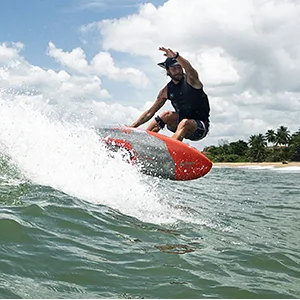
Prone foiling has the same core risks as all hydrofoiling: a fast-moving board, hard components, and sharp edges. The biggest hazards are collisions, shallow water impacts, and uncontrolled board recoil from a leash.
Safety practices that matter
- Give yourself space. Learn away from crowds and away from any person in the water.
- Wear protective gear appropriate for impact risk. Helmets and impact vests are commonly used in foiling to reduce injury severity, especially while learning.
- Use a leash and manage it. A loose board with a foil is dangerous. At the same time, leashes can recoil, so fall in a way that keeps you clear of the board. Retractable reel leashes are more expensive but allow the board to travel further.
- Pick depth. Foiling in shallow water is a common way to break gear and bodies.
- Treat whitewater carefully. Turbulence can suddenly cause the foil to drop, leading to a quick change in direction.
Etiquette is where prone foiling either fits in or causes problems
- The baseline is standard surf etiquette
- The surfer closest to the peak has the right of way.
- Do not drop in.
- A paddling surfer yields to someone already riding.
Additional foiling-specific etiquette
- Avoid crowded lineups. Foils cover more distance and create higher consequence collisions, so the responsible move is to foil where there is more room.
- Do not pump or traverse through the main takeoff zone where surfers are paddling. Go around the break or use a channel if there is one.
- Do not bring motorized assistance into a surf lineup. Mixing powered foiling with paddlers in tight quarters is a recipe for conflict and injuries.
Starter Guide
Prone foiling is one of the more demanding ways to learn to foil because you must combine surf skills with hydrofoil control. The payoff is huge, but the learning curve can be steep.
Minimum gear list
- A prone-capable foil board or hydrofoil board that can float you comfortably while paddling and allow consistent pop-ups
- A complete hydrofoil: mast, fuselage, front foil wing, rear stabilizer, and mounting hardware
- A reliable leash
- Basic impact protection and thermal gear, such as a helmet and impact vest, are common choices in foiling.
- A simple tool kit for assembly and spare parts.
Cost ranges
- Costs vary by materials, condition, and whether the gear is new or used. New equipment is usually in the multi-thousand-dollar range, while used gear can lower the buy-in.
Difficulty and learning curve
- Difficulty: moderate to high for a true beginner, moderate if you already surf confidently and can pop up consistently.
- Expect early sessions to focus on paddling balance, clean pop-ups (smooth transitions from stomach to feet on the board), and short controlled flights before you chase long rides or wave connections.
How to progress efficiently without brand or site chasing
- Watch technique-focused how-to videos that show paddling entry, pop-up mechanics, and ride-height control.
- Start in forgiving conditions: small, clean waves with plenty of space and depth.
- Practice pop-ups on land until your feet land consistently.
- Find a local foiling community through social media searches and local water-sports networks, then ask about beginner-friendly spots and safety norms.
- Keep your foil setup conservative at first: prioritize predictable lift and stability over speed and radical turning.
Gear Selection
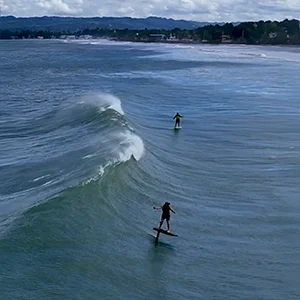
- Board (foil board / hydrofoil board): Prone-foiling boards are used while lying face down and require enough length and volume to paddle like a surfboard and feel stable during the pop-up. A common entry point for many riders is a compact board around the high-30-liter range. For advanced beginners, prioritize paddle speed and stability. Think wider, a bit longer, and with more float than you think you “should” ride. Volumes commonly land in the high-30s and up through the 40-liter range, depending on rider size and local wave power and in the high-30s and up through the 40-liter range, depending on rider size and local wave power.
- Intermediate: often 30 to 40L with a more efficient outline once pop-ups are consistent and you can manage short flights without porpoising.
- Advanced: many riders use boards in the mid-20s to mid-30s liters when conditions and skill allow, trading easy paddling for tighter control and easier pumping.
- Mast length: For surf and prone foiling, mast lengths around 70 to 80 cm are a common “all-around” range because they balance clearance in chop with control during takeoff and turns.
- Front foil wing: For foil surfing, front-wing surface area commonly falls roughly in the 700 to 1500 cm² range, depending on rider weight. Rear stabilizer: The stabilizer is the horizontal wing at the rear of a hydrofoil. Stabilizers commonly measure roughly 195 to 300 cm² in surface area; larger stabilizers increase pitch stability and ease of use, while smaller stabilizers feel looser and faster once you have control.
- Fuselage length: a major stability lever. A common surf-foil range is often 60 to 70 cm, where longer tends to calm pitch and yaw, and shorter tends to tighten turning and pumping feel.
- Common accessories: leash, helmet, and impact vest (especially while learning), cold-water gear as needed, a compact tool kit, spare screws and mast plate/track hardware, and tuning shims if your foil setup supports them.
Conditions
Good conditions for prone foiling
- Clean and organized with room to take off early and set a line.
- Light wind or glassy surface, so the foil stays predictable and you are not fighting backwash and bumps during takeoff and pumping.
- Plenty of depth in the takeoff and runout zone to reduce strike risk.
Challenging conditions
- Strong onshore wind, heavy chop, and backwash increase ventilation and touchdowns, making wave-to-wave connections much harder.
- Crowded lineups are generally avoided as mistakes have higher consequences than traditional surfing.
- Very steep, fast, hollow waves until you have reliable height control and confident exits.
Where to Go
Best general locations
- Ocean surf breaks with space: points and reefs with channels (easier paddles, cleaner lines), and mellower beach breaks when uncrowded.
- Inland options: large lakes and rivers can produce rideable wind swell, and certain rivers can create standing-wave features that people do foil on.
Widely recognized hubs
- Hawaii, especially Maui and Oahu, are major centers of modern foil surfing and prone foiling.
Setup and Tuning
Mast position (fore-aft)
- Move the mast forward if you want earlier lift and less speed required to fly, but expect more sensitivity and a higher chance of over-lifting on takeoff.
- Move the mast back if you want more control at speed and fewer surprise breaches, but you will need a cleaner technique and/or more wave push to lift.
Stabilizer size and shims
- A larger stabilizer generally increases pitch stability and makes learning easier.
- Shim changes fine-tune pitch. Small shim adjustments can remove “porpoising,” reduce front-foot fatigue, or loosen the tail for tighter turns, depending on the stabilizer angle your system is designed around.
Fuselage length
- A longer fuselage usually feels steadier and more forgiving, especially during takeoff and pumping transitions.
- A shorter fuselage usually turns tighter and can feel more lively once your stance and pitch control are solid.
Mast length
- Around 70 to 80 cm is a common surf-and-prone range for mixing control with clearance. Shorter can feel safer in shallow water, longer can help in chop and steeper faces.
Tips and Tricks
- Pick waves you can take off on early, not late: Early entry equals smoother speed build and fewer panic pop-ups.
- Pop up to the stance you intend to ride: If your feet land inconsistently, your foil will feel inconsistent.
- Keep the foil low and quiet at first: Low flights are easier to save, and they teach you pitch control.
- Avoid the busiest takeoff zone: Give yourself space to run down the line, fall safely, and recover your board without endangering others.
- When linking waves, chase clean water: Smooth surface conditions make pumping and reconnecting far more achievable than backwash and chop.
Skills Ladder
Beginner
- Build the foundation that makes prone foiling possible: strong paddling mechanics, confident surf pop-ups, and the ability to angle into a wave instead of going straight. If you cannot consistently catch waves on a normal surfboard, prone foiling will feel wildly inconsistent.
- First flights are about control, not height. You learn to keep the hydrofoil just above the surface, touch down gently, and recover without exploding off the foil.
- Gear is chosen for forgiveness: a board that paddles easily and stays stable during the prone-to-stand transition, and a foil setup that lifts early and resists sudden pitch changes.
Intermediate
- You start taking off earlier and cleaner, with fewer “panic pop-ups.” Your stance becomes repeatable, and you can hold a steady ride height without porpoising.
- You learn direction changes specific to foil surfing: smooth carving turns that keep speed and controlled cutbacks without ventilating the foil wing.
- You begin pumping for short connections to stay flying through soft sections and link waves.
- Gear often shifts toward more maneuverability: slightly smaller, faster wings and a setup that feels less locked-in once you can manage pitch.
Advanced
- You can read the waves, not just the breaking part of the wave. You connect sections, use swell lines, and keep foiling when the wave face is barely breaking.
- You ride higher, faster, and closer to the edge of ventilation without losing the foil. You also manage high-speed breaches with calm corrections.
- Your gear choices become condition-specific: different foil wings for different wave power and surface texture, and tuning changes that match your style, whether that is carving, connecting, or speed.
Niche Specific
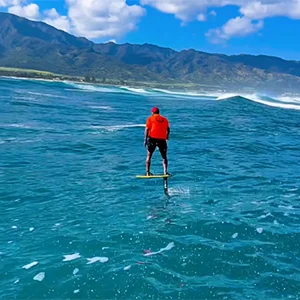
Prone foiling is the purest wave-powered form of hydrofoiling. You earn entry with paddling and wave selection, then the foilboarding phase rewards precision. The defining moment is the transition: from prone paddling to standing control and flight. That is a skill blend you do not get in wing foiling, kite foiling, wake foiling, or efoiling.
It is also uniquely sensitive to crowding and safety margins. A prone foil surfer can cover a lot of water fast and change lines quickly, which makes spacing and surf etiquette more important. This niche works best where you have room to take off early, run down the line, and exit cleanly.
Common Problems
Not catching waves
- Cause: wave choice and positioning are off, paddling speed is not high enough, or the setup requires too much speed to lift.
- Fix: take off earlier on softer shoulders, angle your entry, and use gear that lifts at a lower speed until your technique is solid.
Porpoising and “yo-yo” height changes
- Cause: abrupt weight shifts and inconsistent stance, often combined with an overly sensitive setup.
- Fix: quiet your upper body, make smaller corrections, and tune for stability first. When your foil system allows it, stabilizer angle and tail size are common levers to calm pitch.
Breathing and ventilation in turns
- Cause: riding too high on a rough surface, banking too hard near the surface, or turning through aerated whitewater.
- Fix: keep turns lower and smoother, avoid carving through froth when learning, and choose conditions with cleaner water.
Touchdowns that stall the ride
- Cause: coming down too hard, looking down, or losing speed through the turn.
- Fix: practice gentle touchdowns with immediate re-lift, keep your eyes forward, and prioritize speed management through the arc.
Leash recoil and board recovery issues
- Cause: falling close to the board or letting the board slingshot back.
- Fix: fall away from the foil, protect your head, and keep distance. In prone foiling, clean wipeouts and safe separation are important skills.
Getting blocked by lineup conflicts
- Cause: trying to foil in the same space as traditional surfers.
- Fix: pick uncrowded breaks, use wide safety buffers, and avoid pumping back through the takeoff zone.
World Records
Longest continuous prone or surf foil duration
- Current record: Surf foil world record of 3 hours 41 minutes at Populars - 3 hours 41 minutes. Holder: Gage Schoenherr
- Previous record: Dylan Bez foils for more than 3 hours straight - Over 3 hours. Holder: Dylan Bez
- Previous record: Oskar Johansson stays on foil for 2 hours 46 minutes 19 seconds - 2 hours 46 minutes 19 seconds. Holder: Oskar Johansson
- Previous record: Adam Bennetts sets one-hour-plus prone surf foil benchmark - About 1 hour 7 minutes. Holder: Adam Bennetts
Know about a broken record, an update needed to an existing world record, or a brand new world record that deserves to be in the public record? Submit it.
World Firsts
- First known prone/surf foil ride over three hours: First known prone/surf foil ride over three hours. Holder: Dylan Bez
- First known surf foil ride at Kelly's Wave, Surf Abu Dhabi: Caleb Pont becomes first known person to foil Kelly's Wave. Holder: Caleb Pont
- First modern prone surf foil prototype wave ride: First modern prone surf foil prototype wave ride. Holder: Alex Aguera
- First prone surf foil ride lasting more than one hour: First prone surf foil ride lasting more than one hour. Holder: Adam Bennetts
- First SFT Surf Foil World Cup women's champion: Bowien Van Der Linden becomes first SFT Surf Foil World Cup women's champion. Holder: Bowien van der Linden

Know about a broken record, an update needed to an existing world first, or a brand new world first that deserves to be in the public record? Submit it.
History
Modern wave-riding hydrofoiling grew out of the big-wave experimentation culture in Hawaii. In the early 1990s, tow-in surfing was established on Maui and Oahu as surfers used watercraft to access waves that were too fast and too large to paddle into.
By the early 2000s, hydrofoil boards entered the public eye through surf films and media, including footage of Laird Hamilton and Dave Kalama doing big wave foiling in the 2003 film Step Into Liquid.
Prone foiling, meaning paddling into waves and standing to foil without a tow or kite, became far more practical once foil designs improved for low-speed lift. A major milestone in making paddle-powered foiling accessible was the work of Maui foil designer Alex Aguera, who developed a foil board intended to be ridden using ocean energy and the rider’s paddling.
By the late 2010s, surf foiling and prone foiling had clearly emerged as a widely recognized branch of foilboarding, with many surfers adopting it as a distinct discipline.
FAQs
Is prone foiling the same as surf foiling?
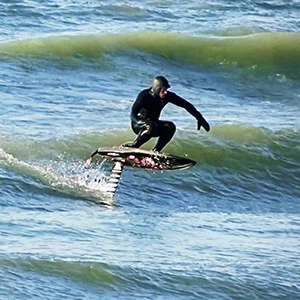
Prone foiling is a form of surf foiling. The word “prone” highlights the paddle-in start, lying down and paddling like surfing before you stand and ride the hydrofoil.
Do I need to be a good surfer to learn prone foiling?
You need basic surfing competence. You must be able to paddle efficiently, read waves, and pop up consistently. Without that, the takeoffs will be random, and the crashes will be frequent.
What should I focus on in my first sessions?
Wave selection, early entry, and low-controlled flights. Your goal is repeatable takeoffs and stable ride height, not speed, big turns, or pumping between waves.
Why does prone foiling feel so different from normal surfing?
Once the foil lifts, drag drops dramatically, and the board accelerates. Small changes in weight shift translate into big changes in height and direction. It feels less like sliding on a board and more like balancing an underwater wing.
Can I prone foil in a normal surf lineup?
You should not. The consequences of mistakes are higher, and a foil covers more distance faster than a surfboard. Prone foiling is best in uncrowded zones, where you can keep a wide safety margin and avoid other water users.
Which Foiling Freaks are into Prone Foiling
-
 Screamin Eeee
First-in, last-out. The one-eyed spark that started the whole menagerie. Checkout Screamin Eeee's merch page.
Screamin Eeee
First-in, last-out. The one-eyed spark that started the whole menagerie. Checkout Screamin Eeee's merch page.
-
 Koa Breakerhorn
The big-wave tow-in specialist of the Foiling Freaks crew. Checkout Koa Breakerhorn's merch page.
Koa Breakerhorn
The big-wave tow-in specialist of the Foiling Freaks crew. Checkout Koa Breakerhorn's merch page.
-
 Big Dave
He is only known as Big Dave, and nobody argues with that. Checkout Big Dave's merch page.
Big Dave
He is only known as Big Dave, and nobody argues with that. Checkout Big Dave's merch page.
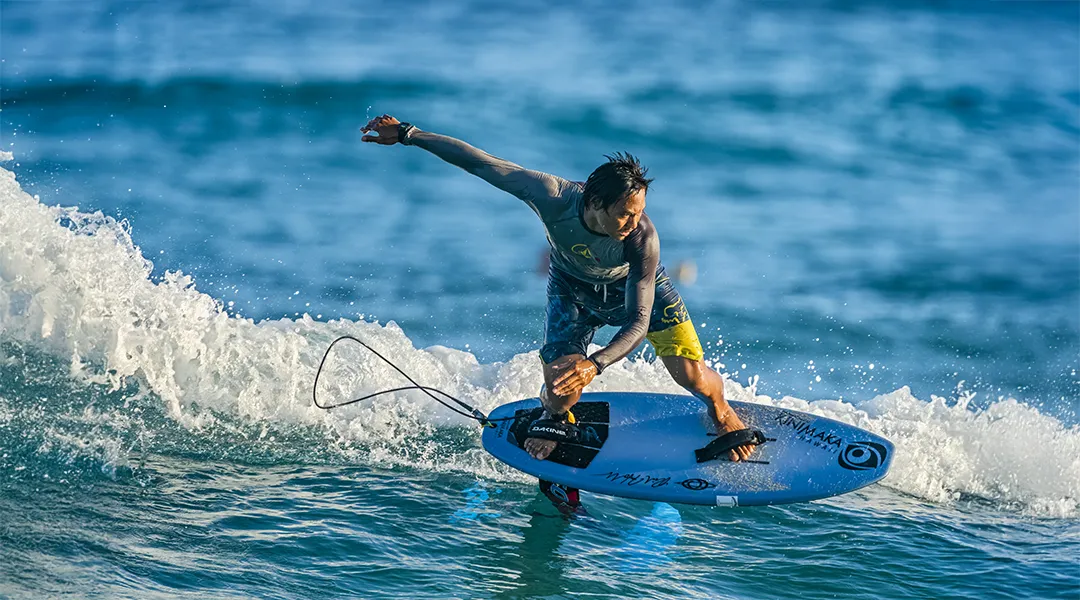
This is prone foiling
Such a crazy time in Australia this winter, prone foiling the best spot in the world.
If you know this discipline inside and out and want to help review and or edit the info on this page, drop us a line. We will credit you as a reviewer or editor and set you up with a proper bio page with links back to your site.