Parawing Foiling
What is Parawing Foiling?
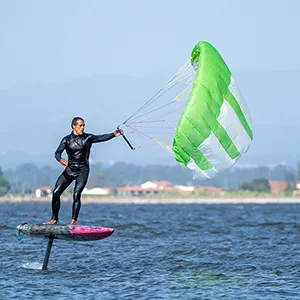
Parawing foiling, often shortened to parawinging, is wind-powered foiling that uses a compact foil-kite-style wing to pull you onto a hydrofoil, then packs away while riding when you want to ride swell. Instead of holding a large inflatable wing with rigid handles, you control a small canopy with a bar and short bridle lines, more like a very compact paraglider or single-skin kite.
The signature move in a parawing foil session is the transition from powered to pure flight. You use the parawing wing to get up and moving, then once you are on foil and linking bumps or a wave face, you can fully stow it in a pouch and continue foiling on swell energy and pumping technique.
Parawinging naturally overlaps with running downwind and with any style that lets you ride hands-free after takeoff. It can also pair with dock starting and other human-powered starts, because the parawing can act as a relaunchable power source when conditions are marginal or when you need to get back on foil after a fall.
Who is into parawing foiling?
If you are into parawing foiling, make sure to drop your pin on the Foilers Pin Map and help parawing foiling claim the leaderboard. Check the pin map and leaderboard for how many people into parawing foiling have marked themselves on the map.
Be more than just a dot on the map. Join the Foiling Freaks community and create your own foiling profile with a custom handle, rider photos, videos, disciplines, bio, and more.
How it Works
All hydrofoiling relies on the same core physics: the underwater foil wing generates lift as water flows across it, raising the board above the surface and reducing drag. In parawinging, the primary power source is wind. The parawing captures wind energy, converts it into pull through the control bar and lines, and that pull creates board speed until the foil produces enough lift to fly itself.
A typical launch-to-ride sequence looks like this
- Setup and positioning: You start with a foil board and a hydrofoil appropriate for low-speed lift and glide. Because parawinging often targets light wind foiling and swell linking, riders commonly favor boards that help them get moving and stabilize during setup.
- Power-up and takeoff: You deploy the parawing, let the canopy fill, and steer it to generate pull. As the board accelerates, you shift weight to control pitch and roll and nudge the foil into a clean lift-off. This is where parawing technique matters: smooth power control, steady stance, and avoiding abrupt steering that can surge or stall the canopy.
- Upwind, reach, or downwind positioning: Many riders use the parawing to work upwind or to reach a starting zone, then set up for a run.
- Stow, then glide: Once on foil and powered by swell, stow the parawing in a waist pouch for hands-free riding. Redeploy if you need to restart.
What Makes it Different
Packable power and true hands-free riding
A parawing setup is designed to allow the wing to be stowed completely. Traditional wing foiling can flag a wing, but you are still holding a large object that affects vision, balance, and handling. Parawinging aims for an uncluttered downwind or wave ride after you pack it away.
Wing handling and control feel
Compared with an inflatable wing, a parawing wing behaves more like a compact kite: it has lines, a bridle, and a bar, and it does not give you the same rigid platform to lean on for balance. That difference is why parawinging is generally not ideal as a first foiling discipline.
Gear emphasis shifts toward glide
Parawinging emphasizes maximizing glide after stowing the wing, unlike traditional wing foiling, which focuses on riding with the wing at all times. Longer boards and downwind-specific foils are preferred because they keep you flying without wing power, making the experience distinct from other foil disciplines.
Wind range and tuning sensitivity
A parawing hydrofoil session can be more sensitive to being underpowered or overpowered than a typical inflatable wing session, depending on the specific wing design and rider skill. That means parawing focuses on choosing conservative conditions and dialing technique before committing to long runs.
Safety and Etiquette
Primary hazards
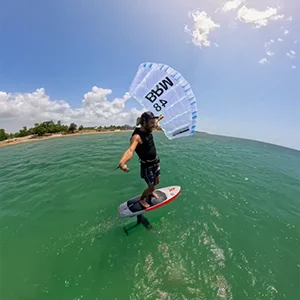
- Hydrofoil impact and laceration risk: A foil is hard, sharp, and fast. Wear impact protection appropriate to your environment and keep a generous spacing from other water users.
- Line entanglement: Parawings use lines and bridles. Lines can wrap around limbs, leashes, or foil components during crashes or while deploying and packing. Practice consistent, methodical stow-and-deploy until it becomes automatic.
- Being pulled into hazards: Wind can drag you toward rocks, docks, boats, or into offshore situations. Choose a launch with a clear downwind exit and avoid gusty, offshore, or crowded zones until your control is solid.
- Sink-and-separate risk: A parawing does not float like an inflatable wing, so a board leash is crucial to keep your foil board from drifting during resets.
Hazard Mitigation
- A helmet and an impact vest are recommended in any foil discipline.
- Use reliable leashes: at minimum for the board, and use a system for the parawing that minimizes tangles.
- Keep your first sessions short and close to shore, with an easy bailout beach.
- In open water, dress for immersion, not for the air temperature.
Etiquette and right of way
- Treat it like a wind sport when you are powered: Starboard and port conventions apply in wing sports, and “right-hand forward” is a widely used way to identify tack.
- Maintain course if you are the stand-on rider: Right of way doesn’t absolve you from avoiding a collision. Hold a predictable line so the give-way rider can avoid you.
- Give waves to the rider already surfing: If you are using parawinging to access swell or waves, follow standard wave priority: do not drop in, and yield to the rider with priority on the breaking section.
- Avoid mixing into tight surf lineups: A foil board moves fast and carries sharp hardware. Do not take a powered craft into crowded peaks where swimmers and surfers cannot predict your line.
Starter Guide
Who it is for
Parawing beginner success is highest for riders who already foil confidently and can control height, speed, and direction without relying on the wing for balance. Beginners to foiling generally struggle because parawinging removes the stable, hand-held support you get from an inflatable wing.
Minimum gear list
- Foil board with enough volume for stable starts and resets (many riders prefer longer boards for this style).
- Hydrofoil setup selected for early lift and glide, often in the downwind-leaning category for parawing downwind use.
- Parawing wing with bar, lines, and a stow system such as a waist pouch for pack and deploy riding.
- Board leash, plus whatever leash system you use for the parawing.
- Helmet and impact vest.
Cost ranges (typical new gear pricing, broad market ranges)
- Parawing wing: often priced in the several-hundred-dollar range.
- Foil system: commonly around the low to mid thousands for new complete setups, depending on materials and performance level.
- Board: typically $500 to $1,000, depending on construction and size.
- Safety gear: commonly, a few hundred dollars total.
Difficulty ranking and learning curve
- Parawinging offers the distinctive challenge and reward of juggling foil control, line management, and canopy-deploy timing. This sets it apart from other foil sports, giving experienced foilers the opportunity to master a unique skill set that blends hands-free riding and technical wing handling.
- Early milestone: consistent takeoffs and controlled reaches without oversteering the parawing.
- Next milestone: reliable upwind angles and safe transitions.
- Defining milestone: clean stow and redeploy without tangles, while staying on foil.
How to get started without overcomplicating it
- Watch a few technique-focused tutorials that specifically cover deployment, stowing, and relaunch. This is the fastest way to avoid line-management mistakes.
- Practice parawing management on land with a skateboard in a wide-open parking lot.
- Choose an uncrowded spot with a simple downwind bailout and steady wind.
- Start with short sessions focused on takeoff, stabilization, and then stow. Do not make long downwind commitments until you can redeploy and restart reliably.
- Find a local foiling community through general social media search and local watersports chatter, then ask about safe launch zones and conditions that suit light wind foiling.
Gear Selection
Parawing wing
Most parawinging is done with compact wings in the low single-digit-square-meter range. Common sizes offered and discussed for parawing foiling are roughly 3 to 5 m² for many average-weight riders in moderate wind, with smaller and larger sizes available for stronger and lighter wind.
For a parawing beginner, sizing slightly larger within your safe wind range makes takeoffs and low-end power easier, especially for light wind foiling.
Foil board
Parawing hydrofoil setups reward early takeoff and glide. Many riders lean toward longer, narrower boards rather than short-wing boards because they accelerate efficiently and maintain speed through lulls and transitions. Downwind-oriented shapes commonly sit around the 7 ft to 8 ft plus range with volumes often around 100 to 130 L, but the right parawing board volume still depends heavily on rider weight and skill.
If you are coming from wing foiling, the “safe and stable” starting point many beginners use is roughly 95-130 L for average-weight riders, scaling up for heavier riders and down for lighter riders.
Foil selection
For parawing progression, think in two phases
- Getting up reliably: larger front wings around 1500 to 2000 cm² are commonly recommended for early wing-powered foiling because they lift at lower speeds.
- Gliding efficiently once the wing is stowed: higher glide-oriented wings are often higher aspect, trading some low-speed roll stability for better efficiency and range.
Mast length
Most parawing foiling happens on mast lengths that balance control with clearance in chop. Common guidance ranges from about 70 to 85 cm, depending on water state, with longer masts favored as chop and swell increase.
Fuselage and stabilizer
Longer fuselages and larger stabilizers generally add pitch stability and make the foil calmer. Shorter fuselages and smaller stabilizers feel looser, turn tighter, and tend to be faster when well controlled.
Accessories
- A waist belt with a stow pouch is core paracord gear because packing and deploying cleanly is the whole point of the discipline.
- At minimum a board leash, plus a system for keeping the parawing and bar under control during crashes and redeploys.
- Helmet and impact vest for hydrofoiling.
- A line cutter is a smart safety tool any time you introduce lines into the water.
Conditions
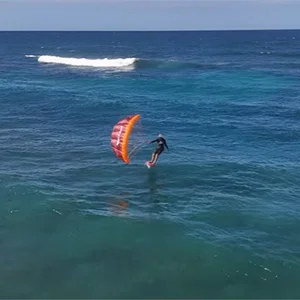
Parawinging shines when you have enough wind to get flying, plus enough swell or bumps to keep foil gliding after you pack the wing.
Good conditions
- Steady wind with room to drift downwind and reset, because parawing technique improves fastest when you can repeat starts without fighting gust holes. A common working range for many riders is mid-teens to the 20-knot range, depending on wing size.
- Rolling swell or organized wind bumps downwind for parawing downwind runs, where the wing is mainly your start button and your safety restart.
- Clear water with low traffic. You want space because a parawing wing has lines, and your foil board carries speed even when you are not powered.
Bad conditions
- Offshore wind, unless you have a proven safety plan. Parawings can restart you, but they can also pull you farther out.
- Highly gusty wind near obstacles, where collapses and line management become the main problem.
- Crowded swimming zones, busy harbors, and tight surf lineups. Parawing foil and any hydrofoiling require extra margin due to speed and sharp hardware.
Wind versus water state
As chop and swell increase, you generally want more mast length for clearance and smoother flight. A practical starting rule for mast choice is about 70 to 75 cm for flatter water and about 75 to 85 cm as chop and swell build.
Where to Go
Parawinging works anywhere you can safely combine wind, room, and a clean downwind exit. The best locations share three traits: consistent wind, a usable downwind run, and an easy bailout.
General location types
- Ocean downwind corridors with steady wind and long-period energy: ideal for parawing downwind because you can stow the wing and link swell.
- Large inland rivers with reliable directional wind are excellent training grounds when you have defined launch and takeout points.
- Big inland lakes: workable if the wind is consistent and you have room, but many lakes lack the long, organized bumps that make the stow-and-glide part magical.
Well-known hotspots
- Maui, Hawaii is widely recognized for downwind foiling, with the Maliko Run often cited as a marquee downwind route that foilers use when trades are on.
- Columbia River Gorge, Oregon and Washington is popular for wind sports and downwind runs when west winds are flowing, with commonly used launch-to-takeout routes that suit foiling and wing-powered craft.
- Cape Town, South Africa, is a major wind destination with an established culture and multiple wind-driven venues downwind depending on direction and swell.
Setup and Tuning
A good parawing setup feels neutral under your feet. You want the foil to fly level at your cruising speed, with minimal front-foot or back-foot fight, because your hands are busy with wing handling and then packing.
Mast position
Moving the mast forward generally increases the system's tendency to lift and can help in light-wind foiling. Moving it back can calm the ride at speed and reduce the tendency to over-lift.
A practical way to get close to neutral balance is to aim for a setup that lifts level when supported at the front wing’s balance point, then fine-tune on water.
Stabilizer shims
Shims change the stabilizer angle and can noticeably affect lift, pitch stability, speed, and turning radius.
Use shims to solve specific problems
- Too much front-foot pressure at speed: tune toward a more neutral trim by adjusting stabilizer angle.
- Not enough low-speed support for takeoff: a small change that increases support can help, but do it in small steps.
Stabilizer size and fuselage length
If your parawinging progression goal is easy takeoff and forgiving flight, go longer and larger. If your goal is efficient glide and tighter surfing turns once the wing is stowed, you can step shorter and smaller, but only after your pitch control is automatic.
Tips and Tricks
- Treat the first sessions as wing management training, not a downwind mission. Practice clean launches, stable reaches, then a deliberate pack into the pouch, then a deliberate redeploy.
- Pack before you are overpowered. It is easier to stow when you are stable and in control, not when the canopy is yanking.
- Keep the system simple early. A stable board, a forgiving front wing, and a calmer tail make parawing easier to learn because the foil requires less constant correction.
- Use mast length to match the water. Shorter masts feel closer and can be easier early on flat water, but once you add real chop, you want the clearance of a longer mast to avoid breaches.
- Do not chase micro-tuning on day one. Start with a neutral mast position and no extreme shims, then change one variable at a time. Shims are powerful, and small changes can swing the feel a lot.
- Always leave yourself an exit. Parawinging is wind-powered foiling with lines. Pick launches where a missed relaunch is an inconvenience, not an emergency.
Skills Ladder
Beginner
Prerequisite
- You already comfortably control a foil board. You can ride both directions, manage speed without constant breaches, and recover from touchdowns without crashing.
First skills to build
- Clean parawing handling on land: sorting bridles, identifying leading and trailing edge quickly, and launching without twists.
- Waterstart timing: generate a steady pull, build board speed, then lift onto foil smoothly instead of yanking up.
- Basic flight with the parawing parked: hold a stable reach, keep the canopy loaded, and avoid oversteering.
- Safe shutdowns: depower early, drop off foil under control, and keep lines away from the foil during the fall.
Gear changes that help beginners
- A parawing setup that favors early takeoff and stability: a higher-volume board and a more forgiving, earlier-lifting foil wing.
- A slightly larger parawing size for your wind range, so you can start without difficult steering.
Intermediate
Core skills
- Reliable upwind angles. Modern parawings are designed to go upwind, and you need that ability to set up repeats and stay out of trouble.
- Powered transitions: jibes and tacks while keeping line tension and canopy stability.
- Stow and redeploy: you can pack the parawing into a pouch while staying on foil, then redeploy cleanly when you need power again.
- Wind management: depower before you are overspeed, and power up without a surge when you are under speed.
Gear progression
- Step toward more glide and less drag once takeoffs are automatic: smaller board volume and a more efficient foil wing for longer foiling runs.
- Consider a small quiver of parawing sizes if you ride a wide range of wind conditions, because this discipline spans from light-wind foiling starts to stronger-wind laps downwind. Having multiple sizes is part of the concept for most riders.
Advanced
High-level skills
- Parawing downwind linking: launch under wind power, stow completely, and connect bumps hands-free for long distances.
- Wave and swell riding with full stow: use the parawing for the start, then ride swell uninterrupted until you choose to redeploy.
- Rough-water precision: stable height control through chop, high-speed touchdown recovery, and disciplined line management in messy conditions.
- Self-launch parawing discipline: you can launch and relaunch efficiently without drifting into hazards, and you keep an exit plan on every run.
Niche Specific
- The defining feature is the power-to-glide transition. Parawinging is wind-powered foiling where the parawing wing can be fully stowed so you can ride swell hands-free, then redeploy when you need power again.
- The wing is a compact parafoil on short lines, drawing directly from ram-air kite and paragliding technology. That design changes everything about wing handling compared with rigid, inflatable wings.
- Parawinging is tightly linked to downwind foiling access. One reason it took off is that it can unlock downwind-style glides without the same paddle-up commitment, and it can be used for repeat laps rather than one-way shuttles.
- Parawings can be carried compactly. The format makes it realistic to pack a second size as a backup or to cover a wider wind range on the same mission.
Common Problems
Line tangles during launch, stow, or redeploy
- What it looks like: the canopy will not fill evenly, steering feels wrong, or the wing will not climb cleanly.
- Fix: treat every deploy like a preflight. Keep the bridles organized, keep light tension in the system, and do not rush the first power stroke. Some designs use color coding and bridle layouts intended to reduce tangles and make untangling more systematic.
Underpowered starts and light wind frustration
- What it looks like: you cannot build speed to lift, or the wing collapses when you try to pump it for power.
- Fix: pick steadier wind and work on efficiency before you chase marginal sessions. Parawinging in light winds is tricky because the parawing lacks the rigid structure that makes aggressive pumping easier.
Overpower and speed spikes.
- What it looks like: sudden surge, foil wants to breach, and the wing starts pulling you faster than your stance can absorb.
- Fix: depower early, bear off slightly to reduce apparent wind spikes, and prioritize a stable foil trim before you think about packing.
Packing while unstable on foil
- What it looks like: you start stowing, lose focus on foil height, and breach or touchdown hard.
- Fix: stabilize first. Get into a comfortable, slightly conservative cruise, then stow in stages. If you cannot hold a steady flight path for ten seconds, you are not ready to pack.
Relaunch delays after crashes
- What it looks like: canopy sticks to the water, lines slack, wing will not climb.
- Fix: build line tension first, then let the canopy load and inflate before you ask it to fly. Do not fight it with rapid steering while it is still half-inflated.
World Records
There are no recorded world records for Parawing Foiling in our database yet. If you know of one, or you hold that epic distinction, submit it for inclusion.
World Firsts
- First men's winner of the SFT Downwind Parawing World Cup: Tom Pansard is the first men's SFT Downwind Parawing World Cup winner. Holder: Tom Pansard
- First double-parawing pump foil ride: Olek Olo is credited with the first double-parawing pump foil ride. Holder: Olek Olo
- First women's winner of the SFT Downwind Parawing World Cup: Manon Dupe is the first women's SFT Downwind Parawing World Cup winner. Holder: Manon Dupe
- First Downwind Parawing World Champion: Bastien Escofet becomes the first Downwind Parawing World Champion. Holder: Bastien Escofet

Know about a broken record, an update needed to an existing world first, or a brand new world first that deserves to be in the public record? Submit it.
History
The word “parawing” existed long before hydrofoiling. In 1948, Francis and Gertrude Rogallo developed a flexible wing concept often referred to as the “Parawing” or Rogallo wing.
In modern foiling, compact, stowable parafoil wings appeared as experiments before the sport hit mainstream attention. Five-O’s published timeline states the “Pocket Wing” was born in summer 2022 and designed by Sam Reynolds to push downwind foiling boundaries.
The parawing foil concept accelerated rapidly in 2024. Foiling Magazine described a major inflection point in the summer of 2024 and cites early developments, including Sam Reynolds’ Pocket Wing and Cynthia “Cynbad” Brown’s parachute-style downwind experiments.
Wider visibility surged with Greg Drexler and Boardriding Maui’s “Maliko” parawing. The Inertia reports Drexler debuted the Maliko V1 on August 21, 2024, and Kitesurfing Magazine published “first sightings” of the Maliko parawing on August 20, 2024.
By 2025, parawinging was recognized as a distinct, named discipline at public events. Maui News reported that Paddle Imua 2025 at Kanaha Beach Park included a parawing division and presented it as the island’s first official introduction to the sport.
FAQs
Is parawinging the same as wing foiling or kiting?
No. Parawinging uses a compact parafoil wing on short lines that can be packed away mid-ride, while wing foiling uses a hand-held inflatable wing, and kite foiling uses larger kites on long lines, typically with a harness. Parawinging is built around stowable power and hands-free foil gliding once you are up.
Can a parawing go upwind?
Yes. Upwind ability is a core feature of modern parawing wing designs, and it is one reason the discipline works for repeat laps rather than one-way drifts.
Do I need a downwind board to do parawing foiling?
You do not strictly need one, but boards that accelerate efficiently and carry glide make parawinging easier because they reduce the power you need to take off, and they hold speed when you stow the wing. The early paraglider push was closely tied to making downwind-style glides more accessible. Short boards work well for dockstarts and for paragliding from a dock-start launch.
What is the hardest skill in paragliding?
The hardest skill is managing the stow-and-redeploy cycle while maintaining control of foil height and direction. Packing too early or too late creates line problems and touchdowns. The discipline rewards riders who can deliberately fly the parawing, then switch to pure foil control instantly.
Why does parawinging feel harder in light wind?
The canopy format does not give you the same rigid platform for pumping and generating speed as an inflatable wing does. Light wind foiling is possible, but technique and efficient gear matter more, and many riders find the low end demanding.
Which Foiling Freaks are into Parawing Foiling
-
 Jelli Maris
Wind whisperer. Queen of the float. Checkout Jelli Maris's merch page.
Jelli Maris
Wind whisperer. Queen of the float. Checkout Jelli Maris's merch page.
First sightings of the new parawing from BRM
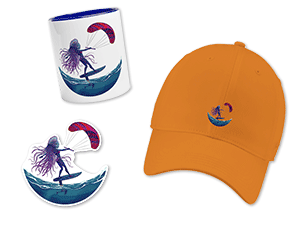
A visual introduction to what parawing foiling looks like on the water, showing the compact wing style, the clean, open-ocean glide, and how riders use parawing to get up on foil and run with swell and wind.
If you know this discipline inside and out and want to help review and or edit the info on this page, drop us a line. We will credit you as a reviewer or editor and set you up with a proper bio page with links back to your site.
We could use a few more high-quality images to illustrate this discipline. If you have shots you own and are willing to share, contact us for where to send them. Bonus if you also credit the rider and give us a URL to link back to you.