Freefoiling
What is Freefoiling?
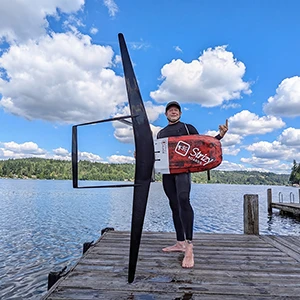
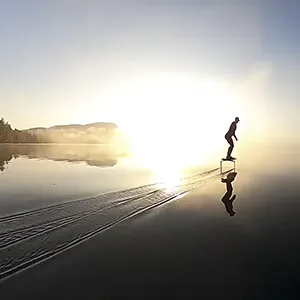
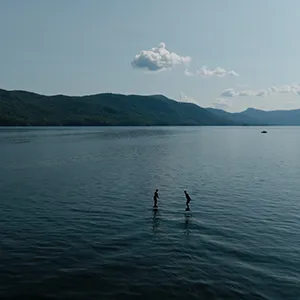
Freefoiling is long-distance pump foiling. In pump foiling, you ride a hydrofoil board powered only by your body movements. Here, the goal is human-powered exploration, not just short rides near your starting point. You start from a dock or beach (called a dock start or beach start), get the board on foil, then settle into a rhythm to cover long distances across flat water, without wind, waves, or a tow boat.
Think of it as endurance foiling. You are optimizing for low-speed foil efficiency and time-on-foil, so you can keep flying for 10 minutes, then 30 minutes, and eventually hours as fitness and technique improve. Multi-hour, tens-of-kilometer flat-water foiling is achievable at an elite level.
Who is into freefoiling?
If you are into freefoiling, make sure to drop your pin on the Foilers Pin Map and help freefoiling claim the leaderboard. Check the pin map and leaderboard for how many people into freefoiling have marked themselves on the map.
How it Works
The power source is human-powered. You generate lift and forward drive by repeatedly loading and unloading the foil through your legs and hips, creating an efficient up-down cycle that keeps the wing producing lift while converting body movement into forward speed.
A freefoiling session has three phases
- Launch: Most riders use a dock or beach start to gain the initial speed needed to fly.
- Settle into the cruise: Once flying, the focus shifts to smooth, economical pumping. You stay in a narrow band of speed and height where the foil glides efficiently, without wasting energy on big-amplitude pumps.
- Navigate and manage energy: Freefoiling is not dependent on waves, but it can take advantage of any helpful texture, such as microswells or low boat wakes. Your job is to keep the foil flying through small disturbances without spikes in effort, then turn that stability into distance.
What Makes it Different
Freefoiling is still pump foiling, but the priority stack is different from most other foil disciplines and even from other exploration-driven formats.
Efficiency over maneuvering
Freefoiling is about covering water with the least wasted energy possible. The goal is not tricks, sharp carving, or explosive direction changes. Every movement is measured against one question: Does it preserve glide? Clean lines, conservative turns, and a steady rhythm matter more than style points because every unnecessary surge or correction costs distance.
Specialized wide-wingspan foil designs
Long-distance pump foiling rewards high-aspect foils with wide spans and narrow chords because they glide farther and carry speed more efficiently once flying. That makes them better suited to sustained distance efforts than shorter, more agile setups built for tighter turns or playful handling. At the far end of the spectrum, dedicated endurance foils can stretch past 2 meters in wingspan and push extremely high aspect ratios, built specifically to maximize glide and reduce the energy cost of staying on foil.
Fitness is integral to the discipline
In freefoiling, your engine matters as much as your foil. If the goal is 5 minutes or more of sustained flight, aerobic capacity becomes a real performance limiter. Efficient endurance pumping is not just technical. It is metabolic. One published benchmark puts the steady output for an efficient 75 kg rider at roughly 210 watts on a bicycle, which gives a useful sense of how serious the physical demand can be. Keeping your heart rate in an aerobic state and not exceeding your lactate threshold is the key to unlocking freefoiling.
Calm-water exploration instead of open-water energy chasing
This is one of the clearest ways freefoiling separates itself from downwinding and similar exploration disciplines. Freefoiling is usually rooted in calmer water and in self-powered exploration of inland waterways, protected bays, flatwater channels, lakes, and slow-moving routes, where the rider creates and manages all forward energy. Downwinding, by contrast, is built around linking bumps, swell, and wind energy across open ocean or large inland bodies of water.
Both can be exploration-focused and can cover meaningful distance, but they do so in very different environments and with different power sources. Freefoiling is about generating your own flight in quieter water. Downwinding is about reading and harvesting the energy of moving water across larger, more dynamic terrain.
A different kind of adventure
Because of that, freefoiling often feels less like chasing conditions and more like unlocking places that look unremarkable to everyone else. A calm canal, a glassy river bend, or a sheltered shoreline becomes a route worth riding. The challenge is not surviving rougher water or connecting ocean swell lines. It is sustaining efficient human-powered flight long enough to turn flatwater into a real journey.
Safety and Etiquette
Freefoiling pushes you farther from the launch, which changes the risk profile.
Safety priorities
- Wear a properly fitted PFD when lake foiling or exploring open water. Endurance foiling means fatigue is guaranteed eventually, and cold water magnifies the consequences of a mistake.
- Dress for immersion, not air temperature. Assume you may be in the water longer than planned.
- Treat boat traffic as your biggest day-to-day hazard. Stay out of navigation channels, cross quickly and predictably, and avoid pumping where boaters cannot see you well. These are also not water conditions conducive to freefoiling.
Etiquette that keeps access open
- Do not freefoil through crowded swim zones, marinas, or fishing areas.
- Give wide berth to paddlers and swimmers. A foil moves fast and carries sharp hardware.
- Near a shared launch, keep your start attempts within your own space to avoid interfering with other users’ spaces.
Starter Guide
Minimum gear list
- A foil board and hydrofoil setup that can be pumped.
- A front wing that lifts early enough to make starts repeatable, then glides efficiently enough to make distance possible.
- Helmet and impact protection for the launch phase.
- PFD for any open-water freefoiling route.
- A basic safety plan: choose your route, check the weather, tell someone your plan, and have a way to signal or call for help if needed.
- Snacks and hydration for the long hauls.
Cost ranges
- New complete pump-foil packages commonly land in the rough ballpark of $1,800 to $3,100 for entry- to midrange setups, depending on materials and what is included, with high-end, efficient setups reaching $ 7,000.
- Specialized endurance-oriented systems can cost significantly more than typical setups.
Difficulty and learning curve
- Difficulty: advanced as an endurance discipline, even if you already know how to pump foil.
- Learning curve: first, you build consistent starts and short flights, then you train efficiency and aerobic capacity until 10-minute flights become normal, then you stretch time and distance in controlled steps.
How to get started
- Start with flat-water foiling sessions close to your launch, and set a time goal, not a distance goal.
- Build a repeatable start first, then perfect an economical cadence that you can hold without spikes in effort.
- Learn a variety of starting techniques, such as rock starts, beach starts, and knee starts, to unlock more launch points.
- Only add distance when you can reliably recover from falls, restart, and still have energy left.
- Find other pump foilers locally through general social media searches and local watersports communities, then learn which areas are safe, tolerated, and free of boat traffic.
Gear Selection
Board
Freefoiling starts like any other pump-foiling session, so the board needs to support repeatable dock starts or beach starts and feel stable enough for long-distance pumping.
- Typical pump boards used for flatwater foiling are compact, measuring about 90-95 cm long and 40-42 cm wide.
- Volumes for dedicated pump boards can be very low, down to 11 liters for some common compact shapes.
For endurance foiling, board choice becomes a tradeoff
- Smaller boards reduce swing weight and feel lively once flying.
- Slightly larger, more forgiving boards make starts and restarts easier and feel less twitchy when you are fatigued.
Front wing
Freefoiling lives or dies on glide efficiency and low-speed lift. You want a low-speed foil that stays in the air at a sustainable cadence.
Practical size bands you see in pump foiling
- General pump foiling wings commonly sit around 1500 to 1900 cm², depending on rider weight and skill.
- High-aspect pump wings for riders around 70 kg are commonly discussed at around 1700 cm² with wingspans of roughly 105 to 115 cm, with heavier riders moving toward 2000 cm² and wingspans of around 130 cm.
- High aspect ratio means the wing has a long, narrow shape, which increases glide efficiency.
Endurance-focused freefoiling pushes larger spans and higher aspect
- Long-distance pump-foiling includes front wings with an area of around 2100 cm², a wingspan of around 2.1 m, and an aspect ratio of around 21.
- Other long-distance-oriented front wings have wingspans of around 1700 mm and an aspect ratio of around 12.6.
- Riders who mix long-distance pumping and surf-style foiling commonly span a very wide quiver, from very large wings for distance down to much smaller wings for surfing.
Mast length
For long-distance pump foiling, you want efficiency, consistent height control, and enough clearance for small chop.
- Beginner-friendly pump mast lengths commonly cluster around 70-80 cm.
- A 75 cm mast is also commonly sold as a standard pump foiling length in complete pump sets.
Fuselage and stabilizer
Freefoiling rewards calm pitch behavior because micro-instability costs energy.
- Longer fuselages and larger stabilizers generally increase pitch stability and reduce the foil's twitchiness, at the cost of some agility.
- Wing shims can change lift, pitch stability, speed, and turning radius, which directly affects glide per pump.
Accessories
- PFD for open-water lake foiling and any long route where fatigue or cold water is a realistic risk.
- Hydration and simple calories: freefoiling sessions can extend long enough that fueling matters, especially as you push into hour-scale efforts.
Conditions
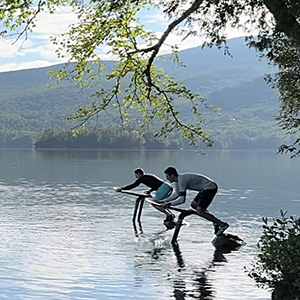
Freefoiling is designed for flat-water foiling. The best sessions happen when the water is calm enough that you are not wasting energy on constant height corrections and fighting boat wakes or wind chop. Think of it for exploring mountain lakes rather than the open ocean, which would be better as a downwinding option.
Good conditions
- Light to no wind, low chop, and minimal boat wake so the foil can stay in a steady low-drag flight state.
- Predictable water texture. Light ripples are fine, but repeated steep chop forces a higher cadence and burns you out.
- Warm enough water, or appropriate exposure protection, because endurance foiling guarantees fatigue eventually, and cold water shortens your safe margin.
- If the session goal is 5 minutes or beyond, calm water becomes a performance multiplier. Every small instability adds up over time.
Bad conditions
- Heavy boat traffic and confused wake. Wakes can be used, but constant wake-crossing is costly and risky.
- Strong current that turns a simple out-and-back into a survival swim if something breaks.
- Offshore wind on large water where a fall plus drift becomes a retrieval problem. These types of conditions should not be considered for freefoiling.
Where to Go
Freefoiling is easiest in places that are naturally calm, have easy access for dock-start foiling or beach starts, and let you stay away from power-boat corridors.
Best general locations
- Sheltered lakes, reservoirs, and protected bays with large no-wake zones or naturally low boat traffic.
- Canals and calm river stretches where the current is minimal, and you have frequent, easy exit points.
- Routes with shoreline options. For long-distance pump foiling, you want bailout beaches, docks, or ramps within a short swim.
- A recurring theme in freefoiling is riders choosing routes that circumnavigate a lake and claiming victory as the first to complete them.
Examples of proven endurance-style venues
- Flatwater endurance records and endurance sessions have been done on lakes such as Lake Sempach in Switzerland.
- Long-distance pumping plans and loops have also been discussed around Lake Zug, and multi-lake expedition-style pumping has been documented around Lake Annecy.
Setup and Tuning
Freefoiling tuning is about one thing: minimizing wasted effort. You want a trim state where you can cruise without fighting front-foot or back-foot pressure.
Mast position
- Moving the mast forward generally increases front-foot pressure and makes the lift come on earlier, while small adjustments matter.
- Mast movement is not, by itself, a magic efficiency switch. Efficiency gains often come from reducing tail lift and then rebalancing with mast position so the system trims neutral at speed.
- Practical freefoiling target: neutral trim at your sustainable cadence, not neutral trim at max sprint speed.
Tail shims and stabilizer angle
- Shimming the tail can change lift and pitch stability, shifting you toward faster, lower-drag glide or slower, more stable behavior.
- For endurance foiling, tune so the foil holds height without constant micro-corrections.
Fuselage length and stabilizer size
- Use more stability when you are building time on foil. A stable foil reduces the energy lost to oscillation.
- Loosen it up only when your cadence is efficient, and you can hold a line without wobble.
Wing choice and span management
- Wider wingspan foil designs improve efficiency, but they also demand cleaner roll control, and they complicate launches and landings near obstacles. Extremely wide wingspans also require a slightly different technique to turn without going into the dreaded death spiral.
- If your routes include tight turns, docks, or narrow corridors, pick a wing you can confidently bank with more control.
Tips and Tricks
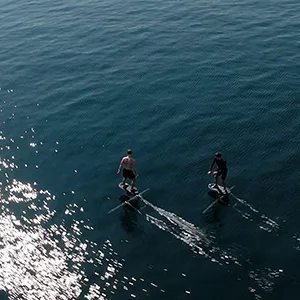
- Train the start to protect the mission. If your dock start or beach start takes five attempts, you burn the best minutes of your legs before you even start exploring. Dial in a variety of starting techniques (rock start, knee start, beach start, dock start) so you can start from awkward launch points efficiently.
- Build a sustainable cadence. Your best endurance pace is when the foil stays quiet, your knees stay springy, and your breathing stays controlled.
- Use loop routes early. Out-and-back and shoreline loops keep you close to exits and reduce risk while you learn what “fatigue” feels like on foil.
- Cross boat lanes like you are a cyclist crossing an intersection. Commit, cross, and then return to quiet water. Speeding up your transitions may not be realistic, as increased speed can push you from a sustainable aerobic pace to an unsustainable anaerobic pace.
- Make one tuning change at a time. Start with mast position, then tail shim, then stabilizer size. Shims can create big changes from small adjustments.
- Treat safety gear as distance gear. A PFD can turn a long-distance idea into a responsible plan when you are far from shore, tired, and without support.
Skills Ladder
Beginner
You build the foundation for long-distance pump foiling by making short flights repeatable and low-stress. Think of your learning trajectory as not only how to pump a foil but how to keep your body working in an aerobic state. You have to view freefoiling as an endurance sport, much like marathon training.
- Consistent takeoffs: reliable dock start foiling or other “dead start” methods that get you flying without burning your legs in multiple failed attempts.
- Efficient cadence: small, smooth pumps that keep the foil in a narrow speed band instead of big amplitude surges. This can also help reduce your heart rate.
- Basic route control: straight lines, gentle direction changes, and calm touchdowns that do not end the session.
- Gear shifts that help: prioritize early lift and stability so you can rack up minutes, not just launches.
Intermediate
You stop thinking in “attempts” and start thinking in “routes” and connecting launch points.
- 5 to 10-minute flights become normal: with consistent turning and speed management.
- Wake management: you cross small boat wakes and wind ripples without crashing. Extremely wide wingspans make even small boat wakes problematic.
- Restart discipline: you can fall, recover the board immediately, and relaunch efficiently.
- Gear shifts that help: move toward a wider wingspan foil and a higher aspect front wing once you can already stay up, because glide efficiency is what turns pump foiling into freefoiling.
Advanced
You are doing endurance foiling, where the limiting factors are physiology, planning, and risk management.
- Sustained neutral trim: You can maintain height and speed with minimal corrective input for extended periods.
- Route execution: shoreline loops, crossings, and multi-leg missions where you plan exits, bailout points, and return options.
- Multi-hour capability is possible at an elite level: Multiple elite riders have made runs in the 4-hour range.
- Gear shifts that help: true endurance wings move into very large spans and high aspect ratios, from 1700 mm at AR 12.6 to 2.1 m at AR 21.
Niche Specific
Freefoiling is flat water foiling built around distance, not tricks. The goal is continuous human-powered flight that lets you explore beyond your launch zone.
The equipment bias is extremely efficient. Wide-wing, foil-style designs and high-aspect wings reduce drag and increase glide, so each pump delivers greater distance with minimal physical effort.
The physiological reality is that you are working near a sustainable threshold for long periods, so small efficiency gains can translate into large endurance gains.
The operational mindset is closer to a long swim or bike ride than a normal foil session: route planning, exposure management, traffic avoidance, and conservative decision-making matter as much as pumping technique.
Common Problems
Burning out early
- Problem: You start too hard, pump too big, and spike into an unsustainable effort zone.
- Fix: shrink the pump amplitude, increase smoothness, and tune the foil so it flies neutral at your cruising pace. Efficiency changes can have an outsized impact on endurance. Combine efficient gear changes, improved pumping technique, and dedicated cardio training to improve your performance and keep your body working in an aerobic state.
Death by micro-instability
- Problem: porpoising, roll wobble, or repeated near-breaches that quietly drain energy.
- Fix: prioritize stability and trim first, then speed. If you cannot cruise calmly, you are leaving free minutes on the table every session.
The route becomes unsafe due to traffic
- Problem: Boat lanes and wakes turn an endurance session into constant defensive riding.
- Fix: choose sheltered water, no-wake zones, and predictable corridors where you can hold a line without surprise wake hits.
Falls become long swims
- Problem: separation from the board or getting pushed away from shore turns fatigue into risk.
- Fix: Use a PFD as standard for open-water lake foiling and long routes, and carry a beacon or phone in a waterproof pouch for communication.
Turns kill your flight
- Problem: You lose too much speed in direction changes, and the foil drops.
- Fix: widen the turn radius, keep the foil loaded through the arc, and treat turns as energy management, not carving practice. Exploration pace rewards conservative flight paths.
History
Freefoiling grew out of pump foiling and dock-start culture, then began to separate into its own endurance-and-exploration niche as riders focused less on short flights and more on sustained travel across lakes, bays, shorelines, and inland waterways under pure human power.
That shift was accelerated by more efficient foil designs and by projects like the Beta Freefoil, led by Todd Reichert, which dates back to 2018 and explicitly positions around long-range, self-powered exploration. The Beta Freefoil had achieved continuous flights lasting 2.5 hours, marking one of the key early endurance milestones in modern freefoiling.
May 11, 2024: Nicolas Iten set a long-distance benchmark by pumping 36 km in 2 hours 39 minutes on Lake Sempach.
May 25, 2024: Iten extended that mark to 54.8 km in just over 4 hours, a world-record performance that helped define what long-distance endurance pumping could look like on the water.
FAQs
Is freefoiling different from pump foiling?
Freefoiling is pump foiling with a different objective: sustained, long-distance human-powered travel rather than short sessions near the dock.
How long can someone actually freefoil?
At the elite end, multi-hour continuous pumping is possible. The average rider does freefoil runs broken into shorter sections by connecting launch points.
Do I need a huge, wide wingspan foil to freefoil?
You can start freefoiling on standard pump gear if you have the cardio capacity to sustain runs longer than 5 minutes, but true long-distance efficiency favors higher aspect and larger spans, with endurance wings ranging from about 1700 mm to 2.1 m in dedicated designs.
What is the biggest safety upgrade for long-distance flat water foiling?
Treat it like open-water travel: A PFD and communication device are the simplest upgrades that reduce the consequences of fatigue, gear issues, and unexpected falls far from shore.
How do I choose a route for my first freefoiling mission?
Start with sheltered water, shoreline loops, easy exits, and minimal boat traffic. Build distance only after you can relaunch reliably and keep your effort steady. Study routes from shore or by boat to identify launch points in advance.
Which Foiling Freaks are into Freefoiling
-
 Glitch Bluewater
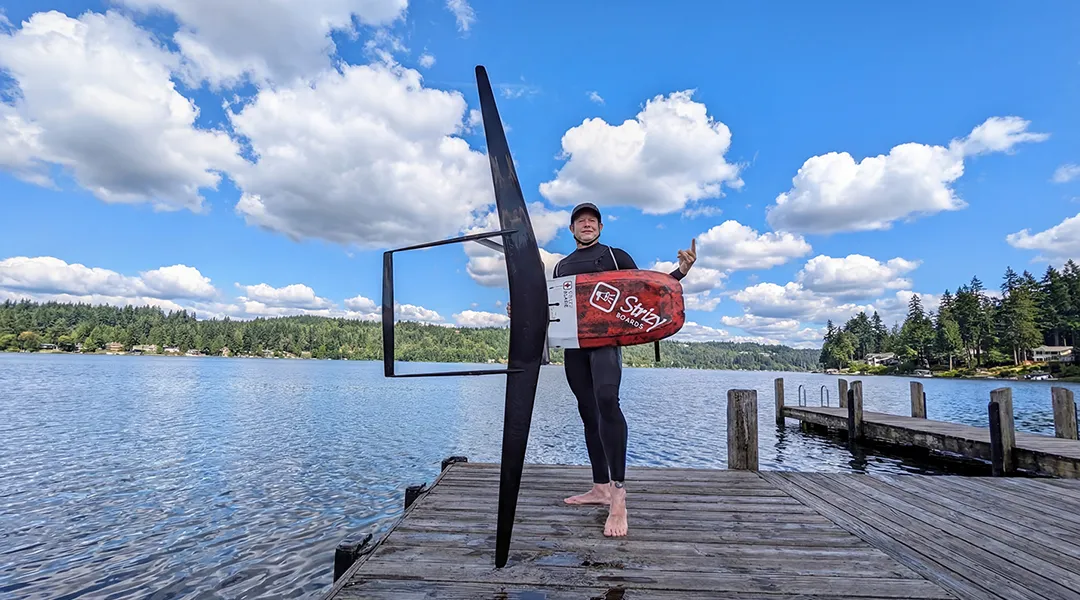
He did not plan any of this. Checkout Glitch Bluewater's merch page.
Glitch Bluewater
He did not plan any of this. Checkout Glitch Bluewater's merch page.
Freefoiling Summit - Blue Mountain Lake
A compilation of footage from the First Annual Freefoil Summit. In September 2025, they gathered together a small group of Beta Foil riders at a cottage in the Adirondacks. The goal was simple: get everyone together at an ideal freefoiling location and try to unlock the sport for them, and for everyone who comes next.
If you know this discipline inside and out and want to help review and or edit the info on this page, drop us a line. We will credit you as a reviewer or editor and set you up with a proper bio page with links back to your site.