Assist Foiling
What is Assist Foiling?
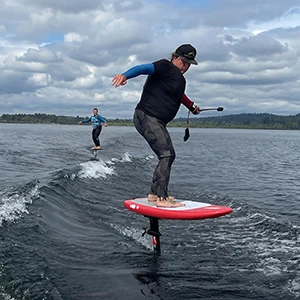
Assist foiling is hydrofoiling with an electric boost that you use only when you need it. You ride a normal foil board and a hydrofoil, but you add an electric foil-assist system so you can accelerate into takeoff, get back out, and connect with waves or bumps with short bursts of power. The goal is still to ride the wave, the swell, or your own pumping. The motor is there to shorten the downtime, get to and from the waves, and expand the range of what is rideable.
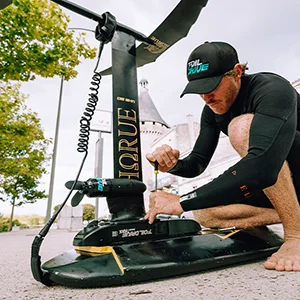
A common assist configuration uses a foil drive motor mounted on the mast, a foil drive battery mounted on the board, and a foil drive remote to control power.
Assist systems are evolving toward hybrid use. The same hardware can often be set up with different motor heights and battery capacities, so a rider can choose a true e-assist foiling feel or something closer to continuous powered riding.
Who is into assist foiling?
If you are into assist foiling, make sure to drop your pin on the Foilers Pin Map and help assist foiling claim the leaderboard. Check the pin map and leaderboard for how many people into assist foiling have marked themselves on the map.
Be more than just a dot on the map. Join the Foiling Freaks community and create your own foiling profile with a custom handle, rider photos, videos, disciplines, bio, and more.
How it Works
All foiling is based on the same physics: a foil wing moving through water creates lift, and the rider balances the foil’s pitch and roll while managing speed and height. Assist foiling adds an electric power source to get the foil to flying speed without needing a boat tow or a full-time motor ride.
Typical power sources and flow
- Electric assist for takeoff and transitions: You use the electric foil assist to accelerate to lift-off speed, then reduce or cut power once you are flying.
- Wave power for riding: In powered surf foiling and surf foiling assist, the motor helps you get into position and into the wave, then the wave becomes the primary energy source.
- Pumping for efficiency: After takeoff, riders often pump to maintain speed through soft sections or between waves, using brief motor taps as needed.
Motor height matters in assist foiling. Many riders use a setup where, once they are up and riding high on the mast, the motor can lift partially or fully out of the water so the ride feels more like clean surf foiling rather than constant motor drag.
What Makes it Different
Assist foiling vs efoil
An efoil is built to be powered for the entire ride, typically with the motor integrated into the mast of a dedicated board. Assist foiling is an add-on system for an existing foil setup that you use selectively rather than continuously. There are efoilers that do unpowered wave riding, which extends battery time; however, the board's weight and the motor's drag are constraints.
Drag and feel when unpowered
In assisted foiling, riders often aim to minimize the amount of propulsion hardware in the water while riding waves. In efoil-style setups, a propeller and drive system in the water can act as a brake when not powered, which changes the feel on a wave compared with a clean surf foil. The heavier weight of most efoils also hinders reaction time, which foil assist boards are better at.
Why it exists as its own discipline
Assist foiling is not just “easy mode.” It changes what is possible: you can catch waves earlier, take softer waves that would normally not have enough push, and reconnect sections without paddling back to the lineup every time. That is why foil-drive surfing and surf foiling assist have become their own category of foiling. As foil-assist and efoiling technology progress, they are increasingly overlapping.
Safety and Etiquette
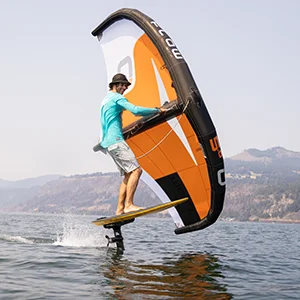
Assist foiling adds the normal hydrofoil hazards plus motor hazards.
Primary hazards
- Propeller injury risk: Treat the propulsion unit like a spinning blade because it is. Use a conservative throttle around people, keep distance, and consider a propeller guard when available for your system.
- Higher approach speed and longer range: You can enter the zone earlier and faster than paddlers. That increases collision consequences.
- Equipment management: Remote, battery, cabling, and mounts introduce failure points. Plan accordingly, including safety gear and a plan when far from shore and alone.
Mitigation
- Ride with wide margins, especially while learning throttle control.
- Use impact protection appropriate for foiling: a helmet and an impact vest are common choices, and a PFD may be appropriate depending on location and regulations.
- Practice first in uncrowded, predictable water before you bring an electric assist anywhere near other people.
Etiquette
- Follow standard wave-priority: the wave closest to the breaking part has priority, and if someone is already up and riding, they have the right of way.
- Do not bring motor advantage into crowded lineups. Motorized surfers can catch waves earlier with less effort, so using assist systems in crowded lineups is widely discouraged.
- If you use assist to return to the lineup, do it outside the main takeoff zone and never thread through paddlers. Better yet, just foil somewhere else.
- If you want to go deeper, Foil Drive has put together one of the most thoughtful assist foiling etiquette guides out there, focused on helping foil assist riders share the water responsibly and play well with others.
Starter Guide
Minimum gear list
- A stable foil board and hydrofoil suitable for your body weight and the conditions you ride in
- An electric foil assist system: foil drive mast mount or equivalent mounting, motor unit, battery, and a wireless remote
- Tools, spare fasteners, and a way to secure and protect the battery and cabling
- Safety gear for impact, rescue, and cold water
Cost ranges
- Electric foil assist kits commonly land in the several-thousand-dollar range. For example, complete kits for popular systems are often listed around the mid-$4,000s to $5,000s USD, depending on configuration, with some packages higher.
- Full efoils are often listed in the five-figure range, commonly above $10,000 USD for new boards.
- Generally, foil-assist packages are much more affordable than a traditional efoil.
Difficulty ranking and learning curve
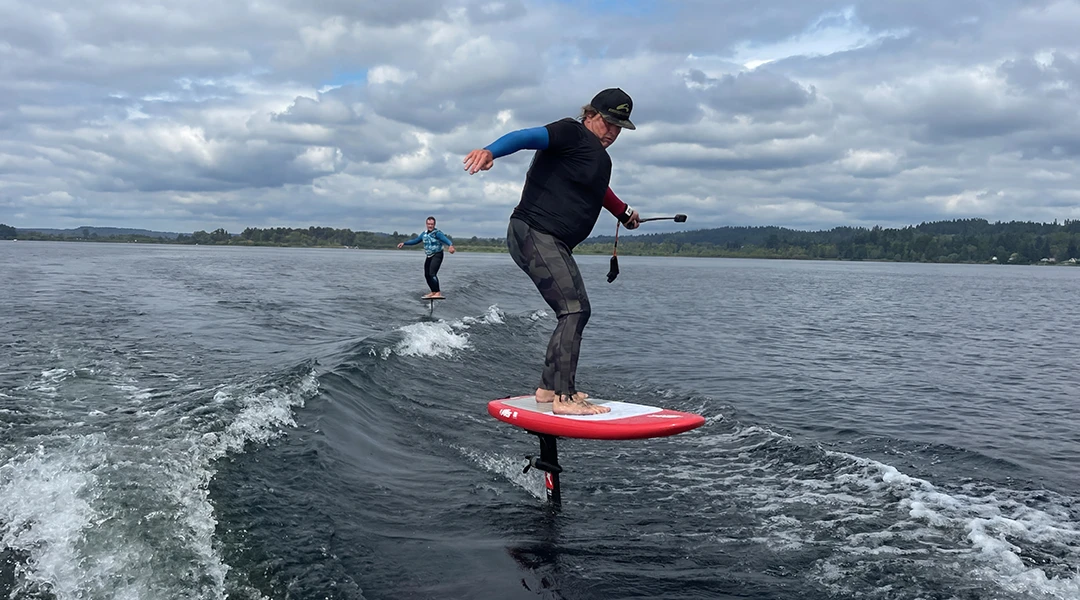
- If you already foil, assisted foiling is usually a moderate learning curve focused on throttle control, smooth takeoffs, and safe transitions from powered to unpowered riding.
- If you have not flown yet, adding a motor does not remove the need to learn balance, pitch control, and safe falling. It can reduce the number of failed takeoffs, but it does not replace core foiling skills.
How to get started efficiently
- Start in flat, open water with nobody around. Learn smooth throttle ramps and consistent takeoffs.
- Train the transition: reduce power gradually and keep your stance stable as you move from powered lift to wave or pump energy.
- Learn your fail-safe habits: what you do with the remote hand, where your body goes in a fall, and how you keep distance from the foil and propulsion unit.
- What video guides for throttle timing and stance, then find a local foiling community through social media searches to learn what is acceptable at your local spots.
Gear Selection
A good example of how the various parts of a foil assist system fit and work together to support a variety of foiling disciplines, rider preferences, skill levels, etc., is Foil Drive’s gear selection system.
Board and volume
Assist foiling uses a standard foil board for the discipline you are doing, most commonly surf foiling, downwind foiling, wing foiling, or flatwater cruising with an e-assist foiling kit. The motor, battery, and mounts add weight and shift balance, so the practical rule is to choose a board that feels comfortably stable for your unassisted riding, then add a stability margin if you are learning assist for the first time.
Mast length
For most riders, an all-around mast length in the 70 to 80 cm range is the sweet spot for open-water use because it gives clearance in chop and during carving while still feeling manageable when you are learning throttle and takeoff timing.
Front foil wing size
The motor lets you ride smaller wings than you could reliably paddle or pump onto, but most riders still choose a wing that matches their riding goal:
- Beginner assisted foiling: larger, lower-speed wings for early lift and pitch stability.
- Intermediate: mid-size wings that balance lift with speed range and carving.
- Advanced: smaller, faster wings when the rider wants tighter turns, higher speed, and more dynamic lines, using the assist for takeoff and links rather than continuous power.
A common reference point is that around 1000 to 1200 cm² front wings can be ridden with electric assist when there is some additional help from a wave, wake, paddle, or wing, while smaller wings generally demand more speed and cleaner technique.
Stabilizer and fuselage
Larger stabilizers and longer fuselages generally feel calmer in pitch and yaw, and are easier to learn powered takeoffs. Smaller stabilizers and shorter fuselages feel looser and more agile once your height control and throttle habits are consistent.
Assist-specific components and accessories
- Electric foil assist motor, battery, and remote (foil drive remote style control is common in this category)
- The battery attachment system and retention prevent it from ejecting in a crash
- Cable management and abrasion protection where cables contact the board
- Tool kit, spare fasteners, and thread locking compound for vibration-prone hardware
- Propeller safety hardware, if your system supports it, plus a routine for checking prop condition and tightness before every session
Battery and runtime expectations: Assist systems are typically used intermittently, not at full throttle for the entire session. If you try to use a foil assist like an efoil, the runtime is often much shorter, while intermittent use during wave riding or downwind runs can significantly extend it.
Conditions
Good conditions for assisted foiling
- Room and visibility: wide spacing from swimmers, surfers, and other foilers. Electric assist increases speed and range, so you need more space than you do with unpowered surf foiling.
- Clean surface: smooth water reduces ventilation, makes takeoffs easier, and keeps the prop from repeatedly re-entering aerated water.
- Waves with open shoulders: for surf foiling assist, the best sessions are usually waves where you can take off early, get clear of the pack, then ride unpowered.
- Downwind bumps with workable wind: for downwind foiling, assist is most useful when the wind and bumps are present but not strong enough to make takeoffs and reconnects consistent without help.
Bad conditions
- Crowded lineups: the combination of a hydrofoil and a motor raises consequences. Do not bring electric assist into surf lineups.
- Shallow or obstacle-heavy areas: powered takeoffs increase the chance of striking bottom, rocks, or debris if depth is marginal.
- Heavy kelp and floating weed: props lose efficiency fast and can foul, which is a safety issue as much as a performance issue.
- Strong offshore wind: assist extends your range, which can tempt riders into drifting risk. If the wind can push you away from shore, plan conservatively.
Where to Go
Best general locations
- Uncrowded ocean breaks with a channel or an easy exit path.
- The ideal is a takeoff area with space to accelerate, and a clean runout where you can shut down power and ride the wave without threading through traffic.
- Open coast points and reefs where you can motor outside the main pack, then take waves on the shoulder.
- Downwind corridors on ocean or large lakes where there is room to accelerate safely and no heavy boat traffic.
- Protected bays and large flatwater zones for learning throttle control and powered takeoffs before you add waves.
Known hotspots
- Hawaii, especially Maui, is widely recognized as a major center of modern foiling across surf foiling and related disciplines.
Setup and Tuning
Assist foiling feels best when the board trims neutral while you are flying high on the mast, both under light power and with power off. Tuning is about controlling pitch sensitivity and keeping the foil predictable when thrust turns on.
Mast position (fore-aft)
- If the nose wants to climb aggressively when you apply power, move the mast position so you can keep the board level with normal front-foot pressure.
- Many riders end up running the mast farther back in the tracks than they did unassisted because the assist system changes leverage and trim.
- While most efoils do not have the ability to change mast positions, many foil-assist setups do allow mast position tuning.
Stabilizer choice and shims
- If powered takeoffs feel twitchy or porpoise, increase pitch stability first by using a larger stabilizer or a more stable stabilizer angle.
- If the setup feels locked in and slow to turn when unpowered on a wave, reduce stabilizer size or adjust the shim angle toward a looser feel.
Fuselage length
- Longer generally calms yaw and pitch and helps early progression.
- Shorter generally improves turning radius and pump response once the rider is consistent.
Motor height and drag management
- A core advantage of surf foiling assist is the reduction of drag during wave riding. Mounting and riding style often aim to keep the propulsion system from acting like a permanent brake when power is off.
Tips and Tricks
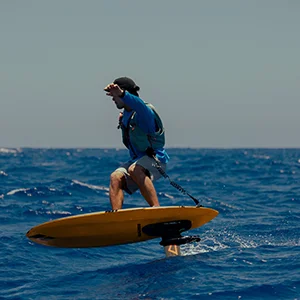
- Learn throttle like a dimmer switch, not an on-off button. Smooth power ramps prevent sudden breaches and reduce falls.
- Use the assist to solve one problem at a time: takeoff, reposition, or connection. If you stay on power constantly, you burn battery quickly, and you never learn clean, unpowered trim.
- Train your power-off transition: ease off, stabilize height, then commit to wave energy or pumping. The skill is staying balanced when the thrust changes.
- Practice in flat water first: get 20 clean, powered takeoffs and 20 clean, powered power-offs before you add surf crowds or complex wave faces.
- Keep a bigger safety bubble than you think you need: higher speed, foil hardware, and a motor mean wider margins.
- Do a bolt check every session: mast bolts, motor mount, battery retention, and any cable strain points. Electric assist adds vibration and extra load, so hardware-checking discipline matters.
- Plan for retrieval: batteries and drive units are valuable and can be hard to recover if a board separates from you in current or surf. Build your habits around not losing the rig in the first place.
Skills Ladder
Beginner
- You start by learning throttle discipline. Smooth power ramps are the skill that prevents breaches, crashes, and prop strikes.
- You learn powered takeoff sequencing: board flat, build speed, lift gently, then stabilize at a low ride height before you do anything else.
- You build a repeatable power-off transition. The whole point of assisted foiling is to tap power, then ride unpowered on a wave, swell line, or pump.
- Gear usually trends more forgiving: a stable foil setup with calmer pitch, plus conservative motor power use and short bursts.
Intermediate
- You can take off consistently with less power and less time on the throttle. Your assist becomes a tool, not a crutch.
- You learn reposition and reconnect: brief boosts to get back outside, to connect wave sections, or to bridge dead water, then back to clean surf foiling.
- You begin tuning for feel. You reduce the “locked-in” training setup and move toward a surfier ride while keeping reliability.
Advanced
- You use assist strategically: early entry, wide takeoff lines, and fast exits that keep you out of the impact zone.
- You ride smaller, faster wings and more agile tuning when conditions call for it, because you can now generate the required speed using short assist bursts.
- You manage complex environments: chop, current, and wave chaos, while keeping safe margins and predictable lines.
Niche Specific
Assist foiling is defined by selective power. It is not an efoil session where the motor is the ride. It is e-assist foiling where the motor exists to expand access: more waves, more connections, more time flying, less time paddling or slogging.
The niche is also defined by motor placement and drag management. Many setups aim to minimize how much propulsion drag remains in the water when you are actually riding a wave. That is the difference between powered surf foiling that still feels like surf foiling and a ride that feels permanently braked by underwater hardware.
Finally, this niche demands a higher standard of self-control. A foil drive remote, foil drive battery, and foil drive motor give you speed and range. That also means your consequences scale up, so etiquette and spacing are important, as is knowing how to get home or get rescued if you have equipment failure too far from shore.
Common Problems
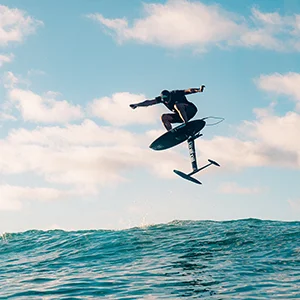
Overpowering the takeoff
- What it looks like: the board rockets up, breaches, then crashes back down.
- Fix: shorten the power burst, ramp power more gradually, and commit to low, quiet flights until your pitch control is automatic.
Prop strikes, damaged prop, or vibration
- What it looks like: vibration, rough running, or loss of efficiency after a strike or debris hit.
- Fix: inspect the prop for chips and damage, clear debris, and do not ride a damaged prop. Even small blade damage can unbalance the system and create vibration.
Motor cutting out or stuttering
- What it looks like: intermittent thrust that makes takeoffs unpredictable.
- Fix: inspect plugs and pins, keep them clean, and address connector issues that can cause intermittent power delivery.
Weed and kelp fouling
- What it looks like: sudden loss of thrust, extra vibration, or a motor that will not spin freely.
- Fix: avoid heavy weed zones, keep bursts short in suspect water, and clear the prop immediately if you feel performance drop.
Battery and saltwater maintenance mistakes
- What it looks like: corrosion, degraded connectors, unreliable performance over time.
- Fix: fresh-water rinse, dry storage practices, and routine inspections. Assisted foiling adds electronics, so maintenance becomes part of the discipline.
- Battery safety is critical; while a rinse usually works, it's important not to overlook this. A dropped battery or water ingress beyond the waterproofing can cause problems. Read your manual for info on "wet battery" or battery care and maintenance.
Safety habits around a spinning prop
- What it looks like: accidental throttle bumps while remounting, or getting too close to the propulsion unit in a fall.
- Fix: Use fail-safe habits when boarding and treat the prop as a cutting hazard. Propellers can cause bodily harm on contact.
World Records
- Longest foil-assist prone-board crossing: Paul Cooper and Josh Ku complete a 30-mile Molokai to Oahu Foil Drive prone-board crossing. Holder: Paul Cooper, Josh Ku
Know about a broken record, an update needed to an existing world record, or a brand new world record that deserves to be in the public record? Submit it.
World Firsts
- First Foil Assist downwind category winner at the Mataro Foil Festival: Dave West wins the first Foil Assist category at the Mataro Foil Festival downwind races. Holder: Dave West
- First winner of a Foil Assist surf competition: Paul Cooper wins the first Foil Assist surf event. Holder: Paul Cooper

Know about a broken record, an update needed to an existing world first, or a brand new world first that deserves to be in the public record? Submit it.
History
Assist foiling is a modern branch of hydrofoiling enabled by compact electric motors, high power-density batteries, and reliable wireless controls.
- A major inflection point for mainstream adoption was the rise of retrofit electric-assist kits designed to work with existing foilboarding gear rather than requiring a dedicated efoil board.
- One of the most visible commercial players, Foil Drive, began as a personal engineering project by Paul Martin aimed at making it easier to access more waves, and the company was launched in 2021.
- The category expanded rapidly as second-generation systems reached the market, including the Gen2 launch in late 2023.
FAQs
Is assist foiling basically the same as efoiling now?
It is continually getting closer as batteries grow and motor options expand, but the intent is different. Assisted foiling is built around short bursts for takeoff, repositioning, and wave connections, then riding unpowered.
Can I use assist foiling in a normal surf lineup?
Do not bring motor advantage into a crowded lineup. You take off wider, keep extra distance, and exit the impact zone fast. The correct venue is uncrowded waves or empty swell lines, not tight packs.
Do I still need strong foiling skills if I have electric foil assist?
Not necessarily. Many riders learn to foil with electric-assist systems like Foil Drive, especially when paired with a beginner-friendly board setup. The motor can meet you at your current skill level, from total beginner to advanced rider, and significantly accelerate the learning curve.
For new riders, this experience is often comparable to eFoiling, one of the easiest ways to get into foiling. Many beginners can get up and ride within their first session or two.
Core skills like balance, pitch control, and safe falling still develop over time. Electric assist doesn’t replace those fundamentals; it just helps you get there faster.
What is the biggest beginner mistake in powered surf foiling?
Too much throttle too fast. Smooth power application and low-controlled flights lead to faster progression and fewer hard crashes.
What matters more, the motor or the foil setup?
The foil setup still defines the actual riding, stability, speed range, and turning feel. The assist changes how you access that performance. A stable foil setup accelerates learning; once throttle control is consistent, tuning shifts toward agility. A motor powerful enough to get you flying and a battery with enough capacity for your use case is important for the foil assist equipment.
Which Foiling Freaks are into Assist Foiling
-
 Riptide Rocco
But everyone just calls him Rocco. Checkout Riptide Rocco's merch page.
Riptide Rocco
But everyone just calls him Rocco. Checkout Riptide Rocco's merch page.
The Foil Drive Foil Assist at The Bluffs
A cold front hit Southern Ontario with a forecast of 3 to 5m swell, but a wind shift left the beach with roughly 1m waves. The session still showed what a Foil Drive can do, followed by Allan explaining why he likes it and how his setup works.
Got something to say about this foiling discipline? Tell us. We'll give it to Rocco to chew on. He likes insightful feedback based on facts and new ideas; personal opinions...