eFoiling
What is e-Foiling?
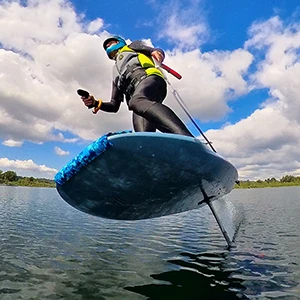
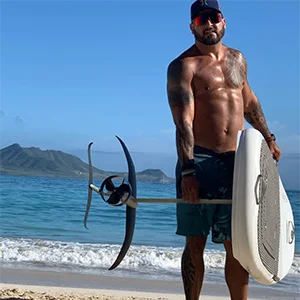
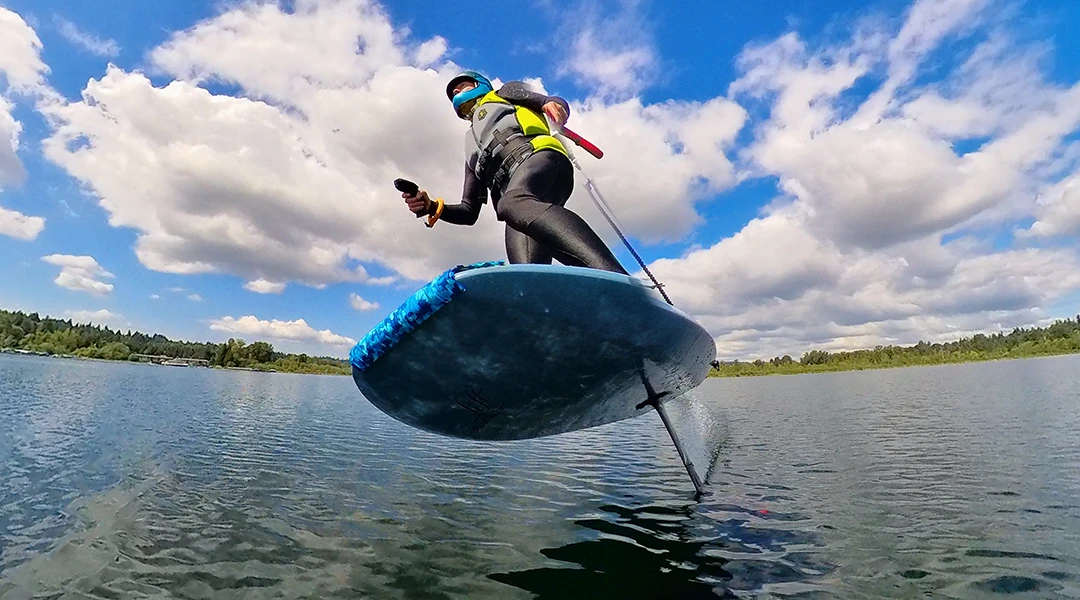
e-Foiling, also called efoiling or riding an efoil, is hydrofoiling with electric propulsion. In simple terms, it is an electric foil board with a battery and motor that lifts a rider above the water once the hydrofoil wing generates enough lift. A hydrofoil works like an underwater wing, creating lift and reducing drag as speed increases.
For a newcomer, the biggest difference from other hydrofoiling disciplines is that an efoil board makes its own speed. You do not need wind, a boat tow, or a wave to get started. That makes efoil cruising possible on flat water and also makes the first learning sessions more controlled and easier than in many non-motorized foil sports.
Efoiling can cover a wide range of riding styles. Some riders focus on relaxed electric hydrofoil cruising, some on efoil carving, and advanced riders may work on tighter turns, wave riding, and efoil tricks. Typical efoil speed and range depend heavily on wing choice, rider weight, water conditions, and throttle use.
Who is into efoiling?
If you are into efoiling, make sure to drop your pin on the Foilers Pin Map and help efoiling claim the leaderboard. Check the pin map and leaderboard for how many people into efoiling have marked themselves on the map.
Be more than just a dot on the map. Join the Foiling Freaks community and create your own foiling profile with a custom handle, rider photos, videos, disciplines, bio, and more.
How it Works
All hydrofoiling uses the same core physics. A foil wing moving through water creates lift, and as speed builds, the board rises so the hull does not touch the water, reducing drag. In efoiling, the power source is an electric motor and efoil battery rather than wind, a wave, or a tow rope.
The basic control system is a hand-held efoil remote controller. The rider uses it to govern the throttle and often to limit top speed while learning. Current systems also commonly include power cutout behavior when the trigger is released, which is a major part of efoil safety.
A common beginner launch sequence looks like this
- Start in calm water with enough depth for the foil and prop system.
- Begin riding prone on your stomach while using the controller to build speed.
- Progress to knees.
- Stand with the board still planing on the surface.
- Then gently increase back foot pressure to lift onto the foil for short touch-and-go flights.
That step-by-step progression is widely taught because it lets an efoil beginner separate throttle control, board balance, and actual foil flight into stages.
What Makes it Different
The main thing that makes e-foiling different is self-propulsion. A dedicated efoil has the motor mounted low on the mast, which allows powered riding in flat water and on windless days. This is different from unpowered hydrofoiling, where you rely on wind, paddling, waves, or tow starts.
It differs from Foil Assist, even though the two categories are closely related. Foil Assist systems are usually built around a lighter assist concept, often to help riders get onto foil or back out to waves, then fly with less motor use. Many hybrid assist designs place the motor near the top of the mast so the rider can keep it out of the water once fully flying, reducing drag during wave riding. That is a different goal than long, continuous motorized efoil cruising.
With gear advancing rapidly, it should be noted that foil assist devices have recently started incorporating features of efoils, such as motor positions that can be either high on the mast for traditional foil-assist goals or low on the mast for efoiling goals. A hallmark of foiling is its rapid evolution.
Gear setup also differs from other foil sports
- Board volume: Efoil boards span a wide range, from roughly 170 liters down to around 40 liters. Beginner choices are usually higher volume for stability. One common rule of thumb is to choose a board volume of about 20 to 30 liters per kilogram of body weight.
- Mast length: Shorter masts are commonly used for beginners because they are more forgiving and work in shallower water, while longer masts are preferred for chop, open water, and more advanced carving. Short, mid, and long mast options are 70 cm, 80 cm, and 90 cm, respectively.
- Wing choice: Larger wings create more lift at lower speeds and usually help stability and battery efficiency. Smaller wings are faster and more responsive but require more speed and skill.
- Propulsion style: Some systems use props, some use enclosed impellers or jets, and some use folding props. These choices affect efficiency, drag when gliding, and perceived safety around the propulsion unit. Some design choices are also related to country-specific regulations.
Safety and Etiquette
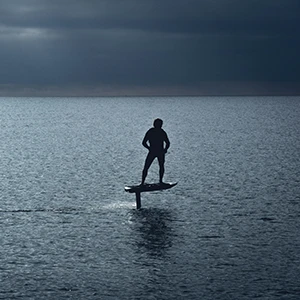
Efoil safety matters because you are combining speed, a hydrofoil, and powered propulsion. The main hazards are contact with the propeller or foil wings, collisions with other water users, falls onto the foil, and running low on battery far from your launch point. Lithium battery handling is also part of the risk picture.
Core safety practices include
- Wear an approved helmet and PFD.
- Keep all body parts clear of the propeller and foil when in the water.
- Cover your face with your hands when crashing and keep your hands up until you spot the board.
- Release the throttle immediately when you commit to a fall.
- Practice falling away from the board and foil.
- Keep a distance from swimmers, boats, and other riders.
- Monitor battery level so you can return safely.
- Charge and store the efoil battery carefully, inspect it for damage, and use the correct charger.
For rules and etiquette, treat your e-foil like a powered craft in terms of caution and awareness. Maintain a proper lookout, understand basic give-way and stand-on right-of-way rules, and check local boating rules, as requirements can vary by area. Some places have updated policies specifically addressing efoils and jetboards.
Practical etiquette for the sport is simple and important
- Do not ride through swim areas.
- Do not run powered lines through surf lineups.
- Give wide clearance to paddlers, swimmers, and beginners.
- Pick launch areas with enough water depth for your mast and foil.
- If you are learning, use calmer water and less traffic.
A depth of about 1.5 meters is a common minimum recommendation for most setups, but the exact depth needed depends on your mast length and local conditions.
Starter Guide
A practical path into efoiling for an efoil beginner is to focus on safety, lessons, and a stable setup first.
Minimum efoil gear list
- Electric foil board setup (board, mast, foil, propulsion unit)
- Hand controller or efoil remote
- Battery and charger
- Helmet
- PFD or buoyancy vest
- Wetsuit or thermal gear for your water temperature
- Basic transport and rinse gear
- A way to check and protect your battery and seals, including the efoil battery case or battery compartment sealing system on your board
Battery handling is very important and involves maintaining proper charge, inspecting for damage, avoiding heat, and using the correct charger.
Cost ranges
There is a broad range of prices for e-foils; however, any investment in a quality e-foil will cost thousands of dollars.
- Lower-priced complete systems are around $6,000 to $7,000
- Premium complete efoil systems are commonly found for around $15,000
- High-end packages can go higher than that.
- Used e-foils will be more reasonable; however, it is key to ensure the battery is not compromised.
Lessons are also variable, but private efoil lessons commonly cost around $150 to $350 for about 1 to 2 hours, with group and extended sessions costing more.
It is common to take lessons on a larger board and learn the basics, then, when purchasing, buy a smaller, more nimble board to progress more quickly, given the high cost of efoils.
Difficulty and learning curve
Compared with many unpowered hydrofoiling disciplines, efoiling is often easier for first-time riders because the motor and controller let you manage speed without needing wind, waves, or a tow. That said, balance and foil height control still take practice.
A reasonable beginner expectation is
- First session: Learn board control on the surface and throttle control
- Next stage: Short foil lifts and touch-and-go rides
- Progression: Stable efoil cruising, then efoil carving, then tighter turns and more advanced riding
Your first controlled rides may come within 1 to 2 hours, but in mixed conditions, they may be much longer. Real progress depends on water conditions, coaching, and how often you ride.
There are models of e-foils, as well as accessories that aid the learning curve, such as handlebars, self-leveling technology, and inflatable wrap-around kits.
Best way to get started
- Start with a lesson, not a solo first session.
- Watch beginner how-to videos focused on stance, throttle control, and falling safely.
- Choose calm water and low traffic.
- Start with a stable board and a beginner-friendly mast-and-wing setup.
- Keep speeds low until your falls are controlled.
- Join general efoiling and hydrofoiling communities on social media and forums to learn local launch spots, conditions, and etiquette.
There are active rider communities online that can help shorten the trial-and-error phase of efoil gear setup and provide local riding advice.
Gear Selection
For efoiling focused on longer rides and efoil cruising, the gear choices usually prioritize stability, efficiency, and battery endurance over the smallest board and most aggressive wing. A practical way to think about efoil gear is by four main pieces: board volume, mast length, front wing and stabilizer, and battery/propulsion setup. Board volumes span from smaller boards in the high 60-liter range to larger cruiser boards in the 80 to 100-liter range, which is a good example of how broad the category is for different rider sizes and skill levels.
For board size, beginners usually do better on larger, more buoyant boards because they are easier to stand on during starts and more forgiving during touchdowns. Smaller boards are lighter and more nimble once your balance and throttle control improve, but they are less forgiving. Example ranges are a 4’9 board at 67 L and a 5’4 cruiser board at 83 L, while other efoil ranges also include larger beginner-oriented boards around 100 L.
Mast length has a big effect on feel. Shorter masts are easier for many beginners because you ride lower and have less height to manage. Longer masts give more clearance in chop and carving, and reduce breaching once you are more comfortable. Efoil mast offerings commonly include 60 cm and 75 cm in one product ecosystem, and another major system offers 28-inch, 30-inch, and 32-inch mast options that roughly match the general range riders see across the market.
Front wing choice is where a lot of the ride personality comes from. In general, larger front wings lift earlier and feel calmer at lower speeds, which helps an efoil beginner. Smaller wings usually need more speed but feel quicker and more responsive for carving and higher efoil speed. Look for larger wings (1500 to 1800) for beginner use, mid-sized wings (1100 to 1300) for intermediate use, and smaller wings (700 to 900) for advanced riding.
Stabilizers matter more than many new riders realize. A larger stabilizer usually feels calmer and more locked in, while a smaller stabilizer feels looser, faster, and more reactive. Many brands purposefully pair beginner complete kits with medium- to larger-sized stabilizers, and then have riders move to smaller ones as they progress.
For long-distance e-foiling, battery size and efficiency are major components of the gear plan. Efoil systems commonly offer multiple battery sizes, and larger batteries and more efficient propulsion are preferred when the goal is longer rides or sharing a single charge across multiple riders. This is the main distinction from foil-assist style setups, where the goal is usually short, powered boosts and minimal drag for wave riding rather than long powered sessions.
Common extra accessories include the efoil remote, charger, board bag, wing bags, battery-carrying/backpack systems, and protective gear. Make sure to budget in all the accessories you will need.
Conditions
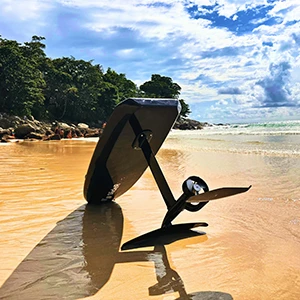
Efoiling works in a wider range of conditions than wind-driven hydrofoiling because the motor provides the power, but conditions still strongly affect how easy and enjoyable the ride feels. For learning, calm water and lighter wind are usually the easiest because they reduce surface chop and let you focus on balance, throttle, and foil height. Calm water and mellow wind are ideal for learning.
Traffic matters a lot. Beginners should choose open water with plenty of room, away from swimmers, shore hazards, and boat traffic. Practice in at least 6 feet (2 meters) of water, away from shore, swimmers, and boats, which is a good baseline for safe learning conditions.
Water texture is a real preference issue. Some riders like a little surface ripple because it helps them judge height above the water. Very glassy water can make depth perception harder, while a slight ripple can make the foil height easier to read. That is not a strict rule, but it is a common rider observation and a useful tip.
As skills improve, some riders enjoy more challenging conditions, such as chop or swell, because it adds more dynamic carving and wave play. Riders may have separate setups for cruising, carving, and wave-oriented riding, reflecting how much conditions influence setup choices and riding style. You may wind up getting multiple front and rear wings for different types of riding.
Current and drift are also important, especially on rivers, tidal inlets, or large lakes. Higher current generally increases workload and makes recovery after falls more complicated, so beginners usually do better in places with lower current until they build confidence.
Where to Go
Good efoiling locations can be inland or coastal. Unlike Unlike wing foiling or kite foiling, you do not need consistent wind to ride, so many lakes, bays, and protected coastal areas work well if they have enough depth, safe launch access, and low conflict with swimmers and boats. You can find viable efoil spots in both coastal and inland areas, not just surf destinations.
For a new rider, the best places are usually protected water with light traffic, gentle surface conditions, and easy launch and recovery. If you plan to take efoil lessons, it also helps to choose areas with established instructors or demo partners, because they often know the local rules, no-ride zones, and safest launch windows. Major efoil brands now maintain broad dealer or partner networks and location finders, which are practical ways to find lessons or demos near you.
Popular efoiling destinations include Hawaii, Puerto Rico, Southern California, and the U.S. Virgin Islands, as well as other popular options for learning and travel. Lake Powell is a well-known U.S. efoiling destination, with its long cruising terrain and marina access.
Always check local rules before riding. Efoil access is not uniform across all areas, and local harbor authorities, lake managers, or marine safety agencies may have their own restrictions on where powered boards can operate. Some jurisdictions also require efoils to be licensed like a watercraft.
Setup and Tuning
Not every efoil system offers the same level of tuning, so this section focuses on general hydrofoiling principles that apply when your equipment is adjustable. Some systems are highly modular, while others have fewer rider-adjustable options. Modular versus fixed-style connections vary by brand, which is why tuning flexibility differs across setups.
Mast position in the track is one of the biggest setup changes you can make. A good starting point is usually the middle of the track box. From there, moving the mast forward generally increases lift and front foot pressure, while moving it rearward tends to improve stability and control but reduces lift. Rearward positions can help when conditions or speed increase. If you have read about mast position tuning, note that efoils generally cannot change mast position because components that connect the board to the mast prevent it.
Fuselage length changes the balance between stability and maneuverability. In general, shorter fuselages feel more reactive and turn more quickly, while longer fuselages are usually better for stable cruising and speed. Shorter fuselages increase maneuverability but make the foil less stable, while longer fuselages favor easier cruising and higher speed. Some efoils have adjustable fuselages, while others have the fuselage length changed by swapping out the entire rear wing. This type of adjustment is brand specific.
Stabilizer size and shape are also major tuning levers. Larger stabilizers usually calm pitch and yaw, feel smoother, and track straighter, but they add drag and slow turning. Smaller stabilizers feel looser, faster, and more reactive, but they can be twitchy if your pitch control is not there yet. This is one reason beginners are usually better off staying on the stock stabilizer pairing until they are consistently riding and turning.
Shim tuning is more advanced, but it matters only on systems that support it. Changes in shim angle affect stability, speed, glide, and overall feel: increasing the shim angle improves stability and a locked-in feel, while decreasing it can improve speed and glide. Short fuselages and small tails are more sensitive and better suited to experienced riders. Shimming is another type of tuning that is not possible in many efoils.
Highly specialized tuning is not usually needed with efoils, as the boards' weight with batteries and the use of a throttle control make such fine tuning less important. Efoil brands tend to tune the wing and mast combinations to work well out of the box.
Tips and Tricks
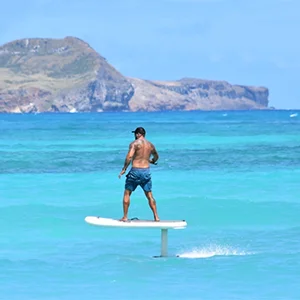
Start simple and keep your first sessions simple. Use a stable board and wing setup, ride in open water with depth, and focus on smooth throttle control instead of speed. Start on your knees, then carefully stand, raising one leg only once the board is moving steadily, and then carefully stand on both legs.
Be gentle with the throttle. One of the biggest beginner mistakes in efoiling is treating the efoil remote like an on-off switch. It usually goes better if you increase speed gradually, let the board settle, and then stand. Use a smooth, progressive throttle and maintain a balanced posture once you are up. Different brands have different types of controllers, so set yours per the manufacturer's instructions to limit your top speed.
Look ahead, not down at your feet. Keep your shoulders square and your eyes looking where you want to go. This helps your body posture and makes efoil carving feel much more controlled.
Use a split stance with one foot close to one edge of the board and your other foot close to the edge of the other side of the board. Which foot is on which side is determined by your dominant side (left foot forward or right foot forward).
Try a little surface texture if glassy water is messing with your height control. A slight ripple makes it easier to judge foil height than mirror flat water. This can be very helpful during the efoil beginner stage.
Do not rush tuning changes. If the ride feels unstable, it is often better to improve technique first and confirm your baseline setup before swapping parts. Use a stock baseline, then change one variable at a time.
Skills Ladder
There is no single universal progression standard for every efoil board setup, because rider weight, board size, wing size, and configurations vary by manufacturer. A practical skills ladder is to progress by controlling milestones first, then changing the efoil gear as your balance and confidence improve.
Beginner
A typical efoil beginner progression is prone to kneeling, kneeling to standing, then short straight flights. Aim for speeds of roughly 6 to 10 km/h before moving to knees, then 8 to 12 km/h for standing, and later short flying attempts once stable. Work on front-foot pressure, constant throttle, and short, low flights as the safest way to learn e-foiling. Lessons are strongly recommended because they shorten the learning curve.
Lessons are typically done with dealers who will help you determine the best board size, wings, mast length, and stabilizers for you, and what you would progress into next. The cost of lessons is also often credited toward the purchase of an efoil from the dealer.
For beginner efoil gear, the usual trend is larger, more stable boards and larger front wings, with a conservative setup. There is a broad wing range from about 1100 cm² up to 2450 cm², and mast options such as 60, 75, and 80 cm, which is why many new riders start on larger wings and shorter masts for easier progression and less intimidating crashes.
Intermediate
Intermediate efoiling usually means consistent stand-up flights, smooth touchdowns, speed control, and basic efoil carving in both directions. A common milestone is being able to foil low and stay composed through small turns without changing throttle too much. Riders at this stage often start experimenting with tuning, including front and rear wing sizes, to calm the board down or make it more responsive.
Gear changes at the intermediate stage often move toward smaller wings or less stabilizing rear wings, depending on the rider’s goals. General foil-tuning guidance also supports this direction, as smaller stabilizers and shorter fuselages increase maneuverability, while larger stabilizers and longer fuselages generally add stability.
Advanced
Advanced efoiling usually means controlled, high-speed riding, precise carving, confident control of foil height, wave linking, and efoil tricks. Tricks include slalom, jumps, wingtip breaches, dock or boat starts, and even unpowered wave riding, all of which require much better pitch, roll, and timing control than basic cruising.
Advanced riders often tune for response rather than forgiveness. That usually means more aggressive, smaller stabilizers, narrower front wings, and sometimes shorter fuselages for tighter turning. The trade-off is that the setup becomes less forgiving, so mistakes occur more quickly.
Niche Specific
What is truly specific to efoiling is that it is a self-propelled electric hydrofoil controlled by a handheld efoil remote, so the rider does not need wind, a kite, a wing, or a tow rope to get on foil. That makes efoil cruising and skill practice possible on many days and in many places where other hydrofoiling disciplines would not work.
The defining feature is the integrated propulsion at the foil, typically with the motor positioned at the bottom of the mast and integrated into the foil system for efficient powered riding. This is the category built around longer powered sessions, battery range, and steady ride time.
Foil Assist is similar in feel and hardware concepts, but it is a different niche with different goals. Assisted foiling differs from efoiling in motor placement and usage goals: assisted foiling systems are high-mounted, with smaller batteries to reduce drag when riding waves, while unassisted efoil systems are built for longer rides under power.
Another niche-specific part of efoiling is battery and electronics management. The sport depends on battery care in a way that non-motorized hydrofoiling does not. That includes monitoring efoil battery condition, charging safely, and ensuring your battery does not get damaged, such as by being dropped or by not being charged.
Common Problems
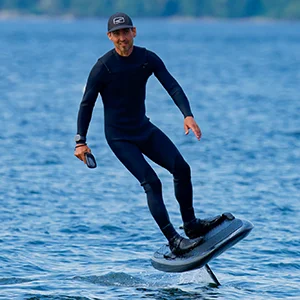
Unintended lift and crashes while learning
A very common early problem is the board lifting unexpectedly because the rider shifts too much weight to the rear foot. Excessive rear-foot pressure can engage the foil and lift the nose rapidly, leading to a crash. The fix is usually slower progression, constant speed, and deliberate front foot pressure.
Trying to fly too high too soon
New riders often try to stay high above the surface before they can control pitch. Beginners should practice short, low flights and frequent touchdowns first because they are both safer and faster for learning. This is one of the biggest efoil beginner mistakes.
Pairing and controller connection issues
Another common efoil problem is pairing the efoil remote to the board incorrectly or leaving the controller in the pairing position too long. Each manufacturer has a specific pairing sequence.
Battery heat warnings and reduced runtime
Battery temperature warnings and automatic protection behavior, including warnings as temperature rises and auto shutdown at high temperature, can occur. Reduced runtime can also happen when the battery management system is still balancing cells after charging. Follow the manufacturer's instructions for charging your battery.
Water ingress concerns
Water in the board cavity or efoil battery case can be a serious issue on an electric foil board. Inspect for water ingress, stop using a waterlogged battery until it is dried out, and inspect the battery housing for damage before charging or riding. Water ingress into a battery should not normally occur, as batteries are sealed. Water ingress into the board can cause other issues, depending on the manufacturer, if left unresolved.
Overcomplicating tuning too early
Many riders start changing wings, masts, or stabilizers before they have a stable baseline. These changes can significantly affect lift, pitch stability, drag, and turning, so the better approach is to make small changes one at a time and test them.
World Records
Fastest eFoil speed standing on a production board
- Current record: Fliteboard 34 mph speed record claim - 34 mph / about 55 km/h / 29 knots. Holder: Unknown
Longest multi-battery eFoil open-water crossing
- Current record: Gulf of Thailand 120 km eFoil crossing. Holder: Natthaphol Patamapongse
Longest self-reported continuous eFoil ride
- Current record: Corinne Devaney self-reports 208 mile eFoil ride. Holder: Corinne Devaney
- Previous record: John Devaney self-reports 218 mile eFoil ride. Holder: John Devaney
Greatest Distance on a Single Battery (Open Class Fun Run)
- Current record: Malakai Lamby single-battery eFoil ride - 67 km on one battery. Holder: Malakai Lamby
- Previous record: Rob Wylie Maldives single-battery eFoil crossing - 40 km on one battery. Holder: Rob Wylie
Greatest Distance on a Single Battery (Strict Class)
- Current record: Daniel Escobar Completes 52.36 km Single-Battery Flat-Water eFoil Loop. Holder: Daniel Escobar
Know about a broken record, an update needed to an existing world record, or a brand new world record that deserves to be in the public record? Submit it.
World Firsts
- First eFoil world champion title: Justin Chait wins 2025 SFT eFoil World Champion title. Holder: Justin Chait
- First English Channel crossing by eFoil: First non-stop English Channel eFoil crossing. Holder: Rob Wylie, Morgan Wylie
- First giant Nazaré waves ridden on an eFoil: First giant Nazaré waves ridden on an eFoil. Holder: Tom Court, Glyn Ovens
- First eFoil backflip: Flo Garbaccio lands the first eFoil backflip. Holder: Flo Garbaccio
- First international eFoil race winner: Tom Court wins the first Flite Cup eFoil race. Holder: Tom Court
- First United States eFoil race winner: Justin Chait wins early U.S. Flite Cup race. Holder: Justin Chait
Know about a broken record, an update needed to an existing world first, or a brand new world first that deserves to be in the public record? Submit it.
History
A key early milestone comes from KTH Royal Institute of Technology. Jakob Kuttenkeuler’s KTH profile states that in 2008, Kuttenkeuler, Stefan Hallström, and a student team were the first to combine a foiling personal surfboard with electric propulsion, marking the start of what is now called e-foiling. The same KTH profile also references the Evolo project.
The 2008 KTH EVOLO project was successfully demonstrated in spring 2009. The early concept was a kneeling, weight-shift-controlled electric hydrofoil.
Patent activity followed as the sport matured. A US patent for an “electrically powered hydrofoil surfboard” with a 2013 priority date and a 2017 grant, and later hydrofoil system patent filings describe the now-familiar layout of motor, propeller, mast, and wings. Those patent records help show the move from the concept stage toward commercialized electric hydrofoil hardware.
Commercial stand-up efoil development accelerated in the mid-2010s. Stand-up prototypes were shown in 2016 under the names Don Montague and Jetfoiler. Lift and Fliteboard entered the commercial market in the 2018-2019 timeframe, marking the beginning of efoiling as it is known today. By 2022, the US Coast Guard had issued a policy letter using the term “motorized personal hydrofoil” and explicitly referencing devices commonly called eFoils, a good sign that the discipline was sufficiently established to warrant formal regulatory guidance.
FAQs
How hard is efoiling to learn for a beginner?
It is generally considered one of the more accessible entry points to hydrofoiling because the rider controls power with an efoil remote rather than relying on wind or a tow. Riders can get up quickly with lessons, but the exact learning curve still depends on balance, water conditions, and prior experience with other board sports.
How deep does the water need to be for an e-foil?
It is generally recommended that you have around 2 meters (6 feet), which is ideal for learning. In practice, deeper is safer when you are new because it gives more margin for touchdowns and avoids bottom strikes.
How long does an efoil battery last, and how long does charging take?
Ride time depends heavily on rider weight, speed, wing size, and conditions. Specs show a wide range, from around 45 minutes to 2.5 hours on some systems. Always follow safe charging practices in a cool, dry, ventilated area and inspect the battery housing or efoil battery case for damage before charging.
How fast can an efoil go?
Efoil speed varies by setup and rider. Most efoil boards are commonly ridden at 20 to 30 mph, with race-oriented setups going faster. For efoil safety, most beginners should avoid chasing top speed early and focus on stable control first.
Do I need a license or registration, and where can I legally ride?
Rules vary by country, state, and local waterway. Riders should check local regulations and restrictions before riding, and the US Coast Guard has separate policy guidance for motorized personal hydrofoils, including eFoils. The practical answer is to check your local boating authority, lake rules, and launch restrictions before you ride.
Can I fly with my efoil battery?
No, efoil batteries are not allowed on commercial flights due to regulations around high-capacity lithium batteries, which are considered a fire risk. You must not attempt to take one on a flight, as airlines prioritize the safety of all passengers.
The only exception is a private charter flight, where you must obtain explicit written approval from both the pilot and operator before transporting the battery. The battery must also be packaged and handled in accordance with the operator’s specific safety protocols.
If you want an efoil vacation, plan around the battery. Travel where you can rent one, or have the manufacturer ship it ahead if you visit often.
Which Foiling Freaks are into eFoiling
-
 Ziggy Sparks
The E-Foil Hooligans. Checkout Ziggy Sparks's merch page.
Ziggy Sparks
The E-Foil Hooligans. Checkout Ziggy Sparks's merch page.
-
 Rex Volt
The blue blur with a one-track mind: pass the next buoy. Checkout Rex Volt's merch page.
Rex Volt
The blue blur with a one-track mind: pass the next buoy. Checkout Rex Volt's merch page.
-
 Riptide Rocco
But everyone just calls him Rocco. Checkout Riptide Rocco's merch page.
Riptide Rocco
But everyone just calls him Rocco. Checkout Riptide Rocco's merch page.
-
 Gnar Brinehowl
Just one more lap. Checkout Gnar Brinehowl's merch page.
Gnar Brinehowl
Just one more lap. Checkout Gnar Brinehowl's merch page.
eFoil, the best way to learn how to foil
Learn to foil with an eFoil! This video demonstrates the easiest way to master the basics of foiling, showcasing various techniques and applications. Explore the possibilities of eFoiling, from initial lessons to towing a friend into waves.
If you know this discipline inside and out and want to help review and or edit the info on this page, drop us a line. We will credit you as a reviewer or editor and set you up with a proper bio page with links back to your site.