Big Wave Foiling
What is Big Wave Foiling?
Big wave foiling is riding a board equipped with a hydrofoil on genuinely large, heavy ocean surf where the wave face is steep, fast, and unforgiving. A hydrofoil lets a rider carry speed across wind-chopped water and stay engaged on parts of a wave that would slow a conventional board, which is why foils have been used to explore spots and lines that are otherwise too fast or too difficult to approach.
In this niche, big-wave surfing and big-wave hydrofoiling converge. Most sessions use tow-assist to enter waves early, fast, and in full control.
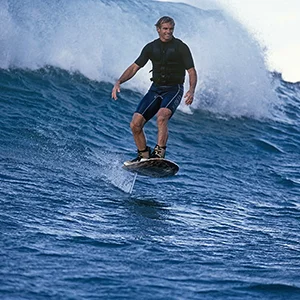
Big wave foiling was defined in the 90's when Laird Hamilton started riding a customized Sky Ski foil equipped with snowboard boot bindings down big wave faces.

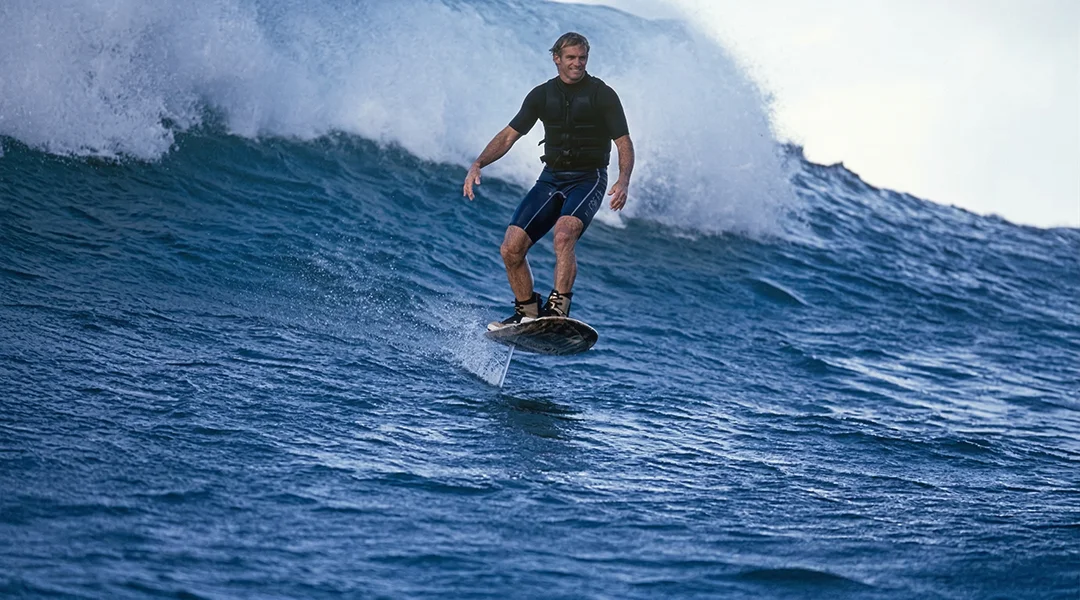
We were reaching out to several big wave surf photographers to get more big wave foiling images when Hawaiʻi was hit by unprecedented rainstorms and an emergency situation, and we have not yet heard back from them. We've only been able to get our hands on one old grainy 90's era shot of Laird. We wish everyone affected the very best during this time. You can donate to Hawaiʻi Community Foundation.
Who is into big wave foiling?
If you are into big wave foiling, make sure to drop your pin on the Foilers Pin Map and help big wave foiling claim the leaderboard. Check the pin map and leaderboard for how many people into big wave foiling have marked themselves on the map.
How it Works
All foiling relies on lift generated by an underwater wing moving through water. In big wave foiling, the primary power source is the wave's energy, but to enter truly large surf, most riders require a tow-in. Towing in is a technique in which a personal watercraft pulls the rider to match the wave's speed and position.
A typical tow-in big surf foiling sequence looks like this
- The driver on a personal watercraft accelerates the rider to match the wave's speed and line.
- The rider drops in, releases the tow line, and immediately adjusts the foil height so it stays deep enough below the surface to avoid breaching at high speed.
- The rider trims through the wave face and exits before it closes out, while the rescue craft prepares for pickup in the channel or safe zone.
Tow-in supports enable quick pickups after falls, a rescue system, and rapid movement during large sets.
What Makes it Different
Big wave foiling occurs faster, farther out, and with less margin for error than everyday surf foiling.
- Speed and stability demands are extreme: The wave face can drive high speeds, making wind resistance a real issue. Riders often crouch to reduce drag and maintain board drive.
- Equipment shifts toward high-speed control: Big wave tow-in foil setups commonly use longer masts to keep the foil deeper in the water when the surface is bumpy and the wave face is moving fast. A 90cm mast may be used for bigger surf.
- Wings get smaller: Front wings in roughly the 500-700 square centimeter range for bigger surf, far smaller than typical learning foils.
- Tow-in foil boards are small: Because paddling is unnecessary, which reduces wind resistance at speed.
- The culture comes from tow-in big wave surfing: The modern big wave playbook was shaped by tow-in pioneers in the 1990s, including Laird Hamilton's “Strapped Crew” era at Pe'ahi (Jaws) and the early adoption of towing into waves too big to paddle.
Safety and Etiquette
Big wave foiling is high consequence. You plan safety first, and you earn access through discipline.
Safety essentials
- A trained support crew and a rescue-capable personal watercraft are standard in serious tow-in environments.
- Inflatable big wave vests are standard because they assist a surfer's return to the surface after long hold-downs and have improved overall safety.
- Helmets and impact protection are common sense in any foiling environment, and the risk climbs as speed and wave energy climb.
- Big-wave foiling requires a pickup plan, a channel strategy, and a rescue craft always on standby.
Etiquette
- Big wave foiling does not belong in crowded lineups. A foil carries speed and sharp hardware, altering the risk profile for everyone around you.
- In tow zones, you keep predictable lines and wide buffers. A tow line, a rescue craft, and a fast-moving foil board require space and clear right-of-way decisions.
- You respect local access rules and local big wave protocols. Some locations have established rescue and rotation systems for tow sessions, including team formats at major events.
Starter Guide
Big wave foiling is not a beginner discipline. The safe path is a gradual progression in which each step removes variables before you add consequences.
Minimum gear list for tow-in style progression
- A foil board and foil suitable for towing and stable high-speed trim.
- A tow handle and line.
- A capable tow craft and a trained driver.
- A rescue plan and rescue equipment appropriate to big surf conditions.
Difficulty and learning curve
- Difficulty is high; you must combine foiling, towing, high-speed wave reading, and rescue logistics.
- You start by learning to foil in controlled conditions, then tow into small waves, and increase the size only when control is automatic. Tow-in foiling can be practiced on small waves and even boat wakes before stepping into heavier surf.
Gear Selection
Board and attachment
Big-wave foiling is most often done as tow-in, and tow-in boards evolved toward shorter designs to handle higher speeds and tighter arcs.
Foot retention is common in tow-in contexts because it keeps the board with you during high-speed entries and violent surface impacts, but it also increases entanglement and injury risk if you get caught in a wipeout and held underwater.
Foil setup
Big wave hydrofoiling prioritizes control at speed and stability in surface chaos.
- Mast length trends longer than everyday surf foiling, so the foil can stay deeper and be less prone to breaching in bumpy, fast water.
- Front wings trend smaller for speed. Front wings around 500-700 cm² for big-wave tow-in foiling.
- Masts around 90 cm are used for very large, deep surf.
Tow gear and rescue craft
True big-wave sessions commonly require a tow handle and line, a capable personal watercraft, and an experienced driver to manage pacing, positioning, and pickup.
Safety equipment
- Inflatable buoyancy vests are standard and have improved big wave safety.
- Helmet and impact protection are common because wipeouts at tow speeds are hard impacts, and the foil itself is sharp hardware moving fast.
Conditions
Big surf foiling is about the right kind of size, not just size.
- You want long-period swell with enough power to create a clean, fast face, plus a defined channel for safe pickup and reset.
- Wind matters more on a foil at big-wave speed. Strong onshore wind can ruin face quality and increase surface chaos, while strong offshore wind can make rescues and drift management more complicated.
- Water texture needs to be readable. Big wave foiling is possible in rough water, but the margin shrinks quickly when the surface is breaking up everywhere, because breaching at speed is a high-consequence failure.
- The crowd level must be low. Big-wave foiling does not mix with packed paddle lineups because speed, long lines, and sharp hardware increase the risk for everyone nearby.
Where to Go
Big-wave foiling only makes sense at established big-wave venues with proven channels, a rescue culture, and predictable swell windows.
- Nazaré, Portugal (Praia do Norte) is a major big-wave venue, with the Nazaré Canyon playing a central role in concentrating and amplifying swells.
- Peʻahi, Maui (Jaws) is a major big-wave break and a historic center of tow-in foiling.
- Mavericks, California, is a winter big-wave break that can reach extreme sizes after major North Pacific storms.
Access and etiquette vary by location and conditions, so permission and protocols are mandatory.
Setup and Tuning
Big wave tuning aims to prevent two failures: breaching and loss of control on vertical faces.
- Mast length: Longer masts keep the foil deeper in turbulent surface water, reducing breach risk at speed. A 90 cm mast is more common with very large, deep surf.
- Front wing size: Smaller front wings reduce drag and stay locked in at high speed. Big-wave foils are in the 500-700 cm² range.
- Trim and stance: you tune for neutral, locked-in trim at tow speed so you are not fighting constant front- or back-foot pressure while also reading a moving, high-consequence face.
- If riding strapped: tune stance and straps for control at speed and quick board exits. “Strapped” boards are standard for performance at tow-in speeds.
Tips and Tricks
- Earn control before you earn size. The clean progression is tow foiling in controlled water, then tow into small surf, then scale up only when your breach management and bailout habits are automatic.
- Keep the foil deep and your ride height conservative when the face is moving fast. Breaching at big-wave speed is a common crash trigger, and longer mast setups are used specifically to help manage that risk.
- Treat the driver as half the system. Big wave tow sessions are team operations, and competition-level big-wave tow-in depends on skilled tow support.
- Build a real rescue plan, not a vibe. Inflatable vests are part of modern big-wave safety, but they do not replace pickup skill, channel awareness, and conservative decision-making.
- Do not take big wave foiling into mixed lineups. Even at established big wave venues, you keep wide buffers, predictable lines, and respect the existing rotation.
Skills Ladder
Beginner
You do not start big wave foiling in big waves. You start by building foil control in low-consequence conditions. That means clean takeoffs, stable pitch control, smooth touchdowns, controlled breaches, and safe recovery habits. Then you learn tow handling in flat water or on small rollers, so releasing the rope, finding trim, and settling the foil all happen without hesitation. At this stage, the gear is larger, slower, and more forgiving than a true big-wave setup. You want a stable board, a predictable foil, and a manageable speed range that teaches control instead of demanding survival. Big wave foiling grew out of the same tow-in culture that transformed big-wave surfing in the 1990s, so the first real skill is not bravery. It is system control.
Intermediate
The intermediate stage begins when you can tow in reliably, release cleanly, and stay composed on faster, steeper faces. This is where the discipline starts to separate itself from everyday surf foiling. You learn to keep the foil deeper, ride more conservatively over turbulence, manage speed without over-foiling, and exit early when the wave stops offering a clean line. Your stance gets quieter, your line selection gets more deliberate, and your communication with the driver becomes part of your performance. Gear shifts here as well. Boards get smaller because paddling is no longer part of the job, and foils get faster and less forgiving. The goal is no longer easy lift. The goal is to lock in control at speed.
Advanced
Advanced big wave foiling is team-based, not solo. At this level, you are managing wave entry, foil depth, wind drag, surface chaos, pickup logistics, and rescue positioning simultaneously. You are considering the risk vs. reward before deciding whether the wave is worth taking, before the rope is ever tight. You understand channels, set rhythm, manage risk, and how the foil behaves when the face turns vertical and rough. Gear becomes highly specialized: small high-speed front wings, longer masts, compact tow boards, tuned strap positions, and a rescue-ready support craft with a driver who understands exactly what the rider needs. The advanced rider is not the one who rides the biggest wave. The advanced rider is the one who can make correct decisions at speed when the consequences are high, and this only comes with experience.
Niche Specific
Big wave foiling is unique because it is one of the few foiling disciplines where the wave, the foil, and the rescue system are equally important. In most foiling niches, your performance comes down to rider skill and gear choice. In big wave foiling, the full operating unit is the rider, the driver, the tow craft, the pickup plan, and the wave window.
It is also one of the only foiling disciplines where entry speed is not just helpful, it is often mandatory. You are not waiting for the wave to come to you. You are matching the wave early, dropping in under control, and carrying speed on a foil that must stay submerged and stable while the surface above it is exploding. That makes foil depth management and control at speed one of the defining skills of the sport. In smaller surf foiling, a breach is usually a mistake. In big-wave foiling, a breach at speed can end the ride violently and with serious consequences.
Another thing that makes this niche unique is how much it borrows from big-wave tow surfing. The modern template came from the tow revolution at places like Peʻahi, where Laird Hamilton, Buzzy Kerbox, Darrick Doerner, and Dave Kalama pushed entry speed, line choice, and rescue teamwork into a new era. Big wave foiling inherited that operating culture and then added speed and flight.
Common Problems
Breaching at speed
This is one of the classic big wave foil crashes. The rider lets the foil ride too high, the wing ventilates, and control disappears instantly. The fix is deeper foil placement, a more conservative ride height, and gear that matches the wave's speed. Longer masts and smaller, faster wings help, but only if the rider has the discipline to keep the foil settled instead of chasing an overly high flight.
Over-foiling on the drop
Some riders come off the rope with too much lift and too little control. Instead of driving down the face, they rise too early, becoming unstable. The fix is cleaner tow release timing, better trim tuning, and a more neutral stance. You want the foil to accelerate forward, not pop upward.
Using gear that is too surf-foily
Many strong foilers get into trouble by bringing everyday surf-foil habits and equipment into big-water conditions. A setup that feels playful in shoulder-high waves can become sketchy and under-gunned when the face gets long, fast, and turbulent. The solution is to move toward dedicated high-speed equipment sooner than your ego wants to admit. Big wave gear exists for a reason.
Poor driver-rider communication
A skilled rider with a weak tow partner is in trouble. Bad pacing, late entry, poor line placement, and missed pickups can ruin a session or create a rescue problem. The fix is to train as a team. Use clear hand signals, repeatable pickup patterns, agreed abort signals, and fixed rules for who does what when the wave stands up.
Taking the wrong waves
Many problems in big-wave foiling begin before the ride starts. Riders misread the shoulder, overestimate the escape route, or commit to a section that is too bumpy, too wind-affected, or too close to the impact zone. The resolution is judgment, not heroics. Better riders pass on more waves. That is part of why they last.
History
The roots of big wave foiling sit at the intersection of two older stories: the development of recreational hydrofoils and the rise of tow-in big-wave surfing. Recreational hydrofoils were being experimented with decades before surf foiling became visible, with early waterski hydrofoil work dating back to the 1960s. In the 1970s and 1980s, Mike Murphy and other hydrofoil pioneers advanced kneeboard and sit-down hydrofoil designs, and by 1990, the Air Chair had become a real commercial product. That gave watermen a practical foil platform to experiment with on open water.
The second half of the story came from Hawaii. In the early 1990s, Laird Hamilton, Buzzy Kerbox, Darrick Doerner, Dave Kalama, and the broader strapped-and-tow-in generation changed what was possible in giant surf. Tow-in surfing opened waves that were too fast and too large to approach under paddle power alone, especially at Peʻahi. Once that culture existed, adding hydrofoils to the equation became the next radical step. Early surf-foil experiments used modified foil hardware, including setups that borrowed from sit-down hydrofoil technology and relied on tow assistance to get moving and to control entry speed.
Big wave foiling became recognized as its own niche in the late 1990s and early 2000s, when Laird Hamilton's foil riding began to circulate widely, and foiling moved from a strange experiment to a serious waterman progression. By the early 2000s, the idea that a hydrofoil could let a rider carry speed above chop and access new lines was no longer theoretical. It was visible. In the years that followed, better carbon construction, more refined mast and wing designs, and broader surf-foil development pushed the discipline forward. By 2020, Hamilton and his crew were foiling giant waves at Nazaré, proving that big-wave foiling was not just a Maui-era experiment but an established high-consequence discipline with global ambitions.
FAQs
Can you paddle into a big wave on a foil, or is it always tow-in?
For true big wave foiling, tow-in is the standard. Once the wave gets genuinely large, steep, and fast, tow assistance gives you earlier entry, more control, and a rescue system. There are situations in which riders can foil large surf without a tow, but that is not the normal operating model in serious big-wave conditions.
Is big wave foiling more dangerous than regular surf foiling?
Yes. The speeds are higher, the wipeouts are harder, the waves are heavier, and the consequences of breaching, impacting the gear, or losing the board are much greater. You also add tow lines, rescue logistics, and big-water hold-down risk. This is not just bigger surf foiling. It is a different level of consequence.
Why are the foil wings so much smaller than beginner foils?
Because beginner foils are built to generate easy lift at low speed, while big wave foils are built to stay composed at very high speed. A wing that feels helpful in small surf becomes too draggy and too lift-happy in serious water. Big wave setups trade early lift for control, speed, and stability.
Do you need foot straps for big wave foiling?
Not always, but straps are common in tow-in big wave setups because they improve control on entry and help keep the board connected to you at speed. They also raise the consequences in a wipeout. Straps are a performance tool, not a casual accessory, and they demand experience.
What is the most important skill before trying big wave foiling?
Judgment. Before the gear, before the tow craft, before the courage, you need judgment. You must know when to go, when to abort, when the driver has you in the right place, when the surface is too chaotic, and when a wave is not worth the risk. In this niche, decision-making is the real advanced skill.
Which Foiling Freaks are into Big Wave Foiling
-
 Big Dave
He is only known as Big Dave, and nobody argues with that. Checkout Big Dave's merch page.
Big Dave
He is only known as Big Dave, and nobody argues with that. Checkout Big Dave's merch page.
Epic Big Wave Surf Foiling in Nazare w/ Laird Hamiton, Terry Chung, Luca Padua & Benny Ferris
This video documents Laird Hamilton, Terry Chung, Luca Padua, and Benny Ferris foiling giant surf at Nazare in early 2020. After extensive testing of equipment and technique, the group takes on the rare, powerful waves on custom surf foils, showcasing the speed, control, and unique feel of big wave foiling. Filmed by Patrick Wieland, it captures an experimental approach to riding one of the world's heaviest breaks in a completely new way.
If you know this discipline inside and out and want to help review and or edit the info on this page, drop us a line. We will credit you as a reviewer or editor and set you up with a proper bio page with links back to your site.
We could use a few more high-quality images to illustrate this discipline. If you have shots you own and are willing to share, contact us for where to send them. Bonus if you also credit the rider and give us a URL to link back to you.