SUP Foiling
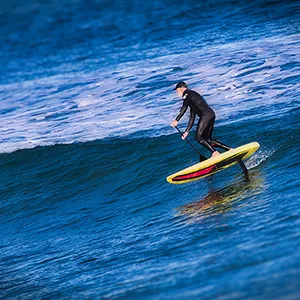
What is SUP (Stand-up Paddleboard) Foiling?
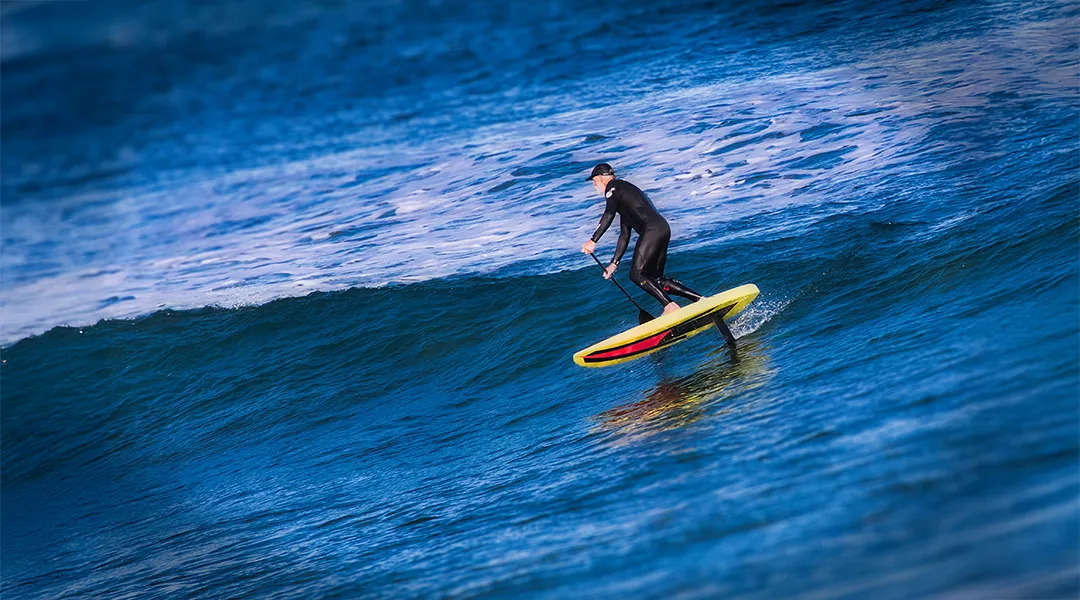
SUP foiling, also called stand-up paddleboard foiling, is riding a board with an underwater wing, called a hydrofoil, to catch and ride waves. The foil lifts the board out of the water, so you glide much longer than with a regular board. Most SUP foiling happens in places like beach breaks or reefs, where you paddle into a wave, rise on the foil, and ride it for longer distances.
SUP foil surfing can work on waves that seem too small or weak for regular SUP surfing because the foil keeps moving easily once you are lifted out of the water. You need enough water under your board so the foil does not hit the bottom, so plan sessions where there is enough depth to ride safely.
Who is into sup foiling?
If you are into sup foiling, make sure to drop your pin on the Foilers Pin Map and help sup foiling claim the leaderboard. Check the pin map and leaderboard for how many people into sup foiling have marked themselves on the map.
Be more than just a dot on the map. Join the Foiling Freaks community and create your own foiling profile with a custom handle, rider photos, videos, disciplines, bio, and more.
How it Works
The power source for SUP foiling is human paddling to reach takeoff speed, then wave and swell energy to keep the foil moving. You paddle out like normal SUP surfing, position in the lineup, turn into a wave, and accelerate with strong strokes. As the board gains speed, the hydrofoil generates lift, raising the board above the surface.
Once you are on foil, you manage height and speed with foot pressure and body position. You can extend the ride by staying on the cleanest part of the wave, using gentle pumps to maintain speed through soft sections, and connecting small energy sections rather than waiting for a single perfect wall.
SUP foils can also be equipped with foil-assist motors to help get to and from the riding area, get on the foil more easily, and connect to waves without as much pumping.
What Makes it Different
SUP foiling looks similar to downwind foiling because both use a paddle and often a longer board, but the aim differs. SUP foiling focuses on waves and areas, catching and riding waves in surf zones or nearshore swell fields. Downwinding is route and distance-focused, built around long runs and linking open-water bumps.
Board shape and size are different even when they appear similar at first glance. Many SUP foil boards used for surf and nearshore swell are built to paddle in, turn, and fit in a pocket, so they are generally shorter and more maneuverable than downwind-specific boards while still carrying substantial volume for stability and paddle-in speed. Common market sizes include boards around 6’6 to 7’2, with roughly 110 to 140 liters, with plenty of variation based on rider size and goals.
Foil setup priorities also differ. SUP foil surfing rewards quick lift at low speed, predictable pitch, and turning control on a wave face. Mast length commonly falls in the surf-friendly range, with 60-75 cm widely used and 68 cm often considered a practical all-around length for SUP and surf-style use.
Front wing sizing is closely tied to rider weight, wave power, and skill level. A common beginner-friendly approach is a larger, low-to-medium aspect front wing in roughly the 1,800 to 2,400 cm² range to lower stall speed and make takeoffs easier, then stepping down as your SUP foil technique, turning, and pumping efficiency improve.
Safety and Etiquette
A SUP hydrofoil adds real impact risk. The foil is hard, has edges, and can injure you or someone else in a collision. Wear a helmet and an impact vest when learning, and treat the first phase of your progression with safety in mind: controlled falls, safe separation from the foil, and disciplined spacing from others.
Depth is a primary hazard. You need enough clearance to avoid striking the bottom during takeoff, turns, and touchdowns. If the foil hits, you can stop instantly while your body keeps moving.
Etiquette matters even more than in standard surfing because the foil covers ground fast, and your turning radius can surprise others. Follow core surf rules: the person closest to the peak has priority, do not drop in, and do not snake the lineup from deep when surfers are already committed. Give extra margin because a foil can travel far beyond a typical surfboard line.
Keep motorized foils out of surf lineups. A powered craft changes the risk profile and does not belong in the same space as paddlers waiting for waves.
If you are paddling outside surf, swimming, or bathing areas, a SUP is treated as a vessel under U.S. federal law, which ties into carriage requirements for safety equipment such as PFDs. Know your local rules and comply before you launch.
Starter Guide
Minimum gear list
- A SUP foil board that is stable enough to stand on comfortably and has enough volume so you can paddle into waves more easily.
- Hydrofoil set: a mast, a front wing, a back wing, and a connection piece, all made for easy lift and control, not high speed.
- Paddle suited to surf use
- Leash appropriate for surf conditions and your local hazards
- Helmet and impact vest for learning, plus exposure protection for immersion
- Have a basic plan for how to call for help and stay afloat if you go outside regular surf areas.
Cost ranges (typical new retail)
- SUP foil boards commonly range from roughly $600 to $2,100+, with higher-end constructions above that.
- Complete hydrofoil sets commonly range from roughly $500 on the low end to about $2,300+ for premium sets and materials.
- Prices vary by construction, materials, and whether you buy a complete set or modular parts.
Difficulty ranking and learning curve
- SUP foiling is more advanced than regular SUP surfing because the foil introduces a new balance axis, higher speeds, and steeper consequences for mistakes. Most beginners progress fastest by learning foil control in low-consequence water first, then moving into clean, small surf with plenty of space and depth.
Practical first steps
- Start in uncrowded, mellow surf with deep water and a simple channel to paddle out.
- Break learning into skills: paddle-in timing, clean lift, controlled ride height, then gentle turns, then pumping in small doses.
- Watch multiple instructional videos to build a mental model, then practice one change per session.
- Find experienced local riders through paddling and foiling communities and learn your local etiquette and hazards before you enter a busy lineup.
Gear Selection
A SUP foil board used for this sport should be easy to paddle into waves, stable while standing, and able to lift onto the foil easily. Compared with downwind boards, a surf SUP foil board is shorter and easier to turn, since you need to work in small surf areas and make quick turns. Often, SUP foil boards for learning are mid-5-foot to mid-7-foot long and have about 110 to 120 liters of volume for good balance.
Front wing choice drives how easy paddle-in foiling feels. For SUP foil surfing, a common learning range is roughly 1600 to 2200 cm² of front wing area, with heavier riders often pushing toward the upper end to reduce stall speed and make wave entry easier. In this size class, a typical wingspan is around 1 meter for many designs, which helps glide but also demands smoother, slower turns than a short, surfy wing.
Mast length is chosen for depth, safety, and control. Many SUP foilers start around 60 to 70 cm to reduce the chance of a bottom strike and make touchdowns more forgiving, then move to longer lengths as they want more clearance on steeper wave faces or rougher water. A mid-length mast around the high-60 cm range is widely used as an all-around choice for surf and SUP style foiling, while 70 cm is also commonly treated as a practical all-rounder length.
The back wing (stabilizer) and the center piece (fuselage) control your stability and how the ride feels. A bigger back wing gives a steadier, easier ride, but adds drag and slows turning. A smaller one is quicker and looser but needs better balance. The back wing helps keep you stable, not lift you. A longer centerpiece makes the board steadier; a shorter one makes it easier to turn.
Accessories matter in SUP foil surfing because impacts and separation risk are higher than with a normal board. A surf-appropriate leash, a helmet, and an impact vest are standard safety upgrades while learning. A foil-specific board bag and wing covers protect equipment and reduce the risk of handling injuries. For the paddle, surf SUP foiling often uses a slightly shorter paddle than downwind, because the stance shifts and turning are more dynamic in a wave zone.
Conditions
Good SUP foiling conditions are clean, rideable waves with enough face to generate speed and enough depth for the mast. Waist-to-head-high, well-shaped waves with a predictable shoulder are ideal because they let you build speed, lift onto foil, and then manage height and speed without being forced into sudden, shallow sections. A higher tide or deeper sandbar often makes ocean SUP foiling safer because you have more clearance if you touch down.
Bad conditions are anything that removes control or margin: shallow reef at low tide, fast closeouts, heavy shorebreak, or confused cross-chop that makes paddle balance unstable and causes frequent breaches. Strong winds can also make SUP foil surfing harder, especially crosswind or gusty onshore wind, because it disrupts paddling rhythm, makes the board yaw, and adds surface turbulence that punishes poor foil control.
Crowds and traffic are part of the conditions. SUP foiling should be treated as a high-speed craft in a mixed-use zone. If swimmers, learners, or dense surf lineups are present, the risk is too high. You want space to fall safely, space to recover the board, and a clear line that does not intersect other riders.
Where to Go
The best places for stand-up paddle foil sessions are wave zones that combine depth, a clean shoulder, and a clear channel for paddling out. Points and reefs with an established channel are ideal because you can paddle out without fighting whitewater, and you can exit safely after a ride. Deep sandbars can also work well if they have a defined peak and a shoulder that does not immediately run into shallow water.
SUP foiling is also realistic on the Great Lakes and other large inland waters when they produce organized swell, but you still need depth and a safe, uncrowded setup. The discipline is wave-focused, so the location is chosen for surfable energy and safe foil clearance, not for long-distance travel.
Well-known areas with strong foil surf communities include Hawaii and Southern California. Oahu’s south shore has established foil surf zones offshore of the main beach areas, and Southern California has many reef and point setups that can be foiled when depth and crowd levels allow.
Setup and Tuning
Mast position in the track is the quickest way to change how the board trims. Moving the mast forward generally increases front-foot pressure and can calm a setup that wants to climb or breach. Moving it back generally reduces front foot pressure and can help a setup that feels stuck to the water, but it can also make the foil feel pitchy if you go too far. Make small changes. On most setups, 1 cm is a large adjustment, so move in 5-10 mm steps and retest.
Shims change stabilizer incidence, which directly changes pitch stability and drag. Increasing stabilizer angle gives more support and pitch stability but adds drag. Decreasing stabilizer angle reduces drag and can increase speed and glide, but it makes the setup less forgiving and more sensitive to small errors.
Stabilizer size and fuselage length should match your stage. If you are learning SUP foiling, prioritize stability: a larger stabilizer and a longer fuselage reduce fast pitch changes and make the foil easier to manage during paddle-in takeoffs and first turns. As you progress, you can reduce stabilizer size or shorten fuselage length to get quicker turning and less drag, but only after you can reliably control height and recover from touchdowns.
Mast length should match your spot. Shorter masts make shallow-water learning and early touchdowns safer. Longer masts give clearance in steeper wave faces and bumpy water, but they demand more depth and increase consequences when you fall.
Tips and Tricks
Start your SUP foil training away from crowds. You need room to miss takeoffs, to fall safely, and to learn without creating risk for others.
Make paddle-in foiling about speed first, then lift. Many SUP foil beginners stand tall and try to force the board onto the foil. Instead, stay athletic, paddle hard to build speed, then shift weight smoothly and let the foil lift when it has enough flow.
Control ride height by staying lower than you think you should. Many breaches occur when riders climb too high, either while excited or while crossing whitewater. A slightly lower, calmer flight is faster and safer.
Touch down early on purpose when the wave goes flat. A controlled touchdown with immediate paddling back to speed beats frantic pumping that ends in a fall next to your foil.
Train safe falls. When you lose it, fall away from the board, protect your head, and avoid reaching for the board near the foil. In SUP foil surfing (as in all foiling), falling well is a core skill.
Skills Ladder
Beginner
You start by building three foundations: paddling balance, clean wave entry, and basic height control on the SUP hydrofoil. The first milestone is a reliable paddle-in foiling takeoff on small, clean waves where you can stand comfortably, accelerate, lift, and then touch down on purpose without falling. At this stage, gear should maximize stability and low-speed lift: a stable SUP foil board with generous volume, a larger front wing that lifts early, a shorter mast for shallow-water margin and easier recoveries, and a more stable tail and fuselage combination that resists sudden pitch changes.
Intermediate
Intermediate SUP foiling begins when takeoff is no longer the whole session. You can angle into the wave, lift smoothly, trim for speed, and make controlled turns on the open face without breaching. You start learning SUP foil surfing skills that extend rides: managing speed through soft sections, pumping lightly to reconnect with swell energy, and linking short sections without losing control. Gear usually becomes more responsive: slightly less board volume, a front wing that trades some low-end lift for glide and turning range, and a mast length that gives more clearance in steeper faces while still fitting your local depth.
Advanced
Advanced stand-up paddleboard foiling is defined by precision and range. You can control height in turbulent water, carve confidently, and maintain speed through transitions that would end a normal ride. You can pump efficiently enough to extend rides and, in the right conditions, connect sections of swell without forcing it. Gear becomes smaller and faster: lower-volume boards, smaller, higher-efficiency wings, and tuning changes that reduce drag while keeping the foil predictable at speed. At this level, small adjustments to mast position and tail setup become obvious in how the foil trims and turns.
Niche Specific
SUP foiling is paddle-powered wave foiling. The defining feature is that you create your own takeoff speed with a paddle, then use wave energy to stay flying in a relatively confined zone. That makes it fundamentally different from downwinding, where the purpose is long-distance travel and route management. SUP foil surfing is about wave choice, timing, and clean control near a lineup.
SUP foiling also has a unique equipment requirement. A SUP foil board must be stable enough to stand and paddle in moving water, yet compact enough to fit in a wave and recover quickly after a touchdown. That balance is why SUP foil boards can look similar to downwind boards on the surface but are built for turning, quick acceleration into waves, and handling nearshore conditions.
Common Problems
Missing the takeoff
Most beginners stall out because they stand too early, lose acceleration, or try to fly before the foil has real speed. Fix it by treating the takeoff like a sprint: build speed first, keep strokes powerful and consistent, then stand and commit to a smooth lift. If you are consistently fast but still cannot lift, your front wing may be too small for your current skill and wave size.
Breaching and ventilation
SUP foiling beginners often ride too high, and the wing breaks the surface, abruptly losing lift. Fix it by riding lower, keeping your eyes farther down the line, and learning to trim with small foot-pressure changes rather than big body movements. A setup with more pitch stability also reduces surprise breaches.
Porpoising and pitch instability
A foil that wants to climb and dive makes learning miserable. Fix it by stabilizing your stance, moving the mast slightly forward if the foil feels too eager to climb, and choosing a tail and fuselage setup that calms pitch. Many riders also improve control by slowing down their movements and letting the foil settle after lift-off.
Touchdowns that turn into crashes
Touchdowns are normal in SUP foil surfing. The crash happens when the rider reacts late or stiffens up. Fix it by planning touchdowns: flatten the board, absorb impact, and immediately paddle to rebuild speed or step off safely. Controlled touchdowns are a skill to build.
Crowd management and dangerous proximity
A SUP hydrofoil travels fast and covers ground unexpectedly. The most common serious problem is riding too close to others in the surf zone. Fix it by choosing uncrowded waves, keeping wide safety buffers, and exiting early rather than threading through people. If the lineup is busy, it is not the right place to learn.
World Records
- Farthest distance by hydrofoil SUP paddleboard in 12 hours: Farthest distance by hydrofoil SUP paddleboard in 12 hours. Holder: James Casey
- Fastest Maui to Molokai M2M SUP foil crossing: Fastest Maui to Molokai M2M SUP foil crossing. Holder: Zane Schweitzer
- Fastest Molokai to Oahu SUP foil crossing: Fastest Molokai to Oahu SUP foil crossing. Holder: Kai Lenny
Know about a broken record, an update needed to an existing world record, or a brand new world record that deserves to be in the public record? Submit it.
World Firsts
- First dedicated SUP foil race: First dedicated SUP foil race. Holder: Connor Baxter
- First downwind SUP hydrofoiling ride: First downwind SUP hydrofoiling run. Holder: Kai Lenny
- First person to race on a SUP foil: First person to race on a SUP foil. Holder: Eric Terrien
- First SUP foil to win a SUP race in France: First SUP foil to win a SUP race in France. Holder: Eric Terrien
- First strapless flat-water SUP foil paddle-up takeoff: First strapless flat-water SUP foil paddle-up takeoff. Holder: Eric Terrien
- First SUP foil crossing between Europe and Africa: First SUP foil crossing between Europe and Africa. Holder: Fred Bonnef
- First SUP foil crossing from mainland France to Corsica: First SUP foil crossing from mainland France to Corsica. Holder: Erwan Jauffroy

Know about a broken record, an update needed to an existing world first, or a brand new world first that deserves to be in the public record? Submit it.
History
Foil surfing as a modern board sport traces back to experimentation in the late 1990s and early 2000s, when riders began attaching hydrofoils to surfboards and exploring tow-assisted wave riding. Laird Hamilton is widely documented as an early experimenter in that period, and Dave Kalama is also commonly credited with developing foil surfing alongside Hamilton.
SUP foiling, meaning stand-up paddleboard foiling with a paddle and a larger board, became widely visible in 2016 when footage of Kai Lenny riding a stand-up paddleboard on a hydrofoil spread broadly and helped trigger rapid interest and development in the discipline. That period marks the point when SUP hydrofoiling moved from niche experimentation into mainstream awareness within the paddling and surf communities.
Foil-surfing experimentation preceded SUP foiling, and widespread adoption accelerated in the mid-2010s as equipment became available and the technique spread.
FAQs
Is SUP foiling the same as downwind foiling?
No. SUP foiling is wave-focused and usually stays in a limited area near a surf zone. Downwinding is route-focused, built around long-distance travel and linking open-water swells for miles.
How big should my front wing be for a SUP foil beginner learning?
Start large enough to lift at low speed. Beginners commonly do best on larger front wings that prioritize early lift and stability, then step down as takeoffs become consistent and turning control improves.
What mast length is best for SUP foil surfing?
A shorter mast gives a safer margin in shallow water and makes touchdowns easier while you learn. As you improve and want more clearance in steeper wave faces and bumpy surface water, a longer mast can help, as long as your spot is deep enough.
Can I SUP foil in small waves?
Yes. Small, clean, non-slabbing waves are often ideal for learning because you can build speed, lift onto foil, and practice control without extreme consequences. The key is depth and space, not wave height.
What is the number one safety rule for SUP hydrofoil sessions?
Choose uncrowded conditions, maintain a large safety buffer, and exit early rather than forcing a line through swimmers, surfers, or paddlers. You should keep a wide buffer between yourself and anyone else on the water.
Which Foiling Freaks are into SUP Foiling
-
 Grom Oarfang
He doesn't flinch when the waves gets weird. Checkout Grom Oarfang's merch page.
Grom Oarfang
He doesn't flinch when the waves gets weird. Checkout Grom Oarfang's merch page.
SUP Foil Surfing Kauai
Sup Foil Kauai, Halloween 2023, some fun conditions on the east side of Kauai
If you know this discipline inside and out and want to help review and or edit the info on this page, drop us a line. We will credit you as a reviewer or editor and set you up with a proper bio page with links back to your site.
We could use a few more high-quality images to illustrate this discipline. If you have shots you own and are willing to share, contact us for where to send them. Bonus if you also credit the rider and give us a URL to link back to you.